
Last updated September 23, 2026
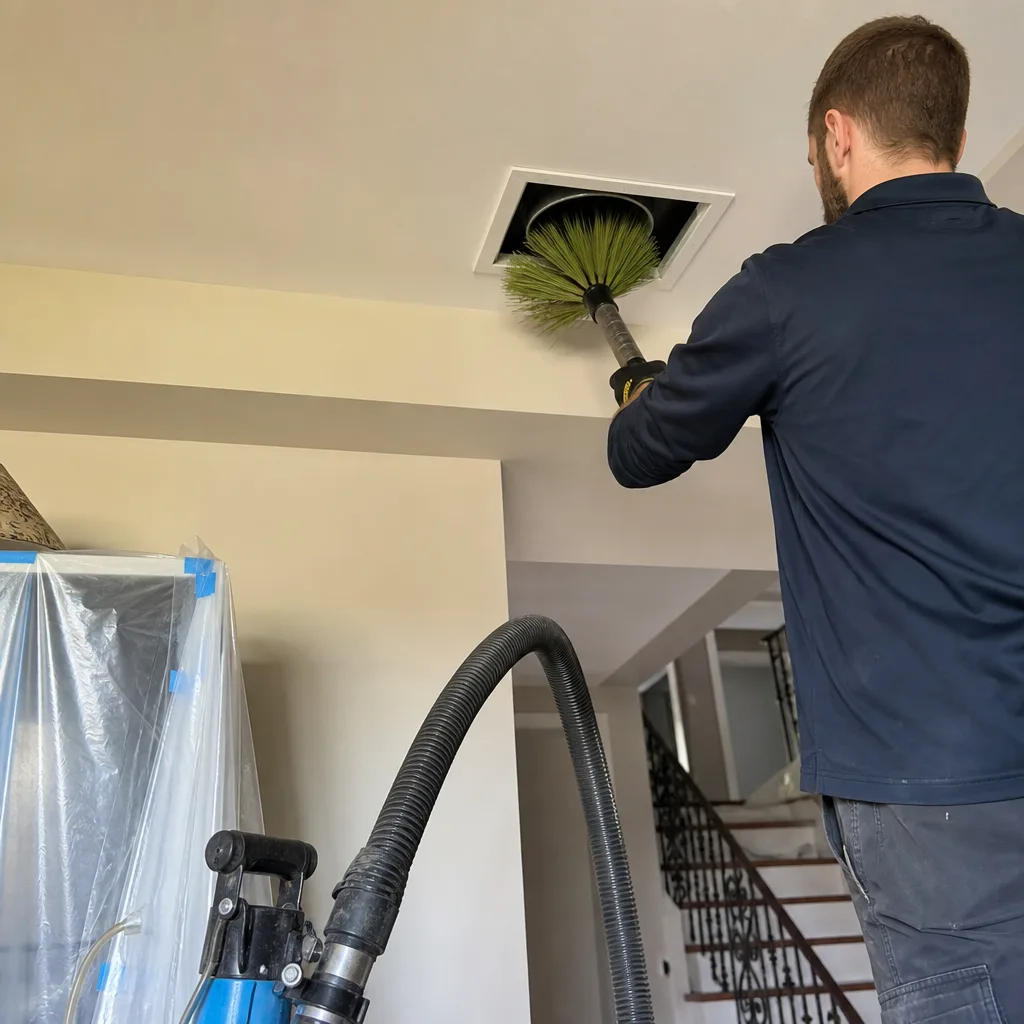
Whole-system duct and dryer vent check with before-and-after photos - you see exactly what came out of your vents
That "$99 whole-house special" is a bait ad - the real number appears once they are in your hallway, or the "clean" is a shop-vac at the register. We photograph the inside of your ducts before and after instead.
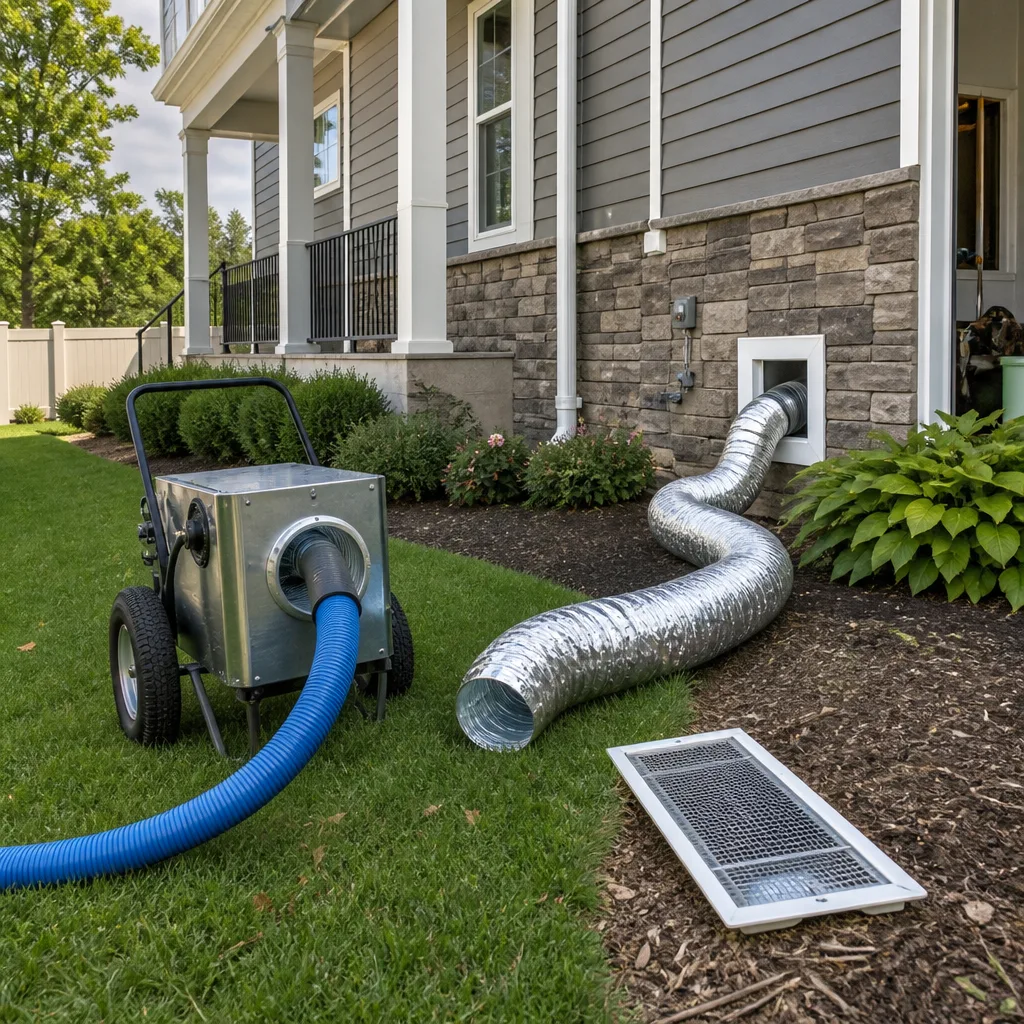
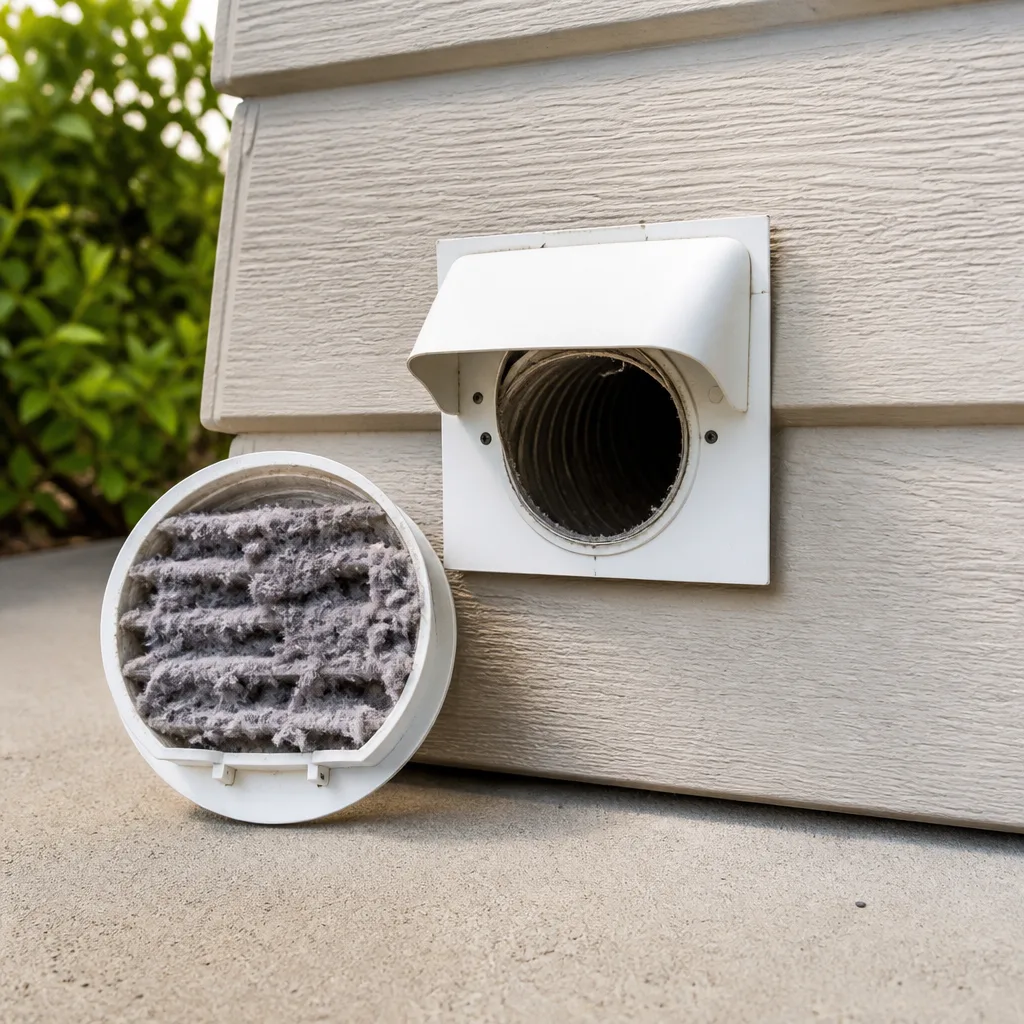
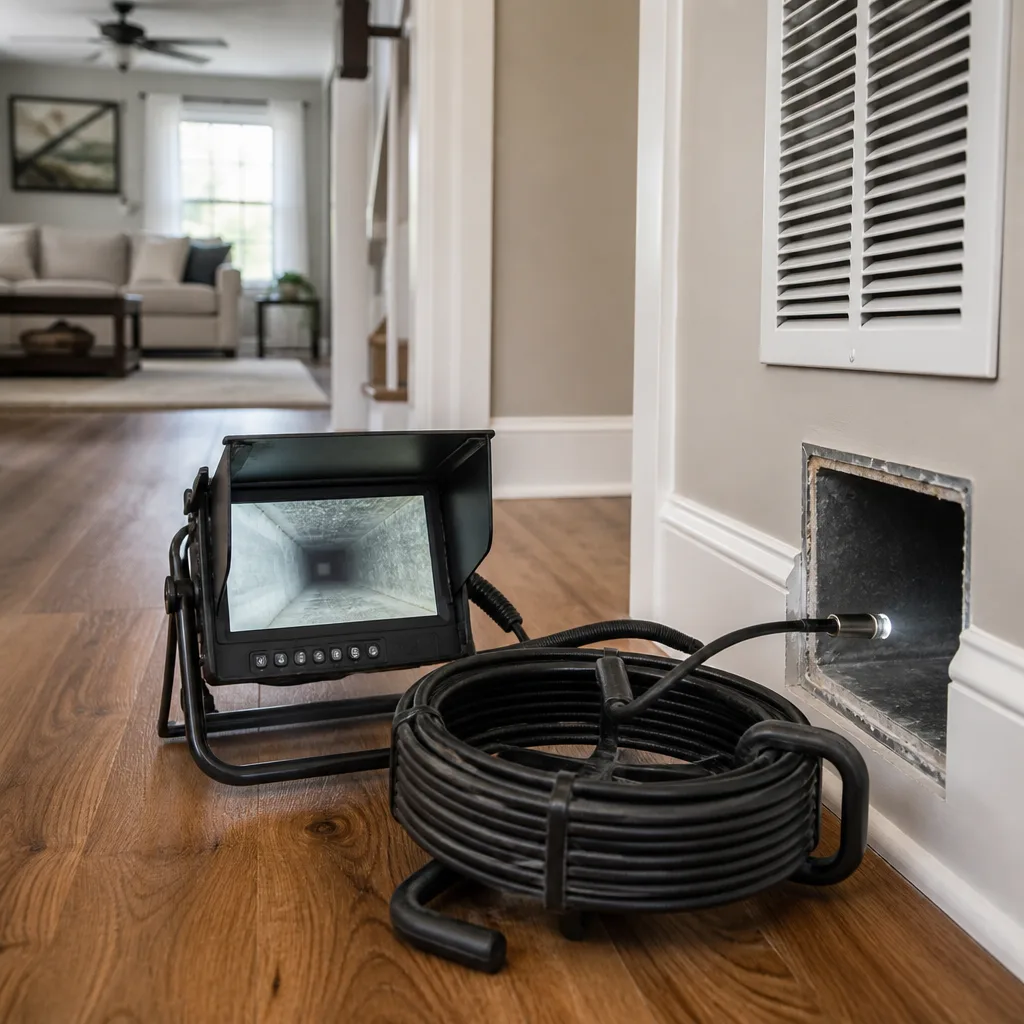
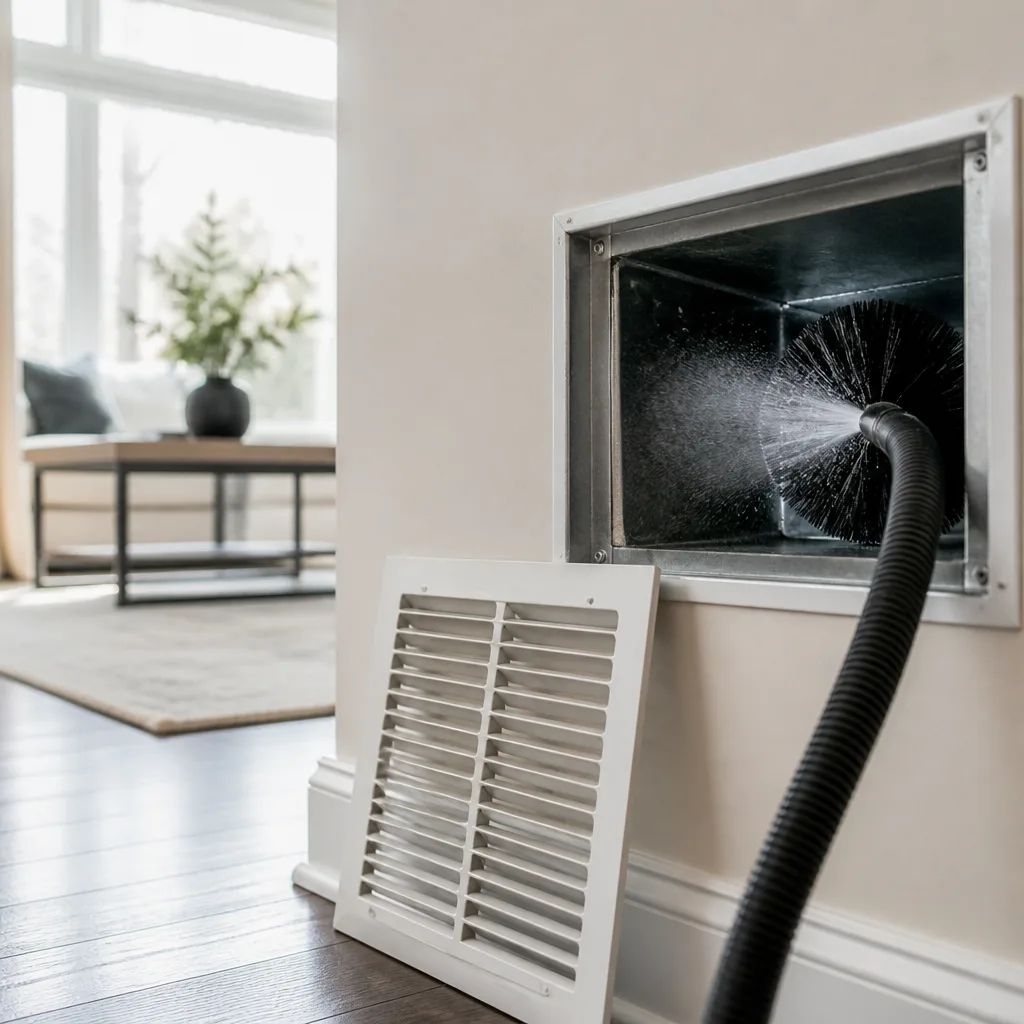
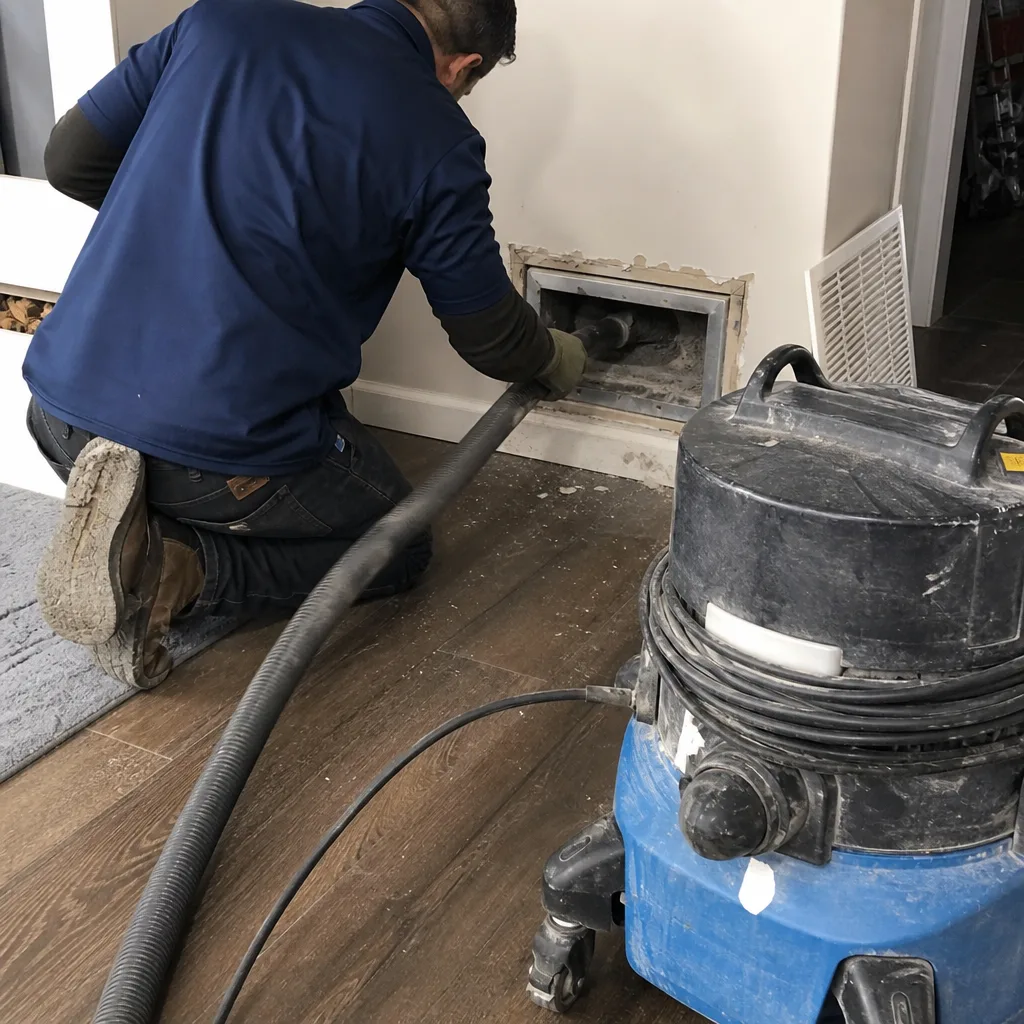 Before
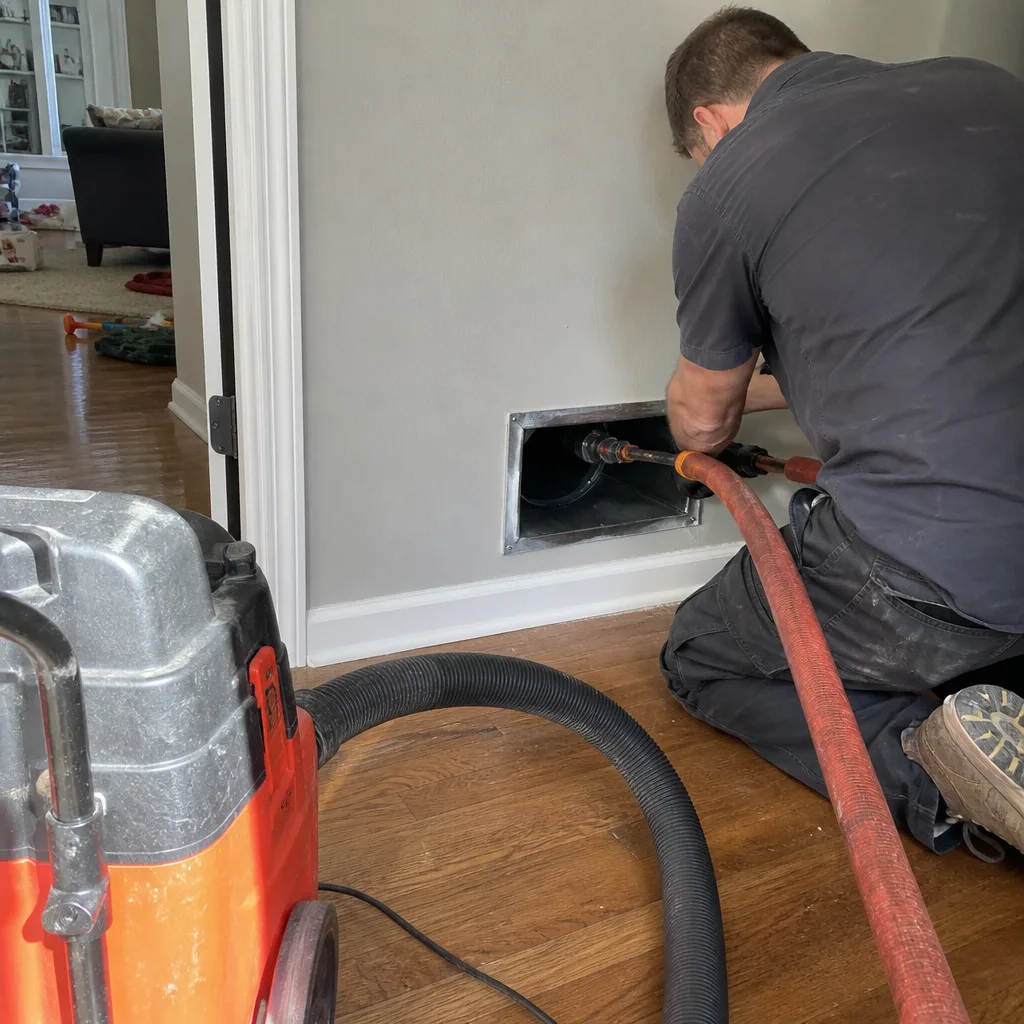 After
After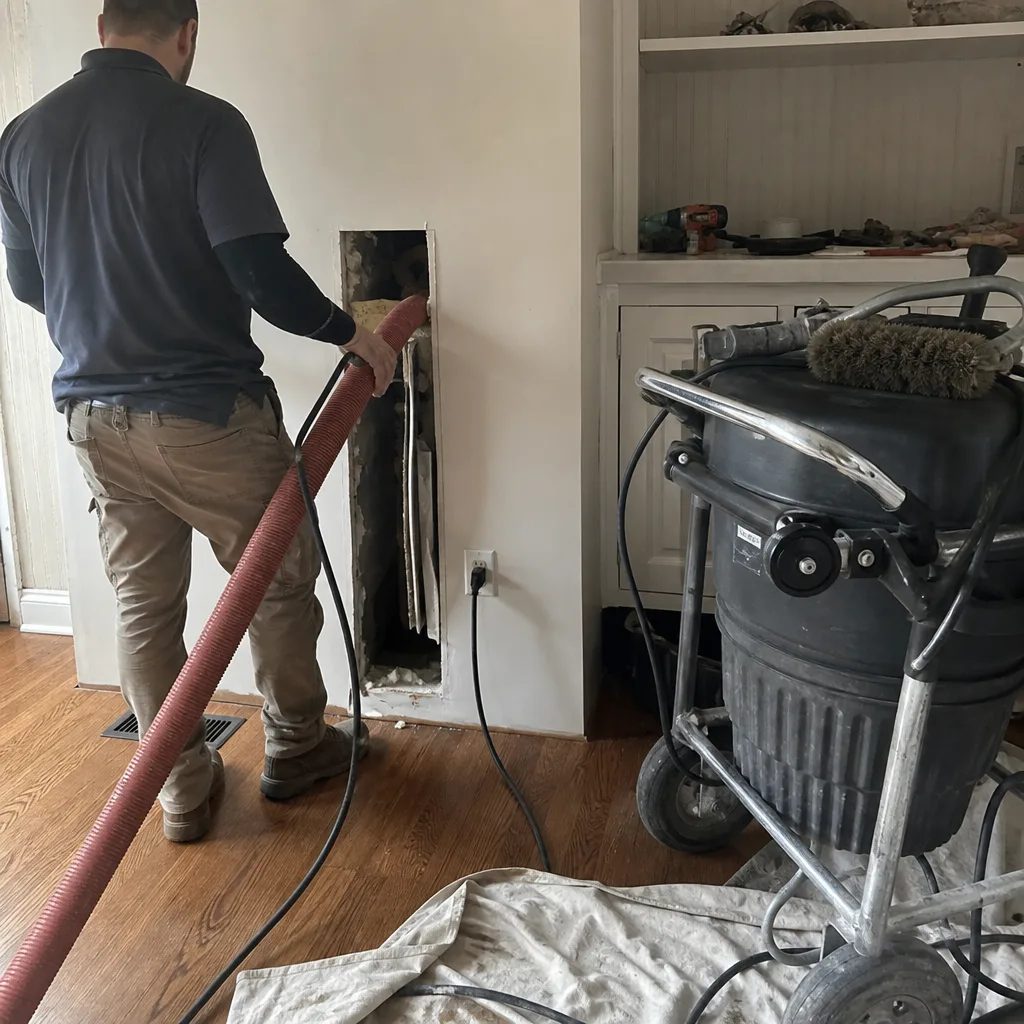 Before
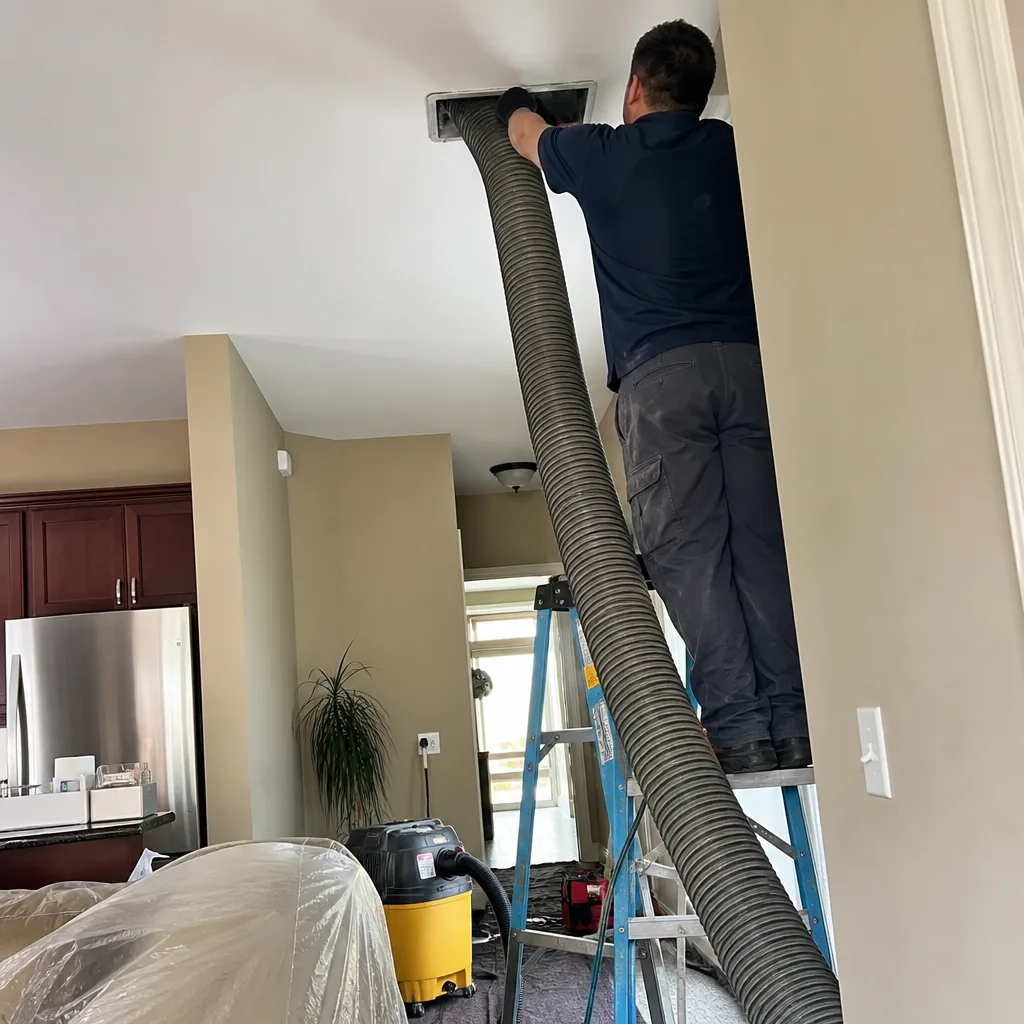 After
After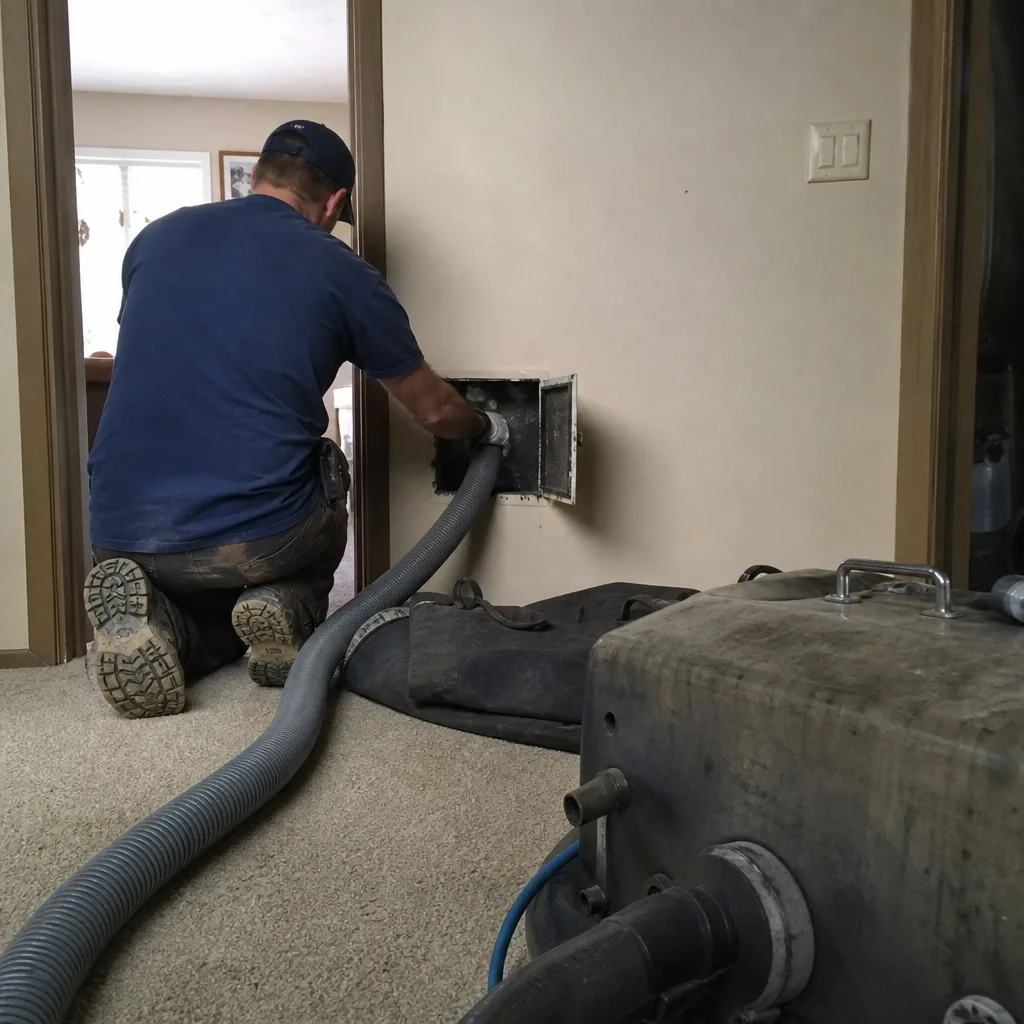 Before
 After
AfterAir Duct Cleaning Cost Breakdown: The Northbrook Homeowner’s Reference for 2026
A $79 duct cleaning and a $549 duct cleaning both take about the same amount of time and both make similar noise. The difference is entirely in what the equipment is doing to the air that equipment moves through your home after the truck leaves. In Northbrook, where homes built between 1950 and 2005 dominate the housing stock and duct systems vary from original galvanized steel to modern flex, we’ve seen the same 2,400-square-foot house quoted at $89 and $680 in the same week. This Air Duct Cleaning guide itemizes what each dollar in a legitimate quote is paying for, so you can evaluate any price against the work it’s supposed to represent.
Quick Answer
Professional air duct cleaning in Northbrook costs between $380 and $720 for a typical single-system home with 12 to 18 duct runs in 2026; for preparation tips, see our Air Duct Cleaning Maintenance Checklist for Northbrook Homeowners. A legitimate job using truck-mounted negative-pressure extraction, camera documentation of every run, and written upfront pricing falls in this range. Prices below $250 typically indicate portable equipment, no documentation, and a business model built on on-site upselling.
Table of Contents
- What Legitimate Duct Cleaning Costs in Northbrook
- Line-Item Breakdown: Where the Money Goes
- Equipment Matters: Truck-Mounted vs. Portable Extraction
- The $79 Coupon Economics: How the Upsell Works
- Add-Ons: Sanitizing, Fogging, Dryer Vents - What Pays Off
- Cost Per Duct Run: A Northbrook Benchmark for Any Quote
- Red Flags and Green Flags: Reading Any Estimate
- Common Mistakes to Avoid
- When to Call a Professional
- Frequently Asked Questions
- The Bottom Line
BeforeAfterWhat Legitimate Duct Cleaning Costs in Northbrook
Northbrook’s housing market creates specific conditions for duct cleaning pricing. The village’s mix of mid-century ranches, 1970s colonials, and 1990s McMansions means duct systems range from original galvanized steel with asbestos-wrapped trunks in neighborhoods east of Waukegan Road, to modern flex-duct installations in newer developments near Techny. Age of system, accessibility, and contamination level all move the needle.
We’ve completed jobs in Northbrook since 2013. In our experience, three factors push any home toward the higher end of the range:
- System age over 30 years with original ductwork, common in neighborhoods like Greenbriar and Stonegate
- Finished basements with drywall-sealed soffits hiding trunk lines, requiring access panel cuts
- Pets, recent renovation dust, or prior water intrusion visible at the plenum (the central distribution box where heated or cooled air enters the duct network)
The Northbrook market sits slightly above national averages due to labor costs and the prevalence of larger homes. A 3,500-square-foot home with two HVAC systems in Northfield Woods typically runs $580 to $840. A 1,800-square-foot ranch in the same village with a single system and exposed basement ductwork might land at $340 to $480.
Climate matters too. Northbrook’s freeze-thaw cycles and humid summers stress duct seals. We’ve found separated flex-duct joints in attics where temperature swings caused tape adhesive failure. That repair work, if needed, is separate from cleaning and should be quoted separately under Haven Standard Clause 1: Written Price Before Any Work Starts.
Line-Item Breakdown: Where the Money Goes
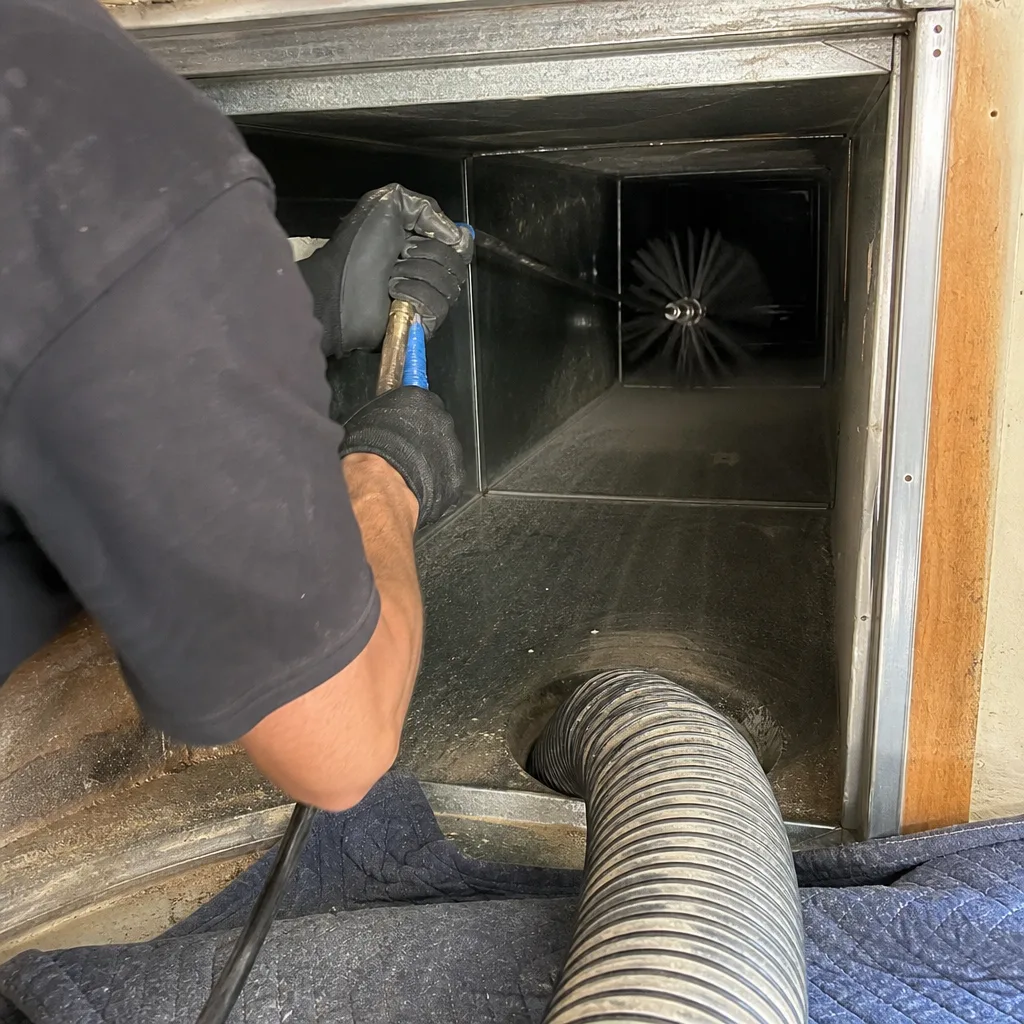
Every legitimate quote should itemize labor, equipment, and deliverables. If you receive a single number with no breakdown, you have no way to compare it to another quote. Here’s how we structure pricing for Northbrook homes, with current market ranges for each component:
| Line Item | Description | Northbrook 2026 Range |
|---|---|---|
| Mobilization | Truck, fuel, crew travel to Northbrook, equipment prep and breakdown | $65 - $95 |
| Per Duct Run Cleaning | Negative-pressure extraction and agitation for each supply and return branch | $18 - $32 per run |
| Main Trunk Cleaning | Supply and return trunk lines, typically 2 to 4 segments per system | $85 - $140 |
| Blower Compartment & Housing | Removal and cleaning of blower wheel, motor housing, and filter rack | $75 - $120 |
| Evaporator Coil Inspection | Visual inspection and light cleaning if accessible; full cleaning extra | $45 - $75 |
| Camera Documentation | Before-and-after imaging inside every duct run, delivered as job record | $55 - $85 |
| Plenum Access & Reseal | Cutting access, cleaning, and resealing the central distribution box | $60 - $95 |
A typical Northbrook home with 14 duct runs, single system, standard access:
- 14 runs at $26 average: $364
- Main trunk: $110
- Blower compartment: $95
- Coil inspection: $60
- Camera documentation: $70
- Plenum access: $75
- Mobilization: $80
- Total: $854
Most homeowners in Northbrook with homes between 2,000 and 3,000 square feet see final quotes of $420 to $680 after package pricing, which bundles these items at a lower combined rate than itemized sum. The table above shows why: a la carte pricing at the high end of each range produces an $854 total, but package structures reduce per-run costs and waive standalone fees for documentation.
Haven Standard Clause 1 requires the written price to match the work described. If your quote says “complete system cleaning” but doesn’t list trunk lines, blower compartment, or camera documentation, the price reflects what’s omitted, not what’s included.
Equipment Matters: Truck-Mounted vs. Portable Extraction
The equipment category determines whether debris leaves your home or simply relocates within it. This is the technical difference between a $79 job and a legitimate one, and it’s invisible to the homeowner until the work is finished.
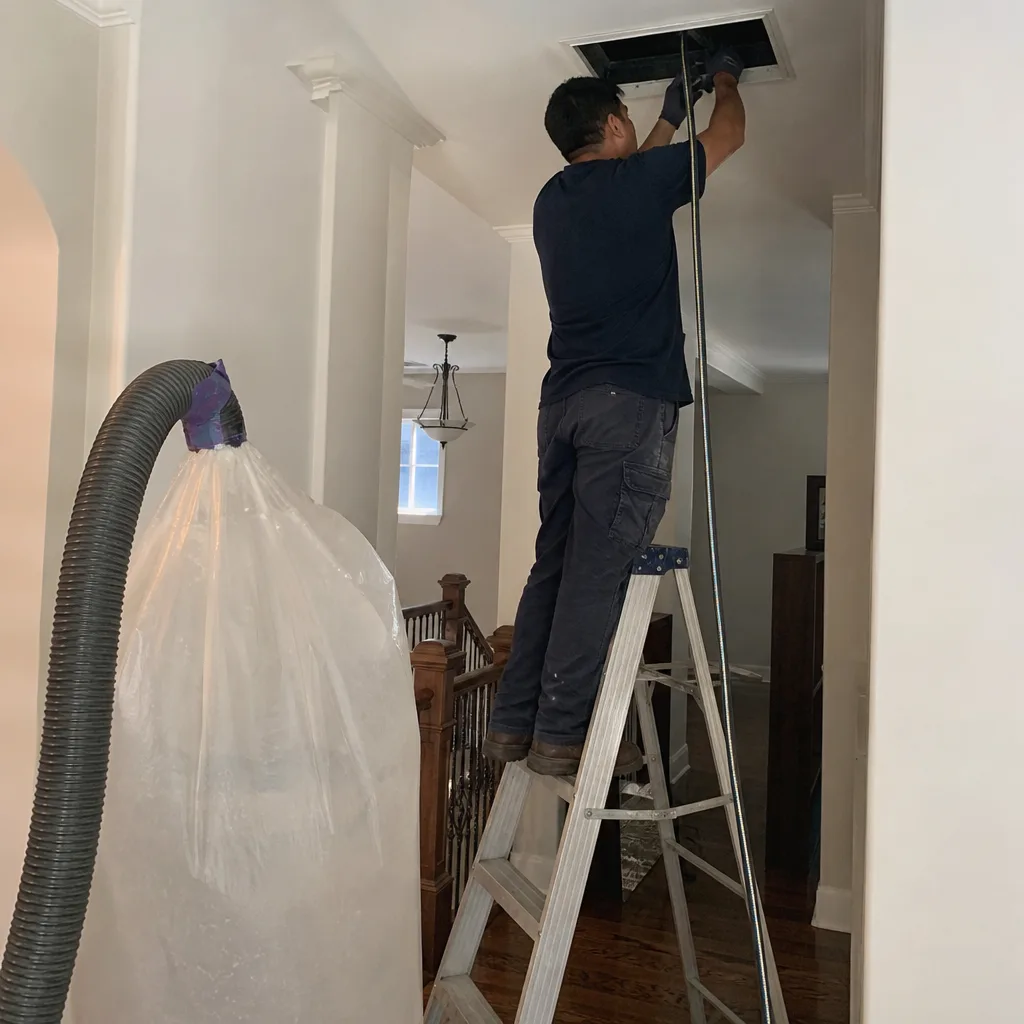
Truck-mounted negative-pressure units draw 10,000 to 15,000 cubic feet per minute (CFM) through a dedicated vacuum collector mounted on the service vehicle. The duct system is placed under continuous negative pressure during agitation, so dislodged debris is captured at the source and transported outside the structure. These units require a dedicated vehicle, fuel, maintenance, and trained operation. In Northbrook, where many homes have long duct runs feeding second-floor additions, the suction power matters: a truck-mounted unit maintains adequate airflow through 80 feet of flex duct plus trunk line where a portable unit loses effective capture.
Portable units, sometimes called HEPA vacuums or shop-vac derivatives, generate 1,500 to 4,000 CFM. They’re wheeled into the home, often operated from a hallway or utility room. Without sufficient negative pressure at the register, agitated debris escapes into living spaces during cleaning. We’ve been called to Northbrook homes where a previous “cleaning” left visible dust settling on furniture for days afterward. The camera showed debris still packed at duct elbows where portable suction couldn’t reach.
The cost difference is structural, not marginal. Truck-mounted systems represent a capital investment of $60,000 to $120,000 per vehicle. Portable units run $2,000 to $8,000. That gap appears in pricing: a truck-mounted job in Northbrook cannot be delivered at $79 or $149 without the operator losing money on every call. The business model that uses truck-mounted equipment must price to cover equipment, maintenance, fuel, and trained technicians. The business model that uses portable equipment can price low and recover margin through upsells.
CleanRun operates Rotobrush and Nikro truck-mounted systems for residential duct cleaning in Northbrook. These are trade-recognized brands with published specifications homeowners can verify independently. We name the equipment because Haven Standard Clause 2, Documented Methods, requires traceability: you should know what touched your ductwork.
The $79 Coupon Economics: How the Upsell Works
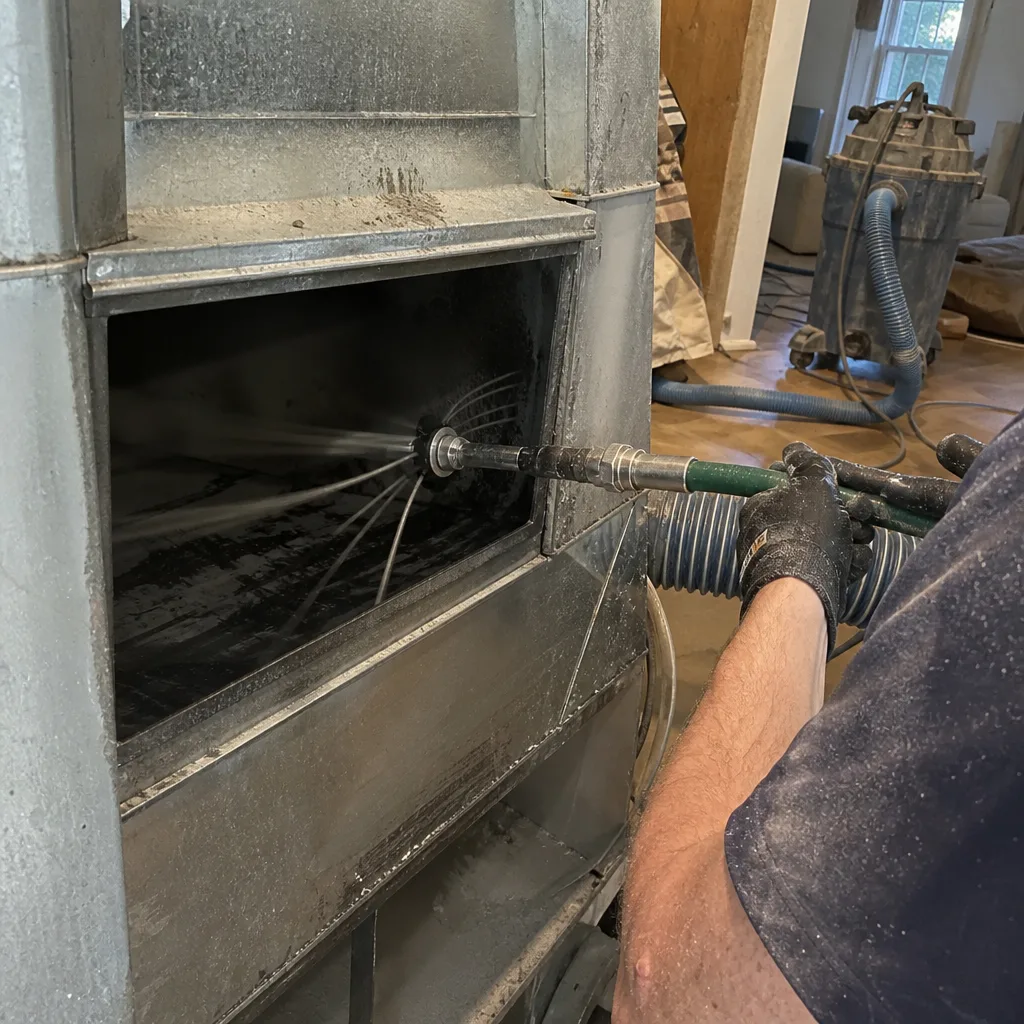
The $79 duct cleaning is not a loss leader in the traditional sense. It’s a structured sales process with documented patterns across the industry. Understanding the sequence helps Northbrook homeowners recognize it before they’re committed.
Here’s how the economics work:
- The coupon captures the lead. The $79 price is advertised for “unlimited vents” or “whole house cleaning,” with no equipment specified. The homeowner books, believing they’ve secured a standard service at a discount.
- The technician arrives with portable equipment. Often a single operator with a vacuum unit that fits in a car trunk. The setup takes 15 minutes. No truck-mounted equipment is present because none exists in the operation.
- The inspection phase identifies “problems.” The technician enters the home, examines one or two registers, and reports findings: heavy contamination, mold concern, blocked ducts, or “your system needs sanitizing.” These findings are rarely documented with photos or measurements.
- The upsell presentation follows. The $79 service, the technician explains, covers only basic vacuuming of accessible registers. The actual cleaning the homeowner expected requires additional services: deep cleaning ($200-$400), sanitizing ($150-$300), mold treatment ($300-$600), or main trunk cleaning ($250-$500). The technician may present these as health necessities, sometimes with alarming language about “what’s living in your ducts.”
- The homeowner faces a decision under pressure. The technician is in the home, equipment is set up, and the homeowner has already invested time in the appointment. Many agree to additional services to avoid the perceived waste of the visit. Industry data from consumer protection filings shows average final invoices of $400 to $800 on $79 coupon jobs.
- The work performed remains undocumented. No before-and-after photos. No written scope. No equipment specifications. The homeowner has paid mid-market prices for below-market procedure, with no record to dispute quality.
In Northbrook specifically, we’ve encountered homeowners in the Meadows and Shermer Square neighborhoods who paid $520 to $680 after responding to a $79 coupon, then called us six months later because dust accumulation had returned rapidly. The camera showed debris still packed at trunk line elbows where portable equipment never reached. The prior service had cleaned what was visible from registers, not what was hidden in the system.
The $79 price is mathematically impossible for legitimate truck-mounted service. Fuel to Northbrook from most regional depots runs $25 to $40 round-trip. Technician labor at two hours minimum is $60 to $100. Equipment depreciation, insurance, and vehicle costs add another $40 to $60. That’s $125 to $200 in hard costs before profit, for a service priced at $79. The gap closes through upsells or through delivering something other than advertised.
Add-Ons: Sanitizing, Fogging, Dryer Vents - What Pays Off
Add-on services represent the highest-margin segment of duct cleaning, and the most abused. We separate them into three categories: documented value, situationally justified, and routine upsell with minimal benefit.
Documented value:
Dryer vent cleaning in Northbrook is the clearest example. Lint accumulation in dryer exhaust ducts causes approximately 2,900 residential fires annually per U.S. Fire Administration data, and the restriction reduces dryer efficiency measurably. A separate dryer vent cleaning runs $120 to $180 in Northbrook, and should include airflow testing before and after. This is not an upsell; it’s a distinct service with independent safety value. Homes in Northbrook with second-floor laundry rooms and long horizontal vent runs, common in 1990s construction, benefit particularly.
Duct repair and sealing, when leaks are verified with a pressure pan test or visual inspection, delivers measurable efficiency improvement. The HVAC cleaning in Northbrook page details this separately. If your ductwork shows separated joints, crushed flex, or failed tape at plenum connections, repair work has documented ROI through reduced energy use.
Situationally justified:
Antimicrobial fogging or sanitizing has value in specific circumstances: water intrusion events, confirmed mold growth verified by third-party testing, or immunocompromised occupants with physician recommendation. The EPA registers specific products for HVAC use, and application requires proper dwell time and ventilation. In Northbrook, where humid summers can create condensation issues in unconditioned attics, we’ve applied sanitizing after documented water damage remediation. The key word is documented: the condition should be verified, not asserted.
Routine upsell with minimal benefit:
“Sanitizing” applied to a standard residential duct system with no contamination event, no testing, and no specific target organism is primarily a revenue add-on. The fogging takes 10 to 15 minutes, uses inexpensive product, and is presented as “finishing the job.” Without pre-existing biological growth, the EPA notes that routine duct sanitizing has not been shown to prevent health problems. We don’t recommend it absent specific conditions.
UV light installation in ductwork is similarly oversold. Properly sized and positioned UV-C systems can reduce microbial growth on coil surfaces, but in-duct units marketed as “whole home air purifiers” typically lack the intensity and dwell time for meaningful air treatment. The Honeywell and Aprilaire products we install are specified for coil-surface applications with documented irradiance levels, not generic duct mounting.
When evaluating add-ons, ask: what condition is this treating, and how was that condition verified? If the answer is a technician’s verbal assessment without documentation, the add-on is likely revenue-driven, not needs-driven.
Cost Per Duct Run: A Northbrook Benchmark for Any Quote
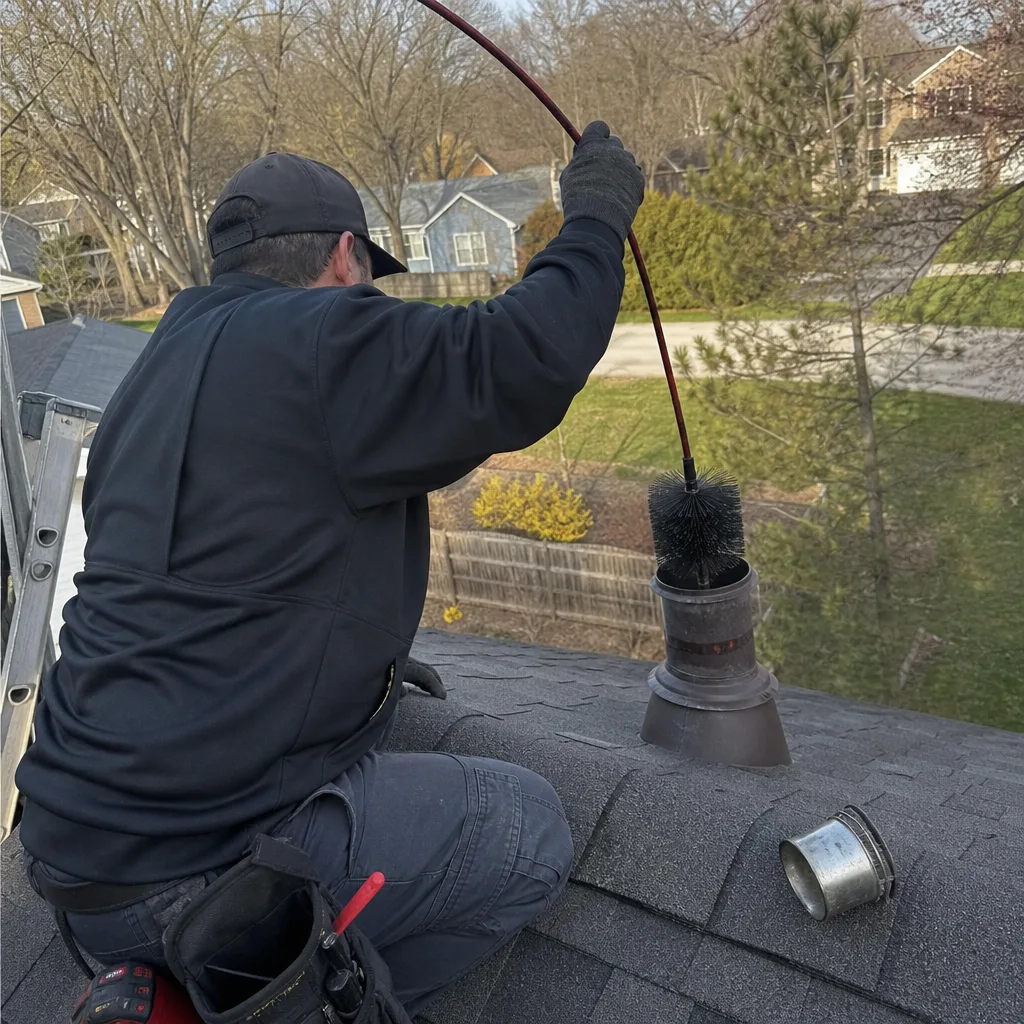
The most reliable comparison metric for duct cleaning is cost per duct run. This normalizes quotes across homes of different sizes and strips away package-labeling confusion.
To use this benchmark:
- Count your supply registers (where heated or cooled air enters rooms) and return registers (where air returns to the system). Each register connects to a duct run, though some large rooms may have multiple registers on a single run.
- Add supply and return runs for total duct run count. A typical Northbrook home has 8 to 12 supply runs and 2 to 4 return runs, totaling 10 to 16.
- Divide the total quoted price by the duct run count.
Northbrook 2026 benchmarks:
- Below $20 per duct run: Unsustainable for truck-mounted service. Indicates portable equipment, no documentation, or a quote that will expand on-site.
- $20 to $35 per duct run: Lower end of legitimate service. May indicate limited trunk cleaning, no blower compartment work, or minimal documentation.
- $35 to $50 per duct run: Standard range for truck-mounted negative-pressure extraction with full documentation, trunk cleaning, and blower compartment service. This is where most legitimate Northbrook quotes fall.
- Above $50 per duct run: Premium pricing. May be justified for complex access, older systems requiring extra care, or homes with finished basements limiting access. Verify what additional services justify the premium.
Apply this to any quote you receive. A $299 quote for a 14-run system is $21.36 per run, at the low end. Ask what equipment is used, whether trunk lines are included, and whether documentation is provided. A $649 quote for the same system is $46.36 per run, in the standard range. The benchmark doesn’t tell you which to choose, but it tells you which questions to ask.
We’ve priced jobs in Northbrook’s East Northbrook area, where 1950s ranches with original ductwork require careful handling, at the higher end of this range. We’ve priced newer homes in western subdivisions with accessible flex duct at the lower end. The benchmark accounts for this variation by forcing specification: what exactly does this price include?
Red Flags and Green Flags: Reading Any Estimate
The estimate document itself reveals whether you’re dealing with a procedure-driven operation or a sales-driven one. Here’s what to look for.
Red flags:
- Verbal quotes only, or “we’ll tell you when we see it.” Haven Standard Clause 1 exists because written pricing protects both parties. If a company won’t commit to paper before work starts, they’re preserving flexibility to increase the price.
- No equipment specification. “Professional equipment” is not a specification. Truck-mounted, portable, or unspecified matters enormously for results.
- Per-vent pricing that doesn’t distinguish supply and return, or that charges separately for “deep cleaning” what should be standard procedure.
- Mold claims without testing. Visual identification of mold by a cleaning technician is not verification. Proper mold assessment requires laboratory analysis of tape-lift or air samples.
- Pressure to decide immediately. “Today’s special pricing” or technician-in-home urgency tactics are sales techniques, not service delivery.
- No mention of access requirements. Homes with finished basements, sealed soffits, or attic-mounted systems require access cuts. If these aren’t discussed in the estimate, they’ll be discovered as “surprises” on-site.
Green flags:
- Written scope with line items matching the table in this guide. You should see mobilization, per-run or system pricing, trunk cleaning, blower compartment, and documentation listed specifically.
- Equipment brands named with model or category. Rotobrush, Nikro, and similar trade brands publish specifications. Naming them allows verification.
- Photo documentation commitment, with delivery method specified. “Before-and-after photos included” should mean every run, delivered digitally, with timestamps.
- Clear warranty language. The 365-Day Done Right Promise specifies what happens if results don’t match the scope. Vague “satisfaction guaranteed” language promises nothing specific.
- License number published. In Illinois, HVAC and duct cleaning contractors must hold appropriate licensure. Publication demonstrates accountability.
CleanRun’s estimate format, used on every Northbrook job since 2013, includes all green-flag elements. We don’t consider this exceptional; we consider it the minimum standard a homeowner should accept.
Common Mistakes to Avoid
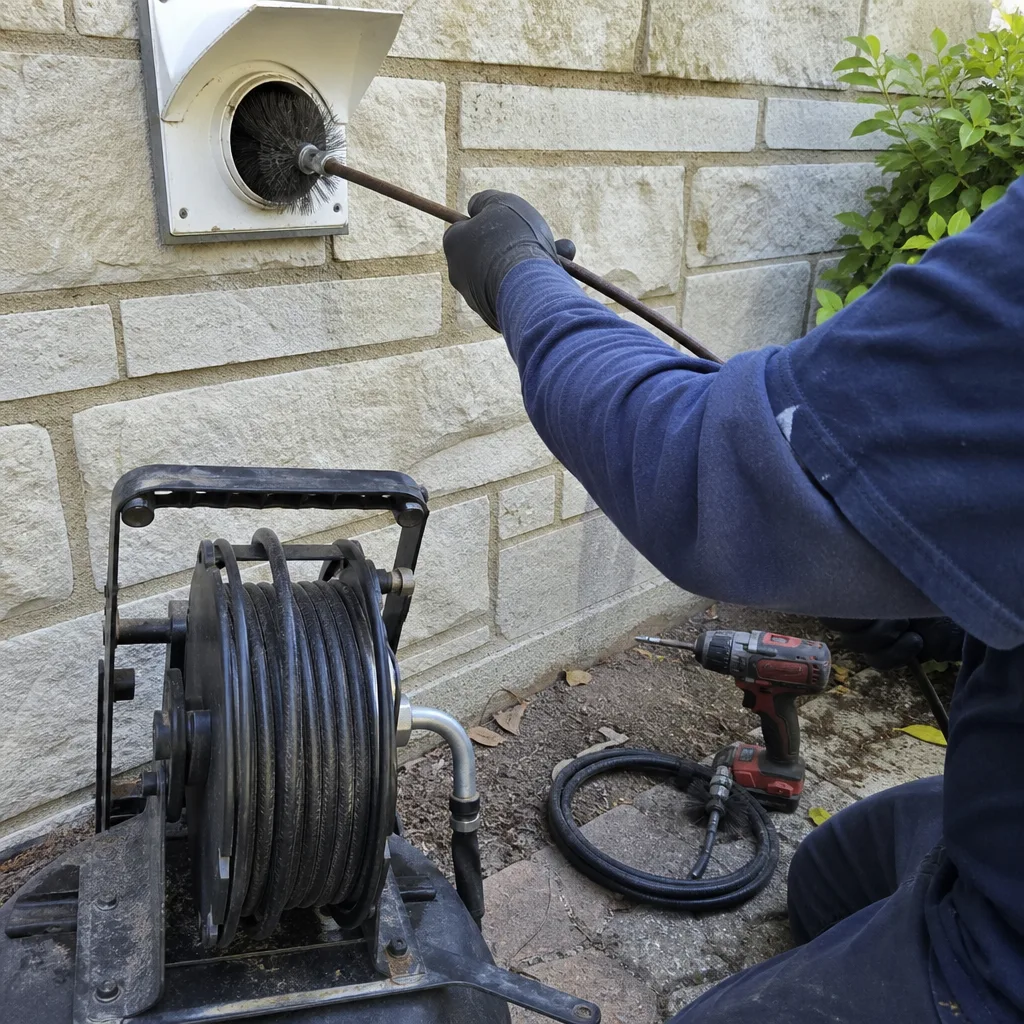
- Comparing only total price, not scope. A $400 quote that includes trunk lines, blower compartment, and documentation is different from a $400 quote that includes registers only. Itemize before comparing.
- Assuming all “duct cleaning” is the same procedure. The industry has no standardized definition. One company’s “complete cleaning” is another’s entry-level service. Read the scope, not the label.
- Ignoring Northbrook’s specific housing stock. Homes east of Waukegan Road with original 1950s ductwork need different handling than 1990s construction. A quote that doesn’t account for system age and material is guessing, not assessing.
- Accepting mold treatment without independent verification. We’ve found no mold in ducts where competitors recommended $600 treatments. Third-party testing costs $150 to $300 and prevents unnecessary work.
- Scheduling during renovation without containment. Post-construction duct cleaning should occur after all trades finish, with proper HVAC protection during work. Cleaning during active renovation wastes money.
- Neglecting dryer vent as part of the service decision. In Northbrook’s older homes with long vent runs, dryer vent restriction is a higher fire risk than duct contamination. Address it as a separate, necessary service.
- Failing to request the photo record before payment. Documentation should be a deliverable, not a promise. If photos aren’t available for review, the work hasn’t been verified.
When to Call a Professional
Call for professional duct assessment when visible dust accumulates at registers within weeks of cleaning, when airflow varies dramatically between rooms, when musty odors persist after filter changes, or when your energy bills rise without thermostat adjustment. In Northbrook’s climate, where heating runs six months annually, these symptoms often indicate duct leakage or blockage rather than simple contamination.
CleanRun Air Duct Cleaning Northbrook offers free estimates in Northbrook, and you can find more guides & resources on our blog. Every estimate includes a written scope, equipment specification, and firm price before any work begins. Call (224) 351-9772 to schedule.
Frequently Asked Questions
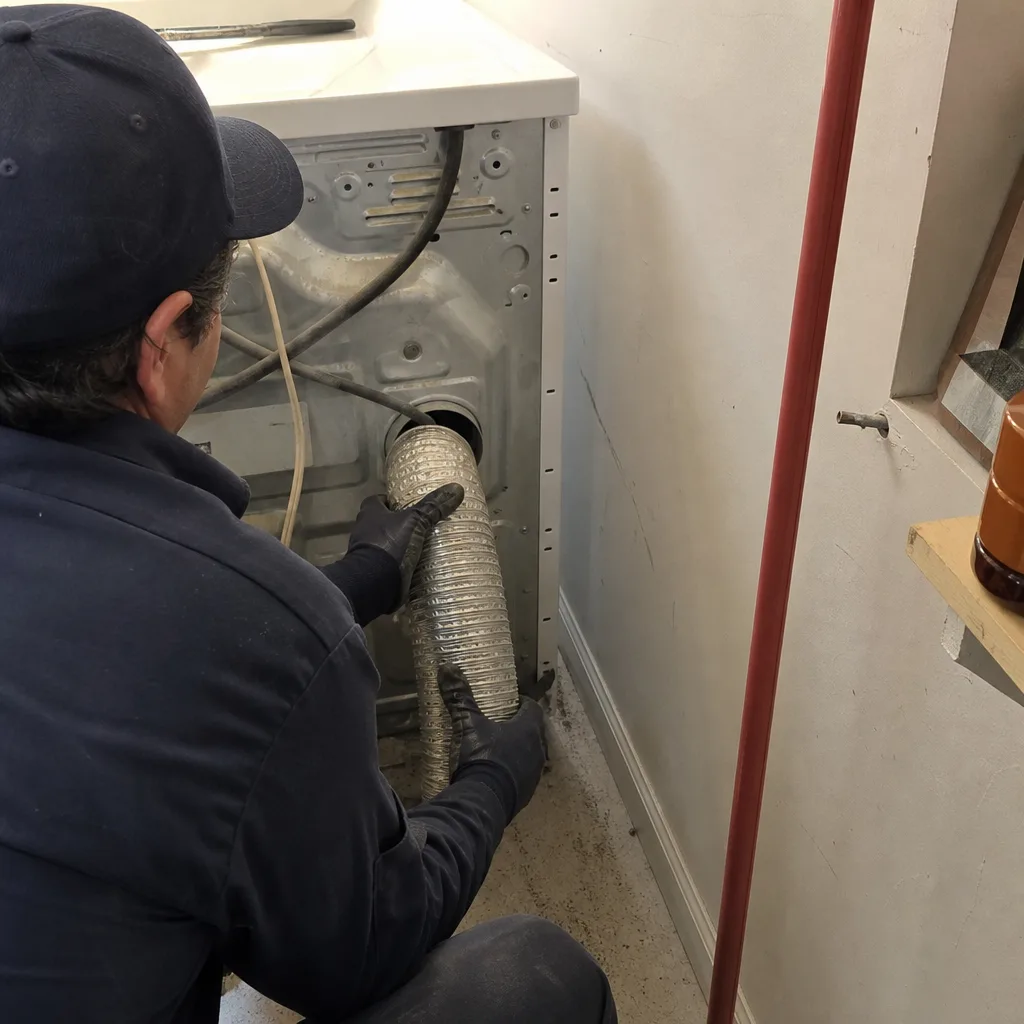
Legitimate air duct cleaning in Northbrook costs $380 to $720 for a typical single-system home with 12 to 18 duct runs in 2026. This range covers truck-mounted negative-pressure extraction, main trunk cleaning, blower compartment service, and documented before-and-after photography of every duct run. Prices below $250 typically indicate portable equipment and a business model built on on-site upselling; learn about Air Duct Cleaning Permits, Codes & Inspections in IL: What You Need to Know before hiring. Call (224) 351-9772 for a written estimate with exact pricing for your home.
The price difference reflects different procedures, not different margins. A $79 to $149 quote uses portable equipment that generates 1,500 to 4,000 CFM suction, cleans only accessible register areas, and relies on upsells to reach profitability. A $400 to $600 quote uses truck-mounted equipment at 10,000 to 15,000 CFM, cleans every duct run under continuous negative pressure, and includes documentation. The cheaper quote isn’t a discount; it’s a different service with a different result. Ask for equipment specification and written scope to verify what you’re comparing.
Demand a documented photo record showing the interior of every duct run before and after cleaning, with timestamps. CleanRun delivers this as standard on every job, a practice held since 2013. Without photographic evidence, you have only the technician’s word that the system was cleaned. The photo record is your verification that debris was removed, not merely disturbed.
For most Northbrook homes, every 5 to 7 years under normal occupancy. Homes with pets, allergies, or recent renovation may need service every 3 to 4 years. The NADCA (National Air Duct Cleaners Association) recommends cleaning when visible debris exists, when mold is verified, or when ducts become infested with vermin. We don’t recommend routine annual cleaning absent specific conditions; it’s unnecessary expense with diminishing returns.
Duct sanitizing has documented value only in specific circumstances: after water damage with verified microbial growth, when immunocompromised occupants have physician recommendation, or when third-party testing confirms biological contamination. Routine sanitizing of a standard residential system without these conditions has not been shown to improve health outcomes per EPA guidance. We apply sanitizing when conditions justify it, not as a default add-on.
Legitimate service includes main trunk line cleaning (the large ducts distributing air from the plenum), blower compartment and wheel cleaning, evaporator coil inspection, and documented photography of every duct run. Coupon services typically clean only register openings and visible duct sections, omitting the trunk lines where most debris accumulates. The omitted work is where the actual cleaning happens; without it, registers look clean while the system remains contaminated.
The Bottom Line
Air duct cleaning prices in Northbrook range from $79 to over $900 for the same house because the procedures behind those prices share almost nothing in common. The legitimate job uses truck-mounted negative-pressure extraction, cleans every duct run and trunk line, documents results with photography, and prices the work in writing before starting. The coupon job uses portable equipment, cleans visible surfaces only, and recovers margin through on-site upsells that typically reach $400 to $800.
Use cost per duct run as your comparison benchmark: $35 to $50 indicates legitimate service in Northbrook’s 2026 market. Below $20 signals unsustainable pricing that requires upsells or corner-cutting to survive. Above $50 demands specific justification for complex access or additional services.
The price you pay should match the work described, documented, and delivered. Anything less is a payment without a purchase.
Written by Tomas Reyes, Owner at CleanRun Air Duct Cleaning Northbrook, serving Northbrook since 2013.