
Last updated September 23, 2026
Whole-system duct and dryer vent check with before-and-after photos - you see exactly what came out of your vents
That "$99 whole-house special" is a bait ad - the real number appears once they are in your hallway, or the "clean" is a shop-vac at the register. We photograph the inside of your ducts before and after instead.
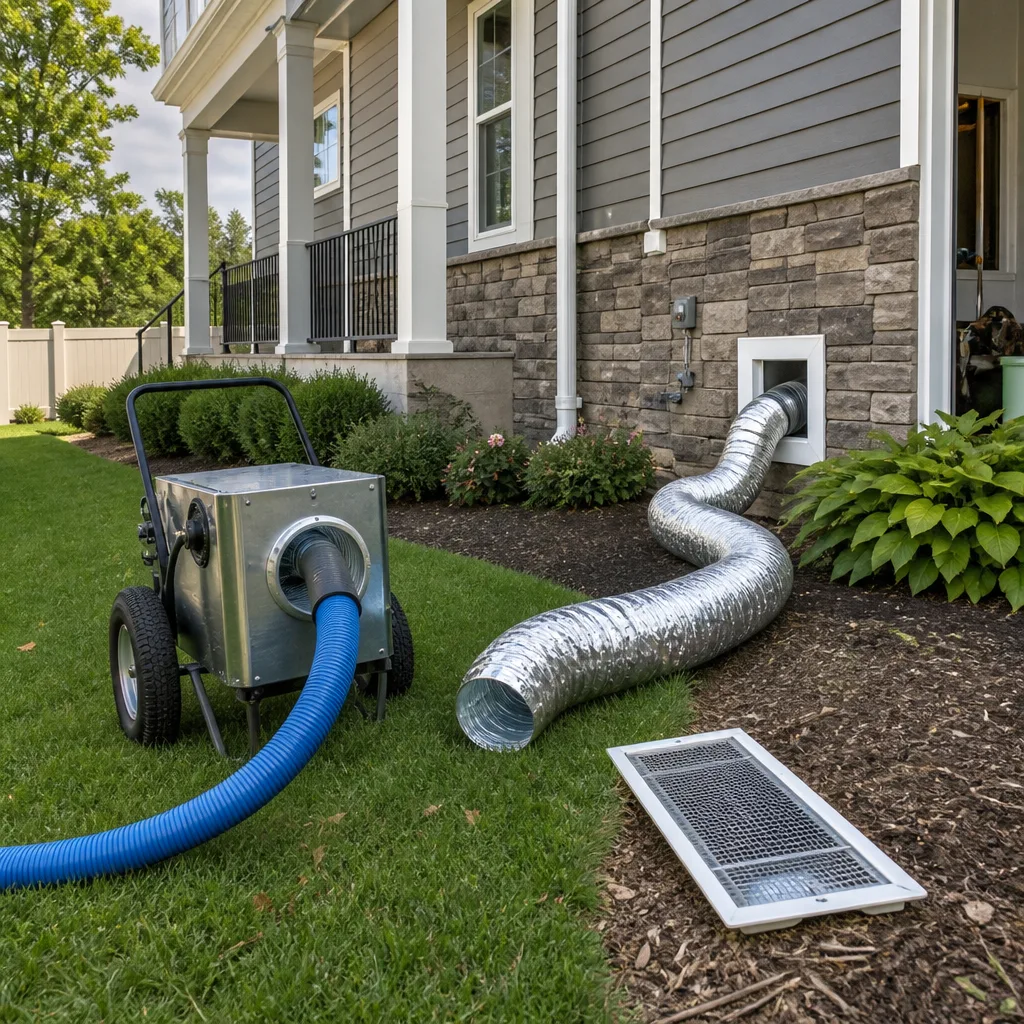
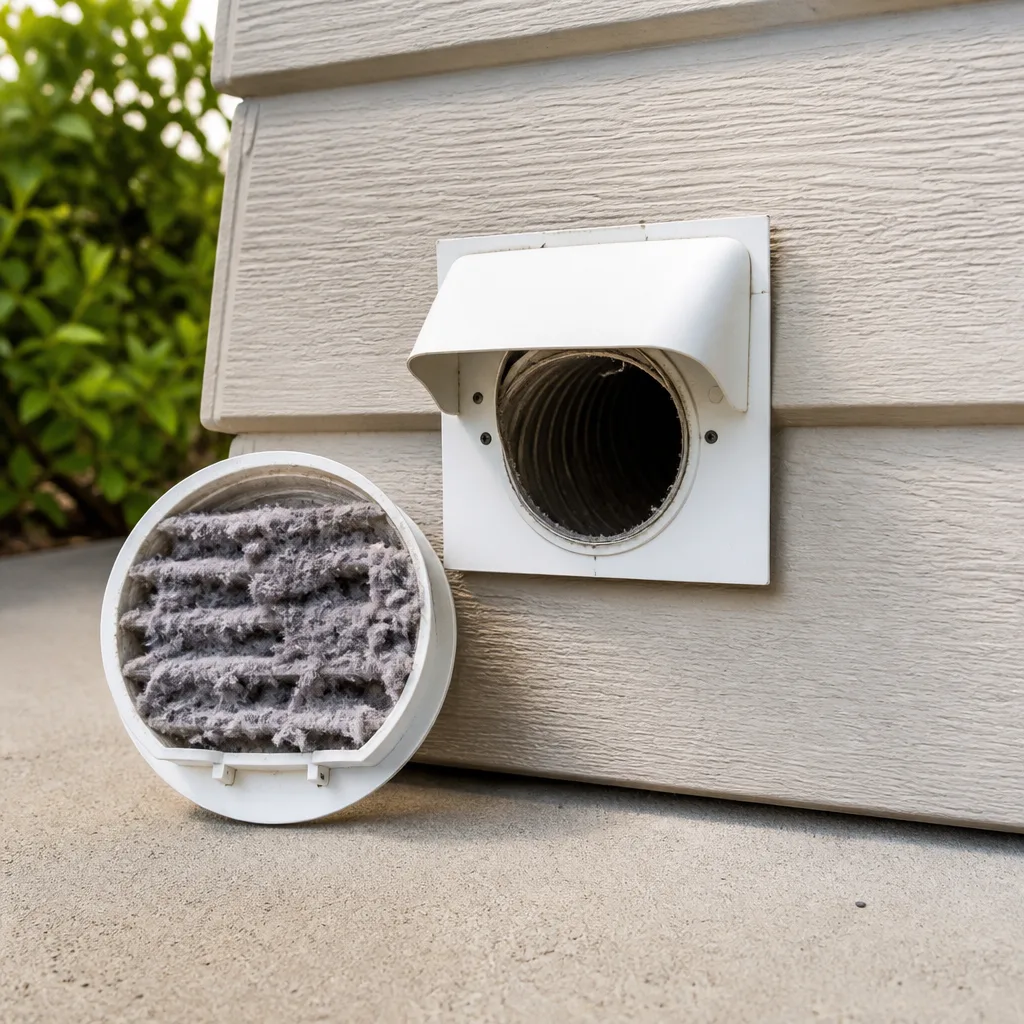
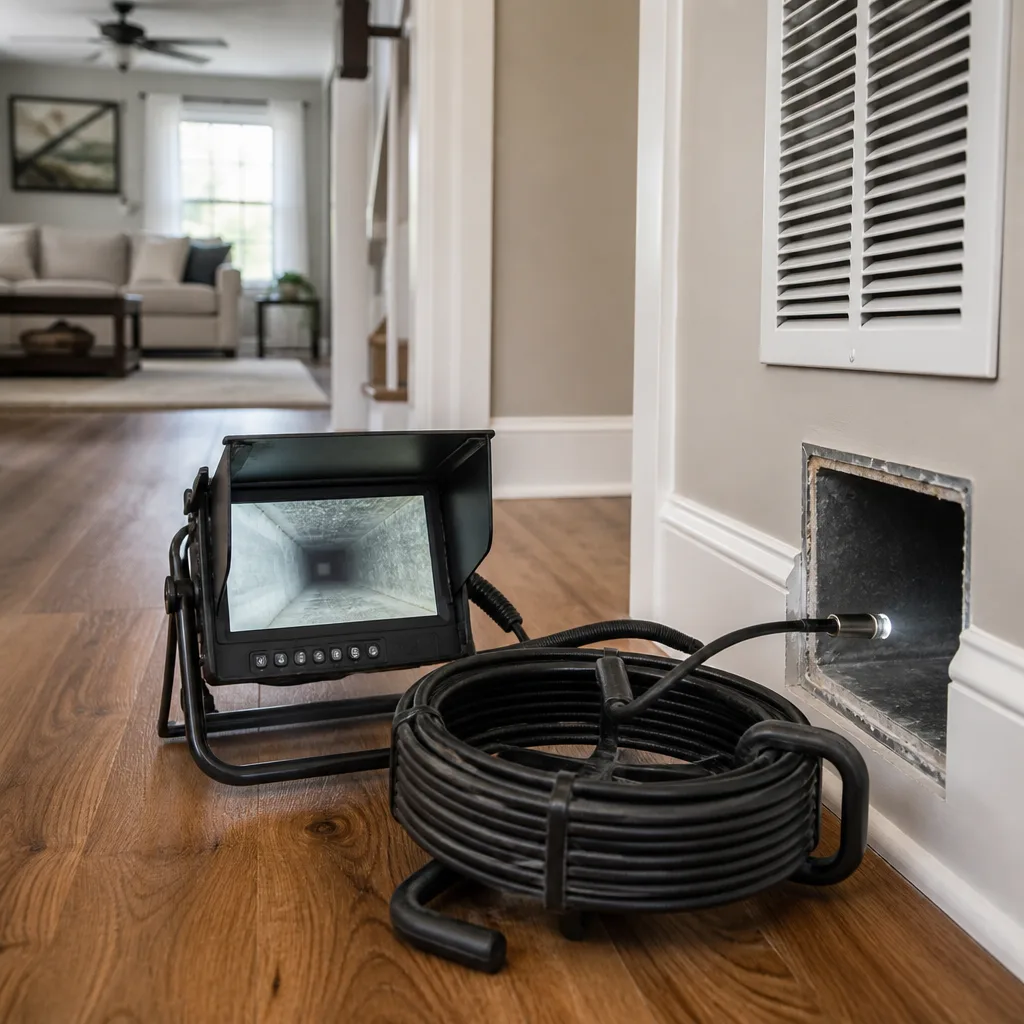
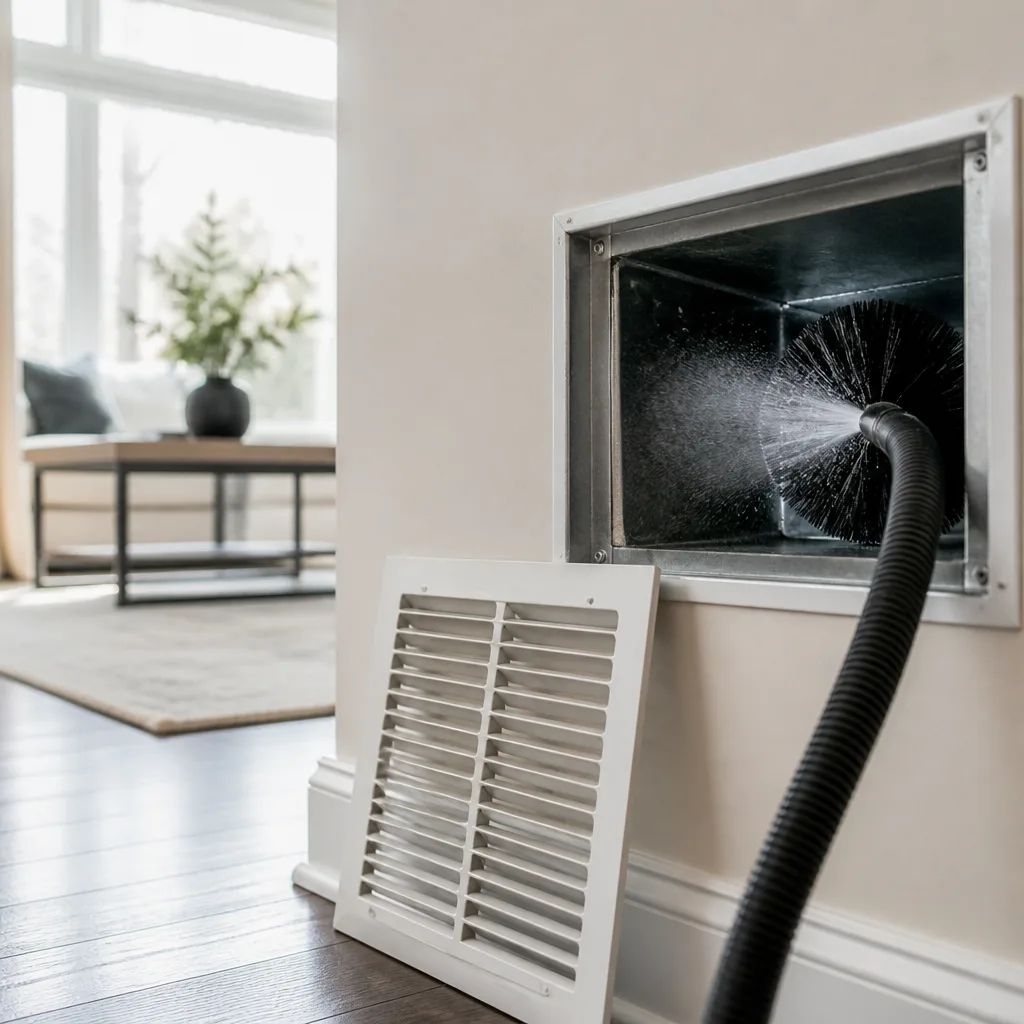
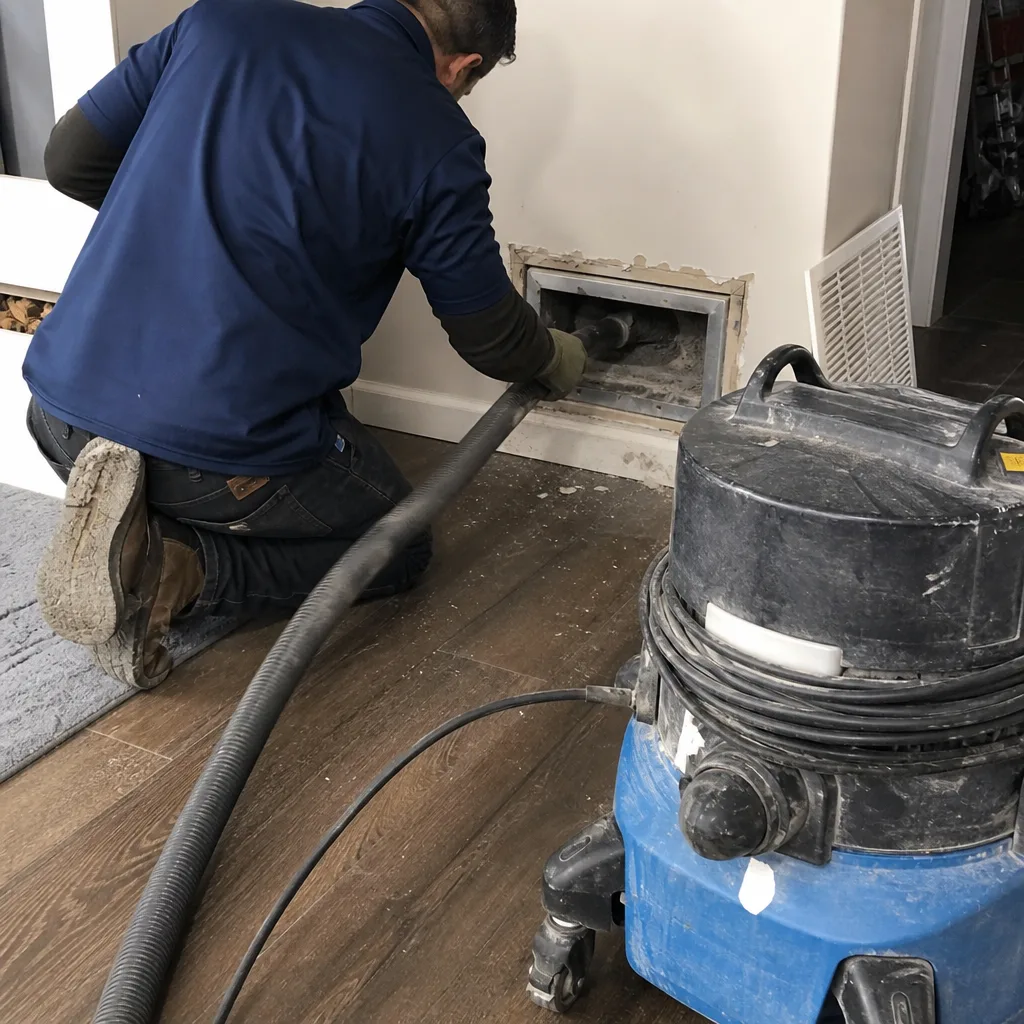 Before
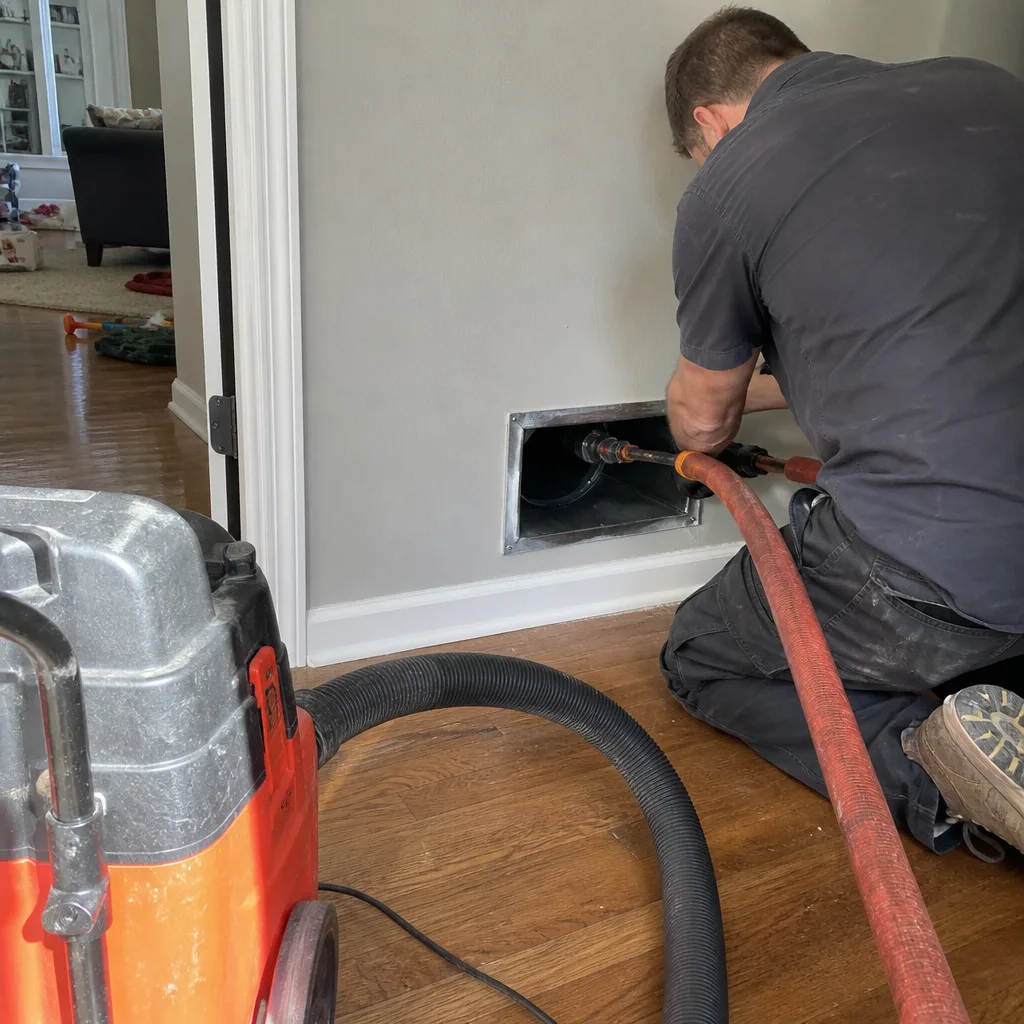 After
After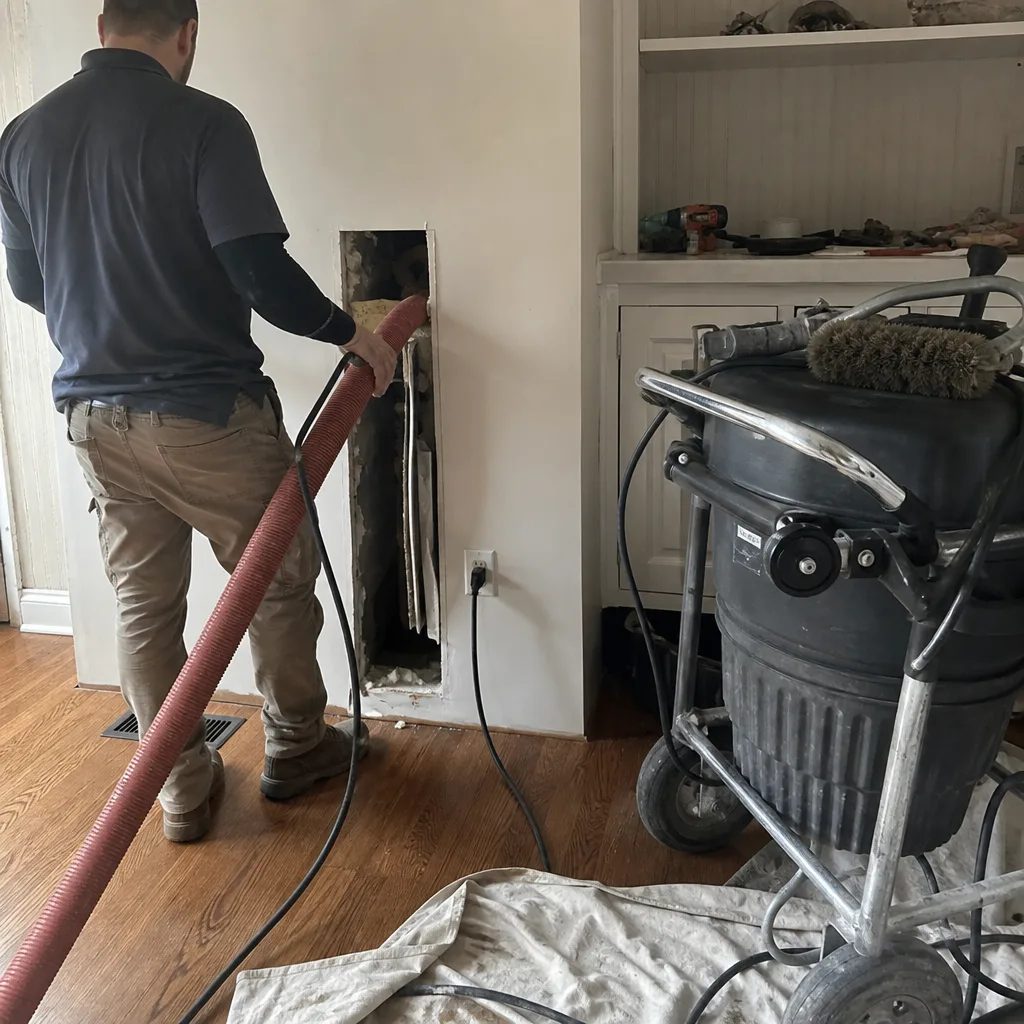 Before
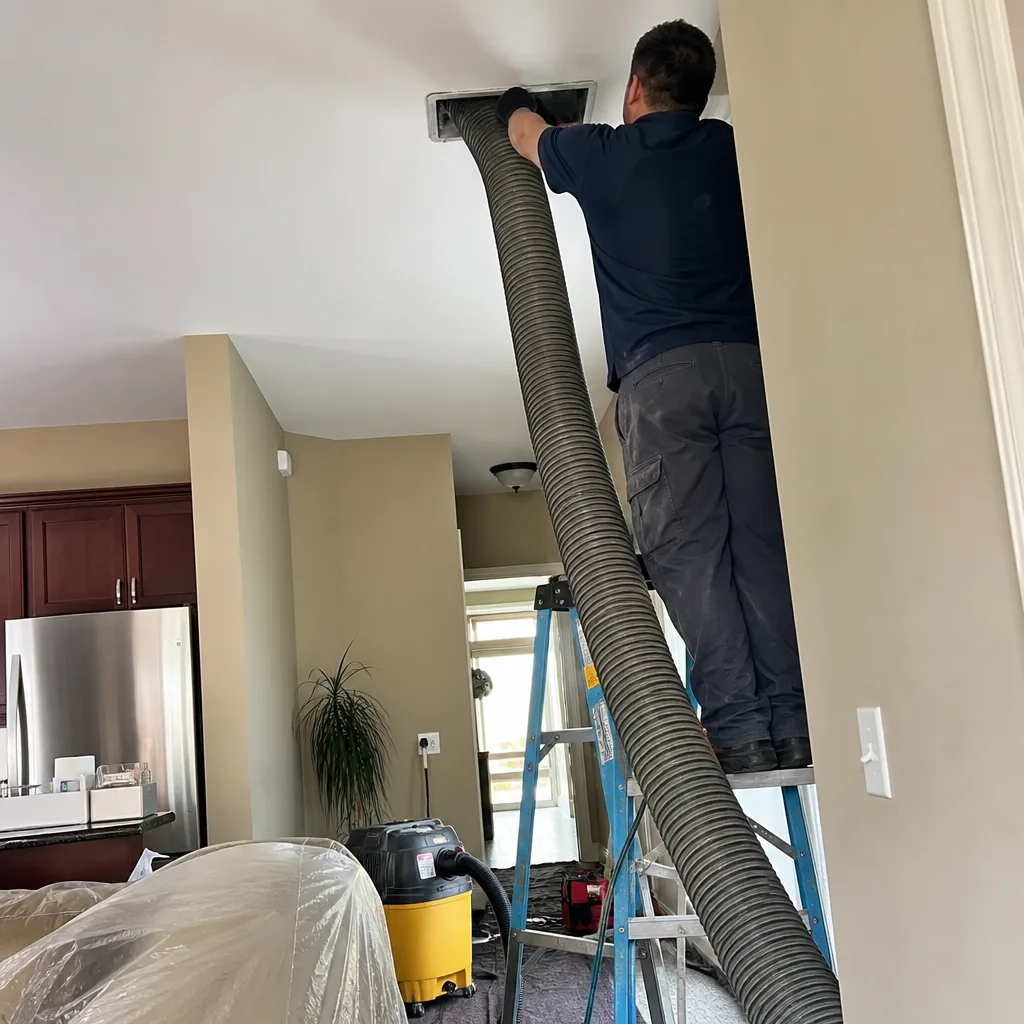 After
After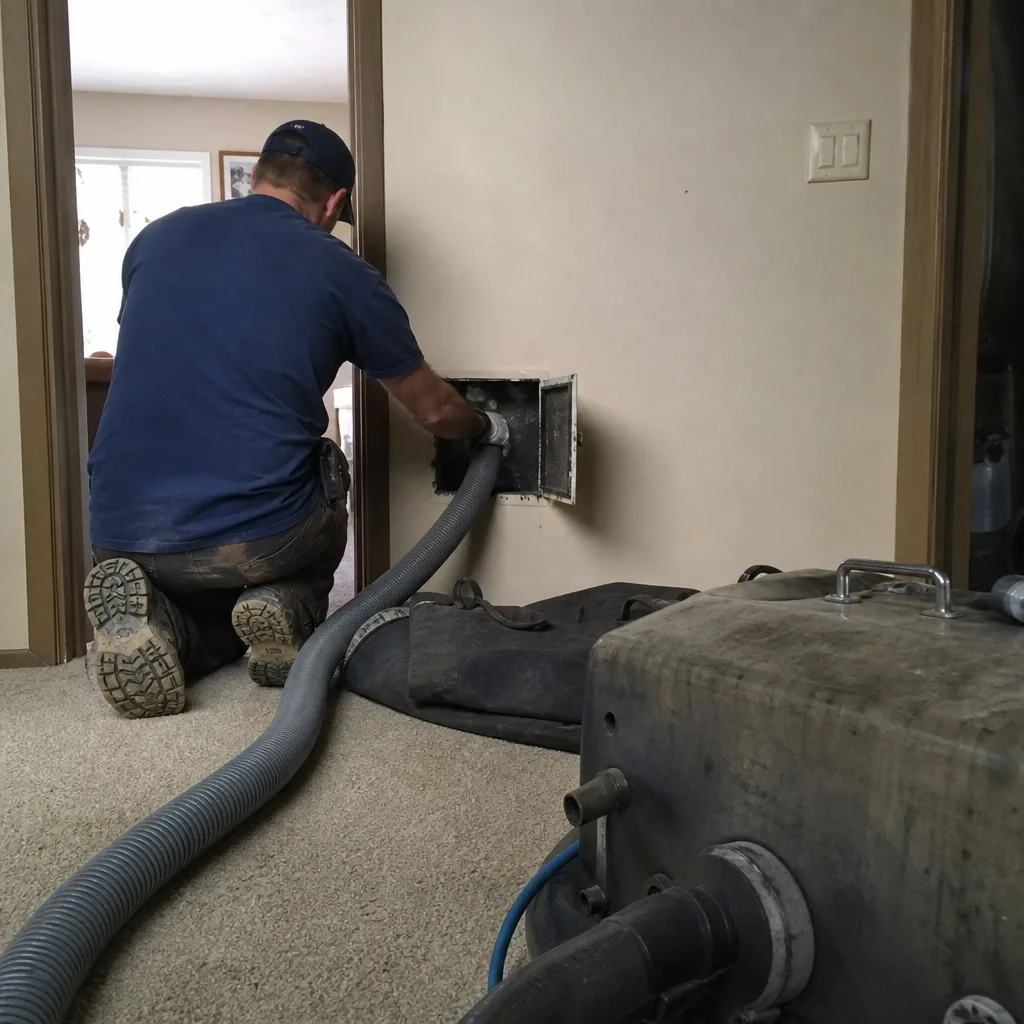 Before
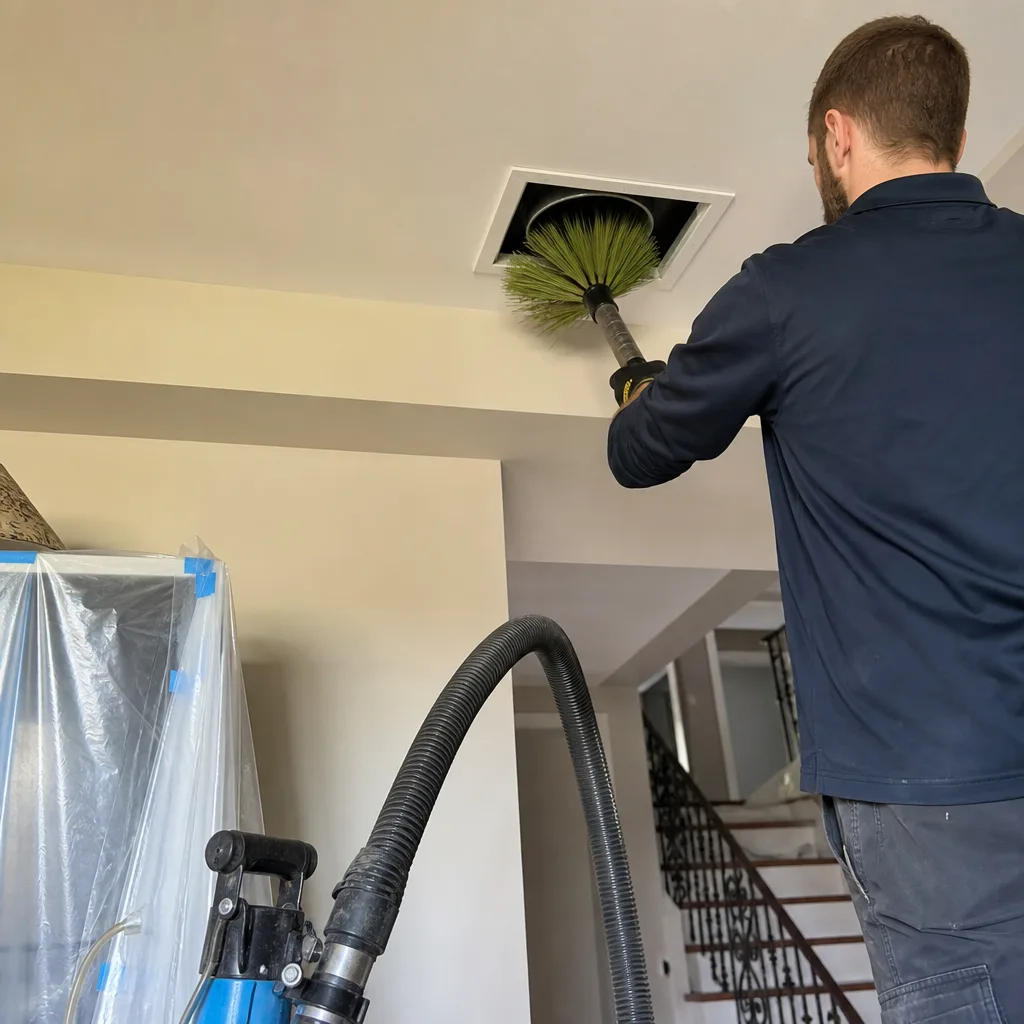 After
AfterAir Duct Cleaning Permits, Codes & Inspections in IL: What You Need to Know
If a technician finds a disconnected duct run in your Northbrook crawlspace and reconnects it without pulling a mechanical permit, the work may not be code-compliant - and that becomes your problem if you sell the house or file an insurance claim. Most Illinois homeowners assume air duct cleaning operates in a regulatory gray zone, which is half true: cleaning itself is unregulated, but the repairs and modifications that cleaning often uncover fall under state and local mechanical codes with real enforcement teeth. In this guide, we’ll draw the exact line between no-permit cleaning and permit-triggering repair work, explain how to verify a contractor’s permit compliance, and show you what unpermitted duct work can cost during a home sale in Northbrook’s inspection-heavy market. For related reading, see our Complete Guide to Air Duct Cleaning in Northbrook.
Quick Answer
Air duct cleaning - the removal of debris from existing ductwork using negative-pressure extraction - does not require a permit anywhere in Illinois. However, duct repair, replacement, or modification that alters the HVAC system’s airflow capacity, materials, or routing typically requires a mechanical permit from your local building department. In Northbrook, the Village’s Building & Inspections Department issues these permits and conducts inspections for all mechanical work beyond routine maintenance.
Table of Contents
- Cleaning vs. Repair: Where the Permit Line Actually Is
- What Is a Mechanical Permit, and When Do Duct Repairs Need One?
- Northbrook-Specific Permit Rules and How to Verify Them
- Flexible Duct Replacement: The Most Common Post-Cleaning Upsell
- The Liability Scenario: Unpermitted Work Discovered During a Home Sale
- How to Verify Your Contractor Is Pulling Permits When Required
- Common Mistakes to Avoid
- When to Call a Professional
- Frequently Asked Questions
- The Bottom Line
BeforeAfterCleaning vs. Repair: Where the Permit Line Actually Is
The Illinois Plumbing, Heating, and Air Conditioning Contractors Act (225 ILCS 320) governs who can perform HVAC work, but it delegates permit and inspection authority to municipal building departments. This creates a two-layer system: state law sets the licensing threshold, while Northbrook and other local jurisdictions determine which specific tasks trigger permit requirements.
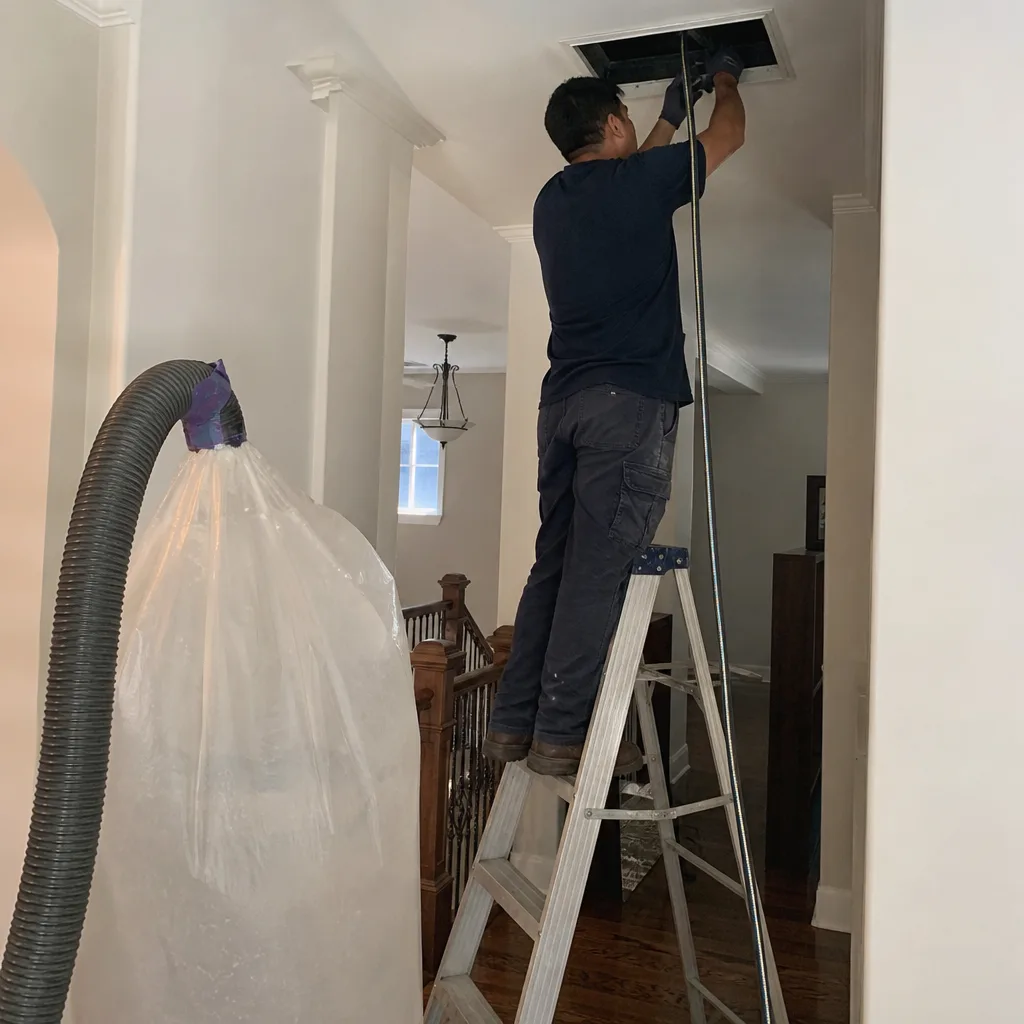
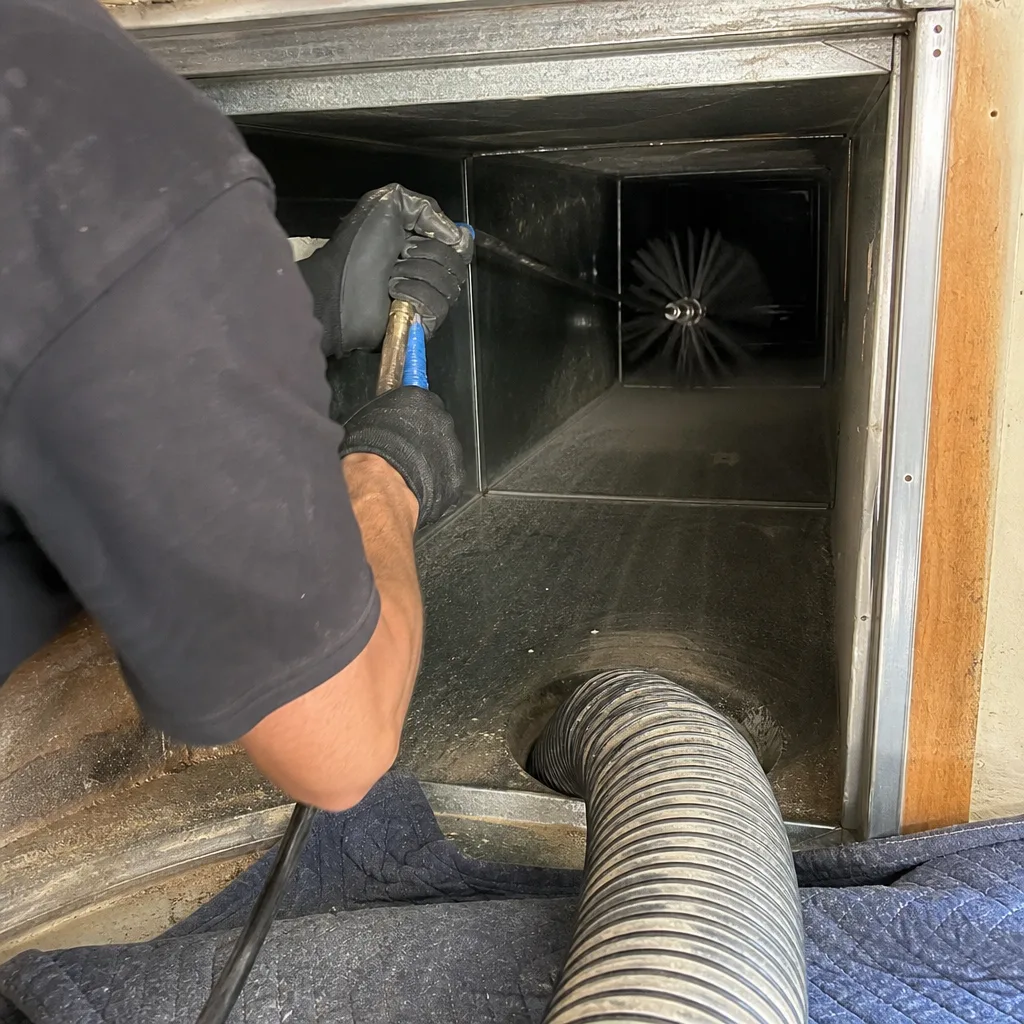
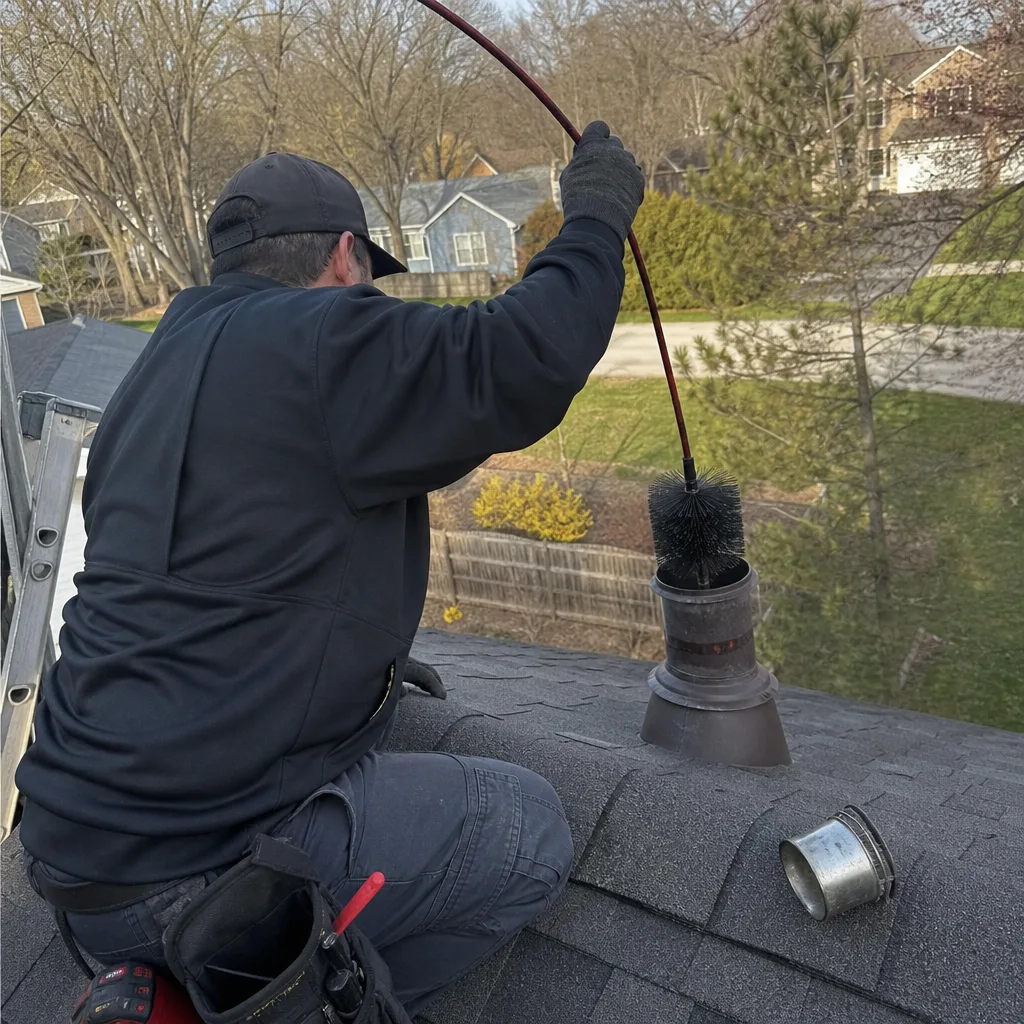
Cleaning (no permit required): Negative-pressure extraction, register and grille removal for access, agitation of debris with mechanical brushes, and sanitizing treatments applied to existing duct surfaces. These are maintenance activities that don’t alter the system’s design, materials, or capacity. At CleanRun, our standard Air Duct Cleaning in Northbrook includes Rotobrush agitation and Nikro negative-pressure collection - equipment that cleans without modifying anything.
Repair and modification (permit typically required): Reconnecting disconnected duct runs, replacing sections of rigid or flexible duct, sealing plenum leaks with permanent materials, altering duct routing, upsizing or downsizing duct diameter, and any work that requires cutting into structural elements to access ductwork. These activities change the system’s engineered airflow or materials and fall under mechanical code.
The gray zone sits in the middle. A technician might:
- Reconnect a fallen flexible duct with a zip tie (temporary maintenance, no permit)
- Reconnect the same duct with a permanent clamp and mastic seal (repair, permit required)
- Seal a register boot with foil tape (maintenance, no permit)
- Replace a corroded register boot (repair, permit required)
The distinction matters because unpermitted repair work, even minor, can create title and insurance issues. In Northbrook’s 60062 and 60065 zip codes, where median home values exceed $600,000 and buyers routinely order pre-sale inspections, unpermitted mechanical work shows up as a flagged deficiency that sellers must remedy or disclose.
We’ve documented this scenario repeatedly. In 2019, a homeowner in the Wescott neighborhood hired a cut-rate cleaner who “fixed” a disconnected return duct in the crawlspace without a permit. Four years later, the buyer’s inspector noted the repair, the seller had to pull a retroactive permit ($175 plus $350 for the inspection), and the original contractor was long gone. The work itself was fine. The documentation was missing.
What Is a Mechanical Permit, and When Do Duct Repairs Need One?
A mechanical permit is the building department’s authorization to install, alter, or repair HVAC components. Unlike electrical or plumbing permits, mechanical permits are less familiar to homeowners because HVAC systems are largely hidden. But the permit serves the same function: it triggers an inspection by a certified mechanical inspector who verifies that the work meets the Illinois Energy Conservation Code and the International Mechanical Code (IMC) as adopted locally.
Work that triggers a mechanical permit in Illinois:
- Duct replacement exceeding 10 linear feet - Most jurisdictions, including Northbrook, use this threshold. Replacing a 6-foot flexible duct branch does not require a permit. Replacing a 15-foot main trunk line does.
- Any rigid duct modification - Galvanized steel or fiberglass duct board work almost always requires a permit because it involves permanent connections to the plenum (the central distribution box) or air handler.
- Plenum repair or replacement - The plenum is the sheet-metal chamber that connects your air handler to the duct network. Any work here affects system static pressure and requires inspection.
- Duct sealing that involves disassembly - If a technician must cut open a duct to access an internal leak, then reassemble it, that’s repair work, not maintenance.
- Adding, removing, or relocating registers or returns - This changes the system’s designed airflow pattern and requires engineering verification.
- Installing inline filtration or UV sanitizing equipment - These devices alter system resistance and electrical load; they require both mechanical and electrical permits.
Work that does NOT trigger a mechanical permit:
- Cleaning existing ductwork with brushes, air whips, or negative-pressure extraction
- Applying EPA-registered sanitizing agents to interior duct surfaces
- Replacing register grilles or covers (the visible finish piece, not the boot behind the wall)
- Temporary reconnection of fallen duct sections with non-permanent fasteners
- Filter replacement or upgrading to a higher-MERV filter within existing rack capacity
The IMC’s Section 602 specifically addresses duct construction and installation standards, including material specifications, support requirements, and minimum insulation R-values for climate zones. Northbrook sits in IECC Climate Zone 5A, which requires R-6 insulation on ductwork in unconditioned spaces. A permit inspection verifies this standard is met. Without the permit, a homeowner has no independent verification that the replacement duct in their unheated attic meets this requirement.
Our crews carry Rotobrush and Nikro equipment specifically because these tools clean without altering duct construction. When we find damage that requires repair, we document it with photographs - part of our standard Documented Photo Record - and explain whether the scope crosses into permit territory before any work proceeds. Haven Standard Clause 1 requires a written price before work starts; if that written scope includes permit-required work, the permit cost and timeline appear as line items.
Northbrook-Specific Permit Rules and How to Verify Them
The Village of Northbrook adopts the International Mechanical Code with local amendments, administered by the Building & Inspections Department at 1225 Cedar Lane. Northbrook’s specific procedures differ from neighboring jurisdictions in several ways that affect duct work.
Northbrook mechanical permit specifics:
- Permit application: Available online through the Village’s Citizen Access Portal or in person. Homeowners can pull their own permits for work on their primary residence; contractors must be registered with the Village and carry current Illinois HVAC contractor licensure.
- Same-day review: Simple mechanical permits for residential duct repair are typically reviewed same-day if submitted before 2 PM.
- Inspection scheduling: Call (224) 351-9772 or request online. Inspections occur within 24-48 hours for mechanical work. The inspector verifies duct material, support spacing, insulation, and return-air adequacy.
- Fee structure: Base mechanical permit fee plus valuation-based additions. A typical residential duct repair permit runs $150-$300 depending on scope. Re-inspection fees apply if the work fails initial inspection.
- Certificate of Occupancy trigger: In Northbrook, any mechanical permit on a home sale requires final inspection approval before closing can proceed if the buyer’s lender or attorney flags it.
Northbrook’s climate creates specific duct stressors that make permit-aware repair more important. The village’s location near the Lake Michigan thermal boundary means wider temperature swings than inland suburbs, with winter lows regularly hitting -10°F and summer humidity pushing 85%. Ductwork in unconditioned attics and crawlspaces experiences more expansion-contraction cycling here than in downstate Illinois. This accelerates seam failure and insulation degradation - the exact conditions that prompt post-cleaning repair recommendations.
We’ve photographed collapsed flexible duct in Northbrook’s older ranch homes near Techny Basin, where crawlspace moisture combines with freeze-thaw cycles to degrade wire-reinforced flex duct within 10-12 years. The repair requires permit-triggering replacement, not just cleaning. Homeowners who understand this distinction before the technician arrives make better decisions about scope and budget.
To verify permit status on any active or completed job in Northbrook:
- Visit the Village’s Citizen Access Portal and search by address
- Call Building & Inspections at (224) 351-9772 with the permit number
- Request a copy of the final inspection approval letter for your records
Retain this documentation with your home records. It transfers to the next owner and eliminates disclosure ambiguity.
Flexible Duct Replacement: The Most Common Post-Cleaning Upsell
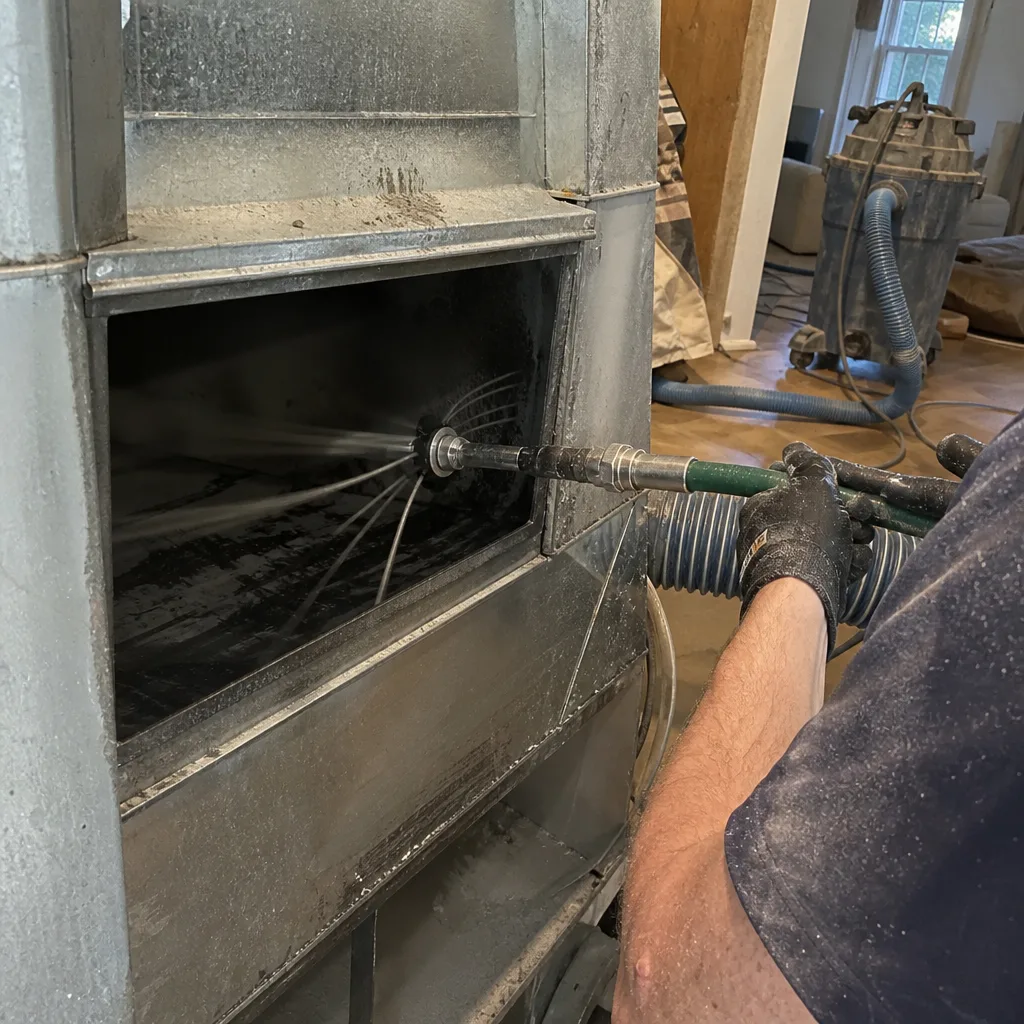
Flexible duct - the ribbed, wire-reinforced tubing common in branch lines - degrades faster than rigid metal duct. During cleaning, technicians routinely find collapsed, torn, or internally lined flex duct that needs replacement. This is where the permit question becomes urgent, because flexible duct replacement is the most frequently upsold add-on in the industry, and the permit status is often left unmentioned.
When flexible duct replacement requires a permit:
| Scenario | Permit Required? | Why |
|---|---|---|
| Replacing less than 10 linear feet of branch flex duct with same size | Usually no | Maintenance-level repair, no system alteration |
| Replacing 10+ linear feet of flex duct | Yes | Exceeds Northbrook’s typical maintenance threshold |
| Replacing flex duct with different diameter | Yes | Alters designed airflow (CFM) and static pressure |
| Replacing flex duct with rigid metal duct | Yes | Material change affects system performance and code compliance |
| Any flex duct connected to plenum or air handler | Yes | Direct connection to central distribution component |
| Adding insulation wrap to existing uninsulated flex duct | Varies | If original installation predates current code, may trigger full upgrade |
The critical detail: even “same-size replacement” can require a permit if the original installation itself was unpermitted or non-compliant. Northbrook’s building records for homes built before 1990 are incomplete, and many flex duct installations from the 1970s-1980s predate modern mechanical codes. A technician replacing 8 feet of 1978 flex duct with modern equivalent may discover the original was never permitted, triggering a requirement to bring the entire accessible system to current code.
This is not a scam. It’s code enforcement doing its job. But homeowners should know the possibility exists before authorizing work.
Our approach at CleanRun: when camera inspection shows flex duct damage, we photograph the condition, measure the linear footage, and note the connection points. The written scope specifies whether the replacement triggers a permit, includes permit fees if applicable, and identifies the licensed HVAC contractor who will perform permit-required work. We do not perform permit-triggering repairs ourselves; we coordinate with licensed partners and include their documentation in your job record. This maintains the integrity of our CleanRun Air Duct Cleaning Northbrook home service model - documented, accountable, and code-compliant.
Equipment matters here too. We use Abatement Technologies and Honeywell inspection cameras to document flex duct condition before recommending replacement. These images become part of your permanent photo record, showing exactly what the technician saw and why replacement was advised.
The Liability Scenario: Unpermitted Work Discovered During a Home Sale
Northbrook’s real estate market moves at a premium pace, and buyers arrive prepared. Pre-sale inspections are standard above $500,000, and attorneys for both sides scrutinize municipal records. Unpermitted mechanical work creates three specific liabilities:
1. Disclosure obligation. Illinois residential disclosure forms ask directly whether the seller is aware of “any work performed without required permits.” Answering “no” when unpermitted duct work exists is material misrepresentation. Answering “yes” triggers buyer negotiation or walkaway.
2. Insurance claim denial. If HVAC-related damage occurs - water from a clogged condensate line, fire from an overheated fan motor - and investigation reveals unpermitted duct modifications, insurers may deny coverage based on policy exclusions for unpermitted work.
3. Retroactive permitting cost. Northbrook allows retroactive permits, but the process is punitive by design. The homeowner must:
- Apply for the permit with full scope disclosure
- Pay double the standard fee as a penalty
- Open walls or ceilings as required for inspector access
- Remedy any code deficiencies found, even if the original work was functionally sound
- Schedule and pass final inspection
We’ve seen retroactive permitting for a simple flex duct replacement cost $1,200-$2,800 in Northbrook, compared to $400-$700 for the same work done with an original permit. The difference is wall repair, re-inspection fees, and the penalty multiplier.
One case from 2022: A homeowner in the Sunset Ridge area had a “duct cleaning” company replace 18 feet of main trunk flex duct and relocate a return register. No permit was pulled. Two years later, the buyer’s inspector flagged the return relocation (visible as a patched wall section). The seller had to pull a retroactive permit, open the wall for inspection, discover the duct was supported with wire hangers at 6-foot intervals instead of the required 4-foot maximum, and pay $2,100 to bring it to code. The original contractor had dissolved its LLC.
The written price before work starts - Haven Standard Clause 1 - protects against this by forcing explicit scope definition. If a contractor won’t put “permit included” or “permit not required” in writing, that’s information.
How to Verify Your Contractor Is Pulling Permits When Required
Most homeowners don’t know to ask, and some contractors rely on that. Here’s the verification process:
- Ask before booking: “Will this scope require a mechanical permit, and who pulls it?” The answer should be specific, not “we’ll take care of everything.” If the scope includes any repair or modification, the contractor should identify the permit requirement before arriving.
- Request the permit number: For any permit-required work, the contractor must provide the permit number before starting. In Northbrook, permits are issued within 24 hours of application. No permit number means no permit.
- Verify online: Check the Village of Northbrook Citizen Access Portal with the permit number. It should show the scope, contractor name, issue date, and inspection status.
- Confirm inspection scheduling: Ask when the rough and final inspections are scheduled. Attend if possible. The inspector works for you, not the contractor.
- Obtain final approval: Request the signed inspection card or digital approval certificate. File it with your home records.
- Check contractor registration: Northbrook requires contractor registration. Verify at (224) 351-9772 that the company is registered and in good standing.
Red flags that suggest permit avoidance:
- “Permits aren’t required for this kind of work” - when the scope clearly involves replacement or modification
- “We pull permits on bigger jobs” - the threshold is the threshold; there’s no informal size exemption
- “The homeowner pulls the permit to save money” - legitimate contractors pull their own permits; pushing this to homeowners is often a licensing dodge
- Cash-only pricing with no written scope - Haven Standard Clause 1 exists precisely because this pattern predicts problems
Our crews are background-checked and uniformed under Haven Standard Clause 3: Verified Crews, identified by name before arrival. We carry our Illinois HVAC contractor license number and Northbrook registration. When we encounter permit-required conditions during HVAC Cleaning in Northbrook, we stop, document, and explain the pathway forward - including referral to a licensed partner if the repair exceeds our cleaning scope.
Common Mistakes to Avoid
- Assuming “cleaning” covers everything the technician does. If the scope shifts from debris removal to duct repair mid-visit, permit requirements may activate. Get the revised scope in writing before authorizing additional work.
- Accepting verbal assurance that permits “aren’t a big deal.” In Northbrook, they are. The Village’s active enforcement and complete digitization of records means unpermitted work gets discovered.
- Hiring based on lowest price without verifying permit inclusion. A $199 “whole house special” that discovers $800 of “needed repairs” without permit costs is a predictable pattern. The low price excludes compliance costs that become your liability later.
- Not requesting photo documentation of claimed damage. If a technician says your flex duct is torn, you should see the tear from a camera before authorizing replacement. Our Documented Photo Record includes these images as standard; competitors who resist photography are revealing something.
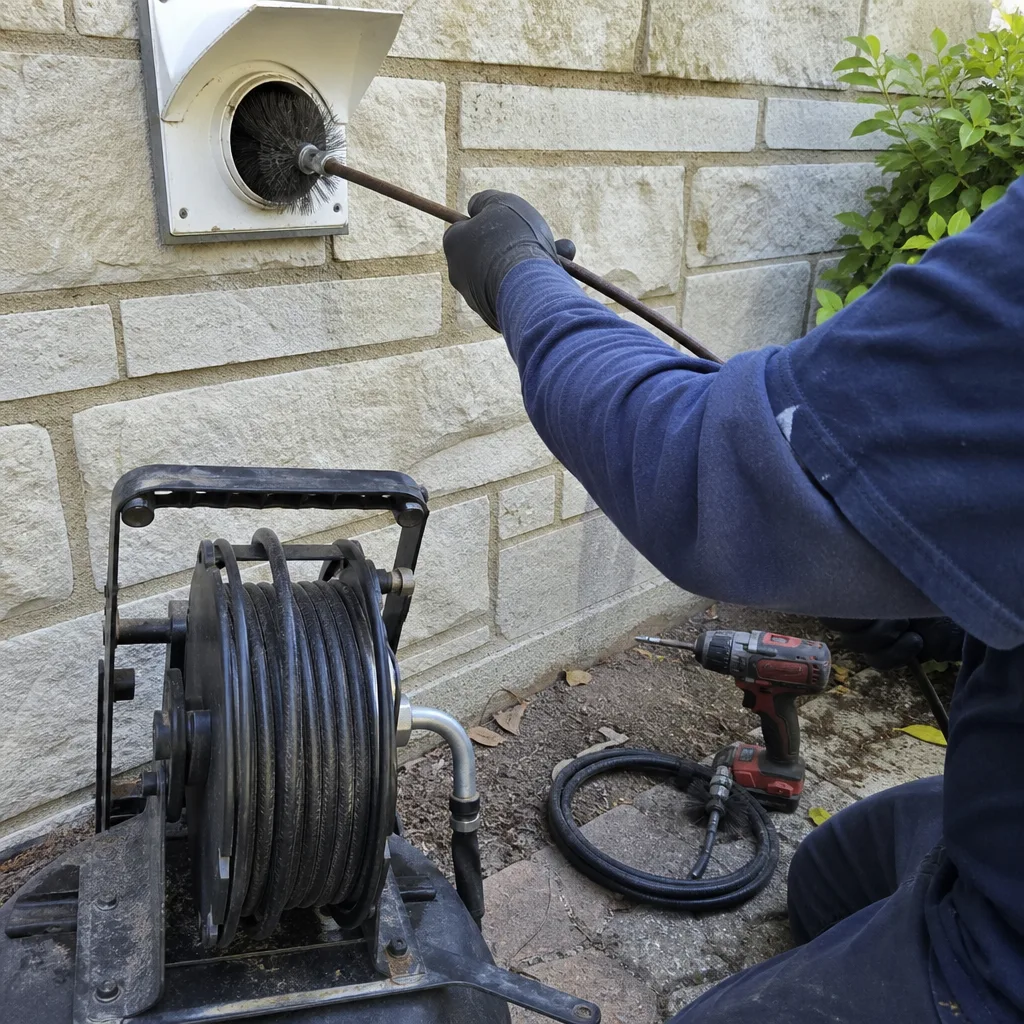
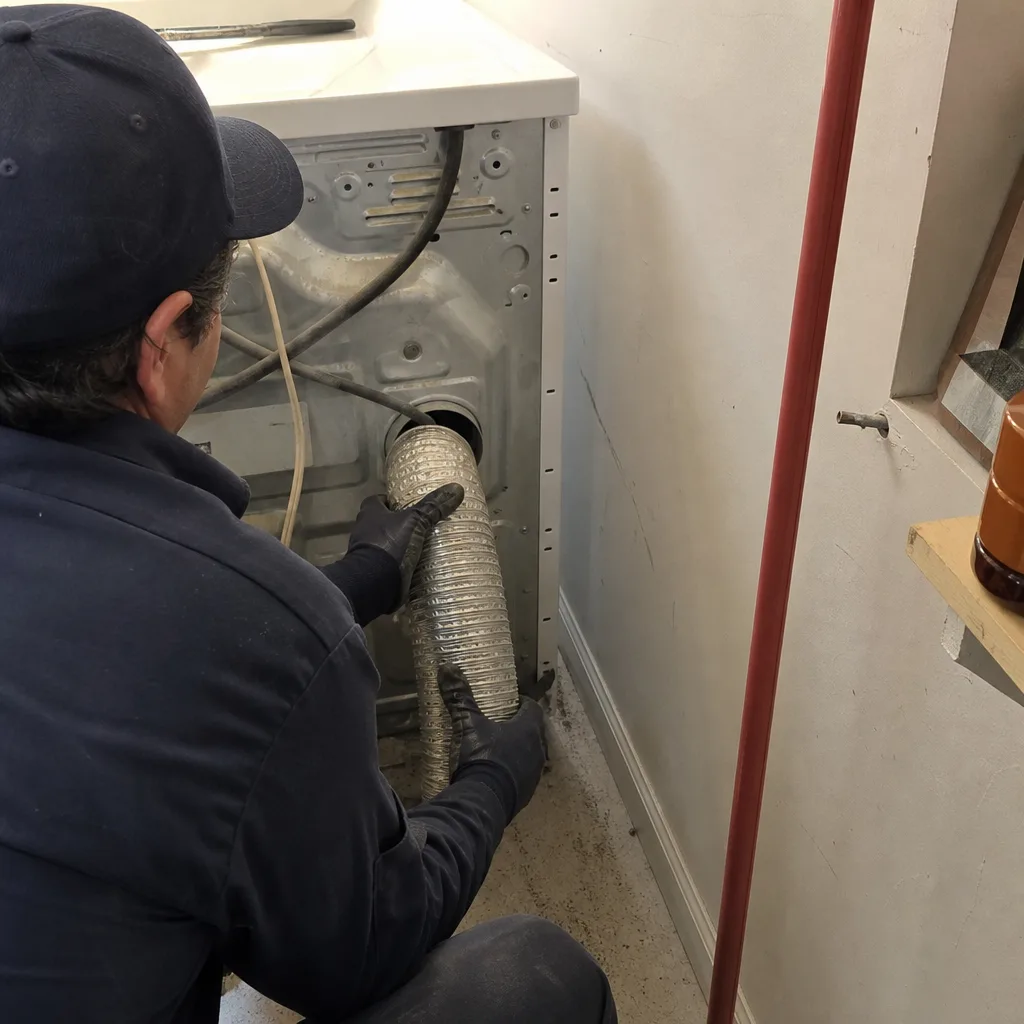
- Ignoring the distinction between duct cleaning and dryer vent cleaning. Dryer Vent Cleaning in Northbrook has its own code considerations - fire safety clearances, termination requirements, material restrictions - but it’s a separate trade with different permit thresholds. Don’t assume your duct cleaner’s expertise transfers.
- Failing to retain documentation. Permits, inspection approvals, and photo records belong in your permanent home file, not the contractor’s truck. You’ll need them at sale time.
- Authorizing emergency repairs without permit verification. “Your duct is disconnected and your furnace is overheating” creates pressure. Even in urgency, a 10-minute permit check saves weeks of retroactive hassle.
When to Call a Professional
Call a licensed professional when your ductwork needs anything beyond surface cleaning: disconnected runs, visible corrosion, pest damage, moisture staining, or airflow imbalance between rooms. In Northbrook’s climate, these conditions worsen faster than in milder regions, and the cost of delayed repair typically exceeds the cost of prompt, permitted correction.
CleanRun Air Duct Cleaning services in Northbrook offers free estimates - call (224) 351-9772. Every estimate includes a written price before work starts, a Documented Photo Record of every duct run, and explicit identification of any permit-required work with referral to licensed partners. Our 365-Day Done Right Promise applies to every job we perform.
Frequently Asked Questions
No. Air duct cleaning - the removal of debris from existing ductwork using brushes, vacuums, or agitation devices - does not require a permit in Northbrook or anywhere in Illinois. Call (224) 351-9772 for a free estimate on cleaning; we’ll identify any permit-triggering repairs before work begins.
Residential mechanical permits for duct repair typically cost $150-$300 in Northbrook, depending on project valuation. Re-inspection fees add $100-$150 if the initial inspection fails. Retroactive permits, required for previously unpermitted work, cost double the standard fee plus potential wall-opening and repair expenses.
In Illinois, duct repair that alters or replaces HVAC system components requires a state HVAC contractor license (225 ILCS 320). Many duct cleaning companies lack this license and legally cannot perform permit-required repairs. Always verify licensure before authorizing repair work; CleanRun coordinates with licensed partners for permit-required scope and includes their credentials in your job documentation.
The buyer’s attorney will likely require retroactive permitting, or the buyer may negotiate a credit equal to estimated remediation cost. In Northbrook’s market, this typically ranges from $1,200-$2,800 for simple flex duct replacement, escalating if wall or ceiling opening is required for inspector access. Disclosure of known unpermitted work is legally required on Illinois residential disclosure forms.
Yes. Any material change in duct construction - including flex-to-rigid replacement - alters system static pressure and airflow characteristics, triggering mechanical permit requirements. The replacement must also meet current insulation standards for Climate Zone 5A (R-6 minimum in unconditioned spaces).
Search the Village of Northbrook Citizen Access Portal by your address, or call Building & Inspections at (224) 351-9772. Permits remain searchable indefinitely. If no permit appears for work you believe was performed, contact the contractor for documentation; if they cannot produce it, assume the work was unpermitted and consult a licensed professional for evaluation.
The Bottom Line
Air duct cleaning stands alone as an unregulated maintenance activity, but the repairs it frequently uncovers do not. In Northbrook’s code-enforced, inspection-heavy housing market, the line between cleaning and permit-triggering repair is a liability boundary that protects or exposes homeowners depending on whether they understand it. Verify permits explicitly, demand written scope documentation, and retain records permanently. The cost of compliance is modest; the cost of retroactive remediation is not. For cleaning work that stays clearly on the safe side of that line - with documented photo evidence of every duct run and a written price before any equipment starts - CleanRun Air Duct Cleaning Northbrook home service operates under the H.A.V.E.N. Standard with full transparency on permit status for every job.
Written by Tomas Reyes, Owner at CleanRun Air Duct Cleaning Northbrook, serving Northbrook since 2013. Browse our more guides & resources for additional homeowner information.