
Last updated September 23, 2026
Whole-system duct and dryer vent check with before-and-after photos - you see exactly what came out of your vents
That "$99 whole-house special" is a bait ad - the real number appears once they are in your hallway, or the "clean" is a shop-vac at the register. We photograph the inside of your ducts before and after instead.
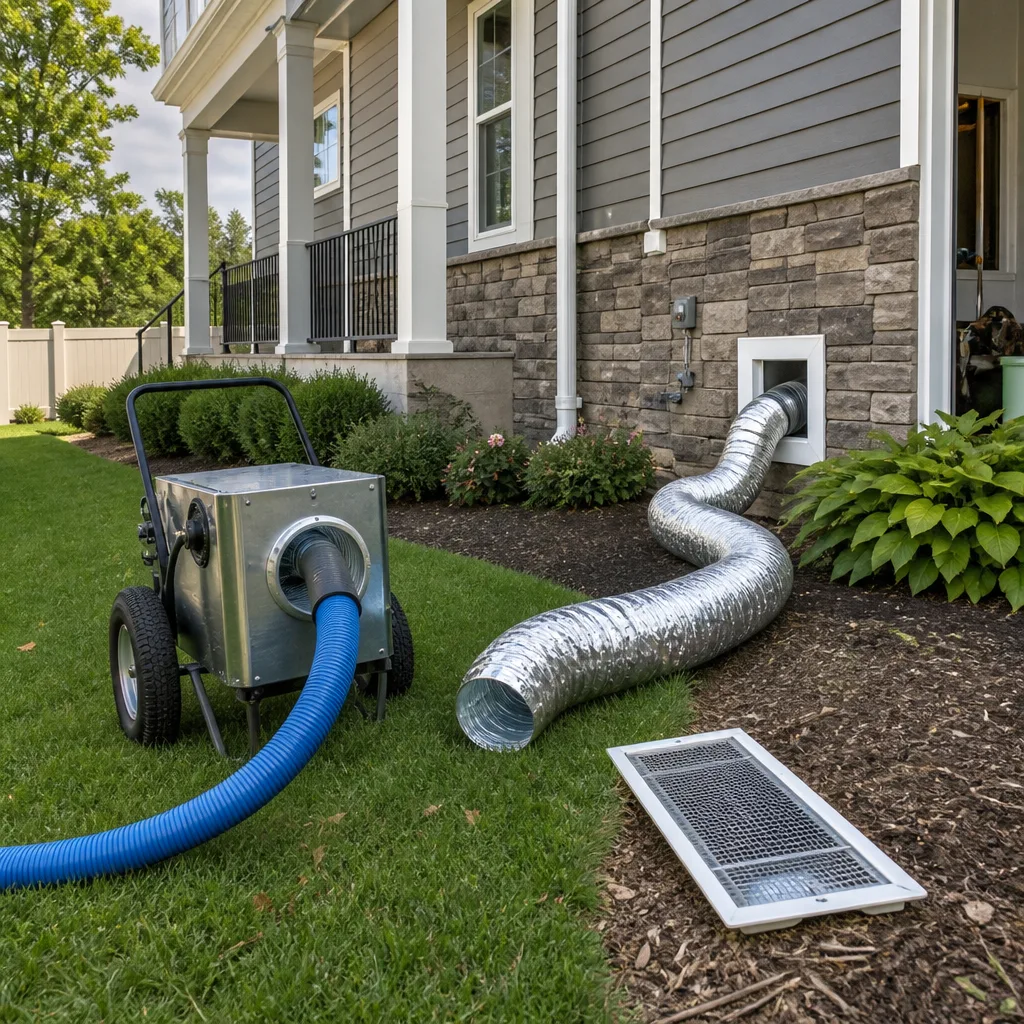
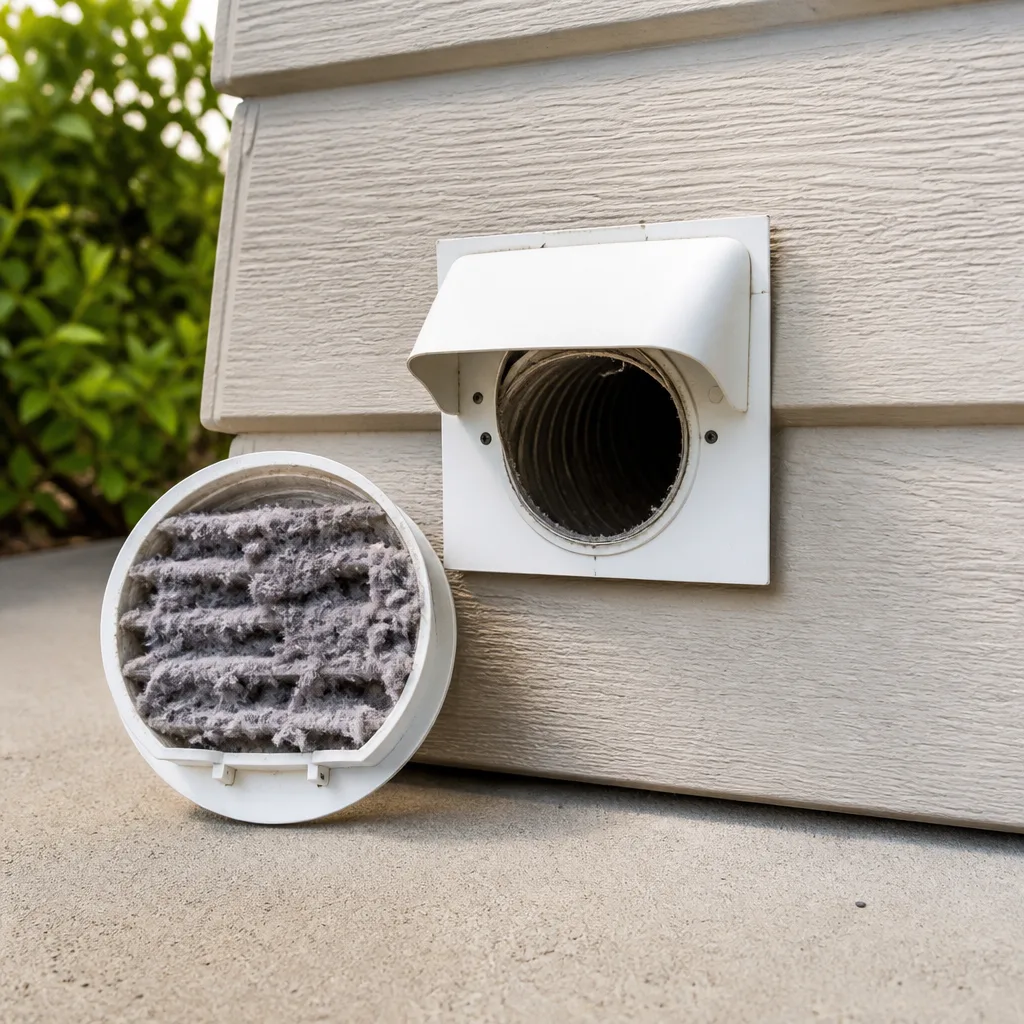
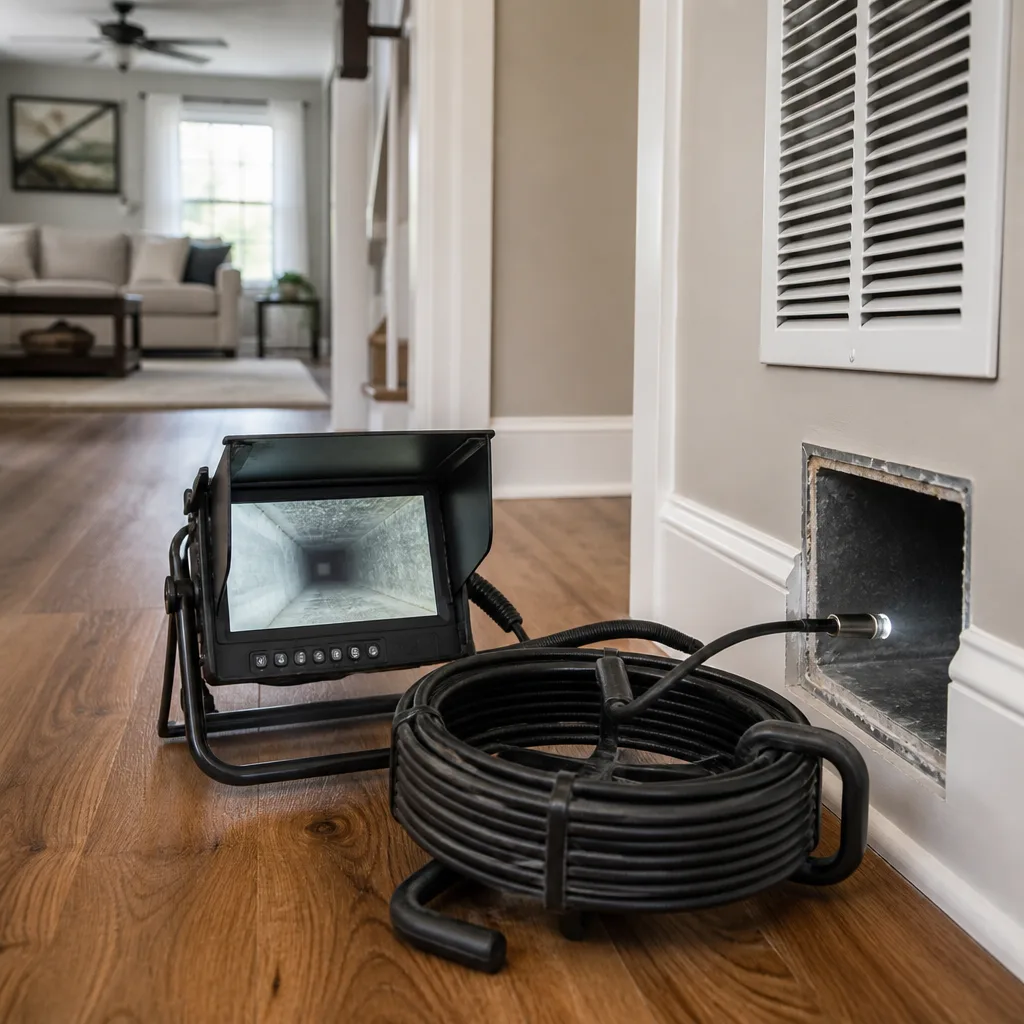
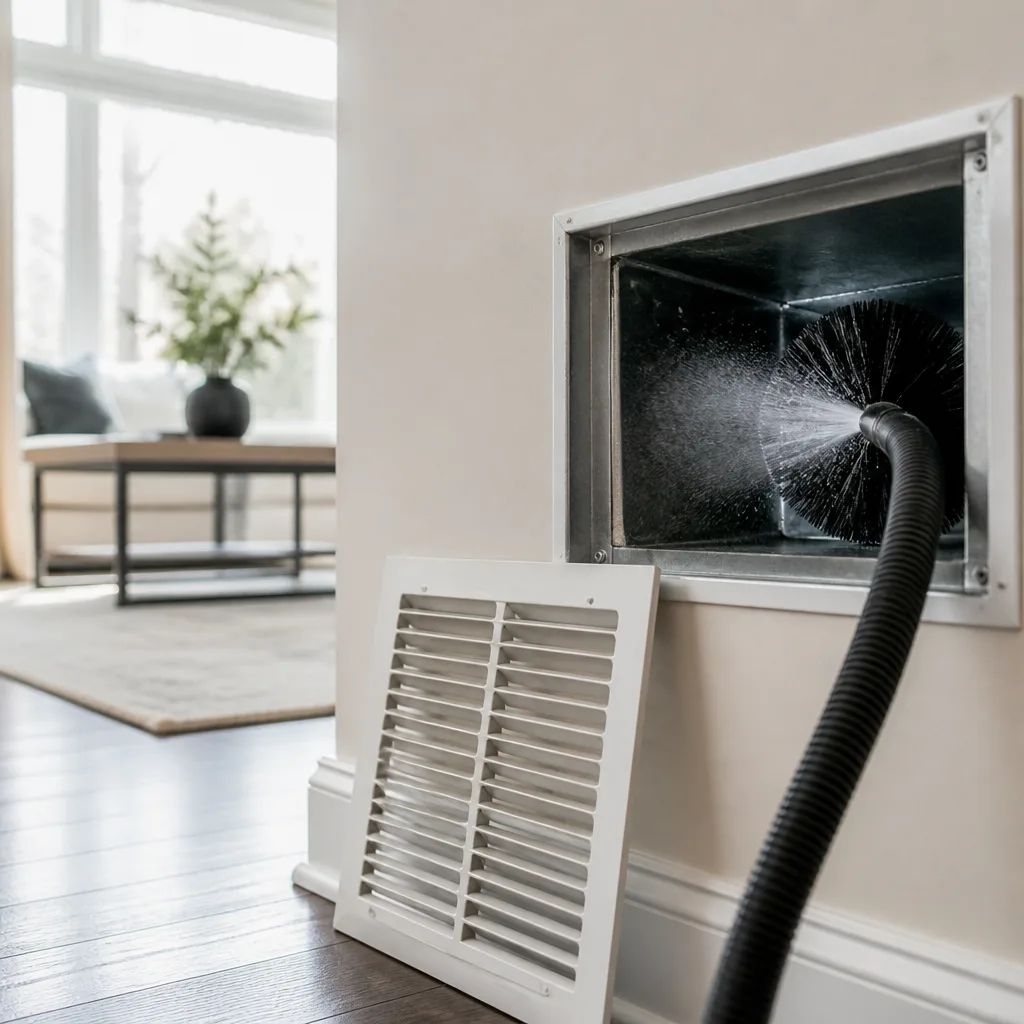
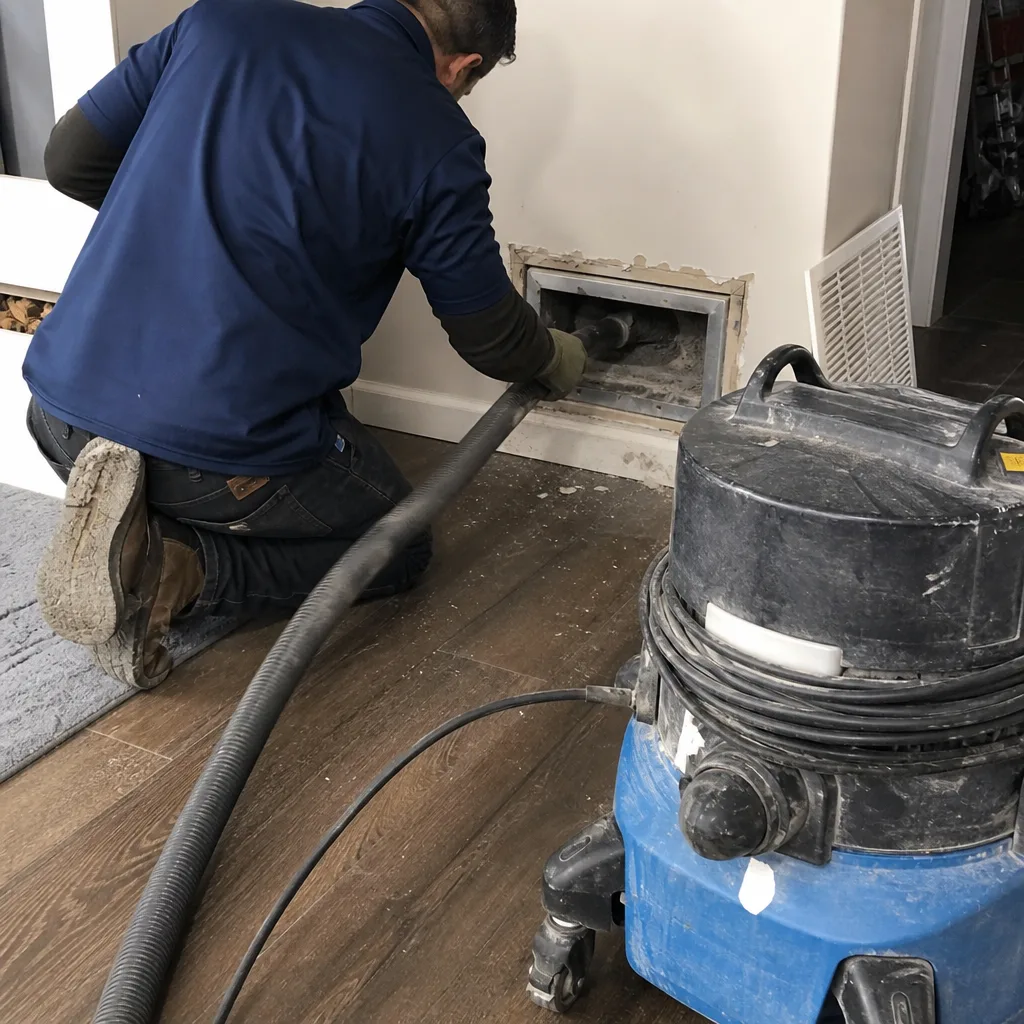 Before
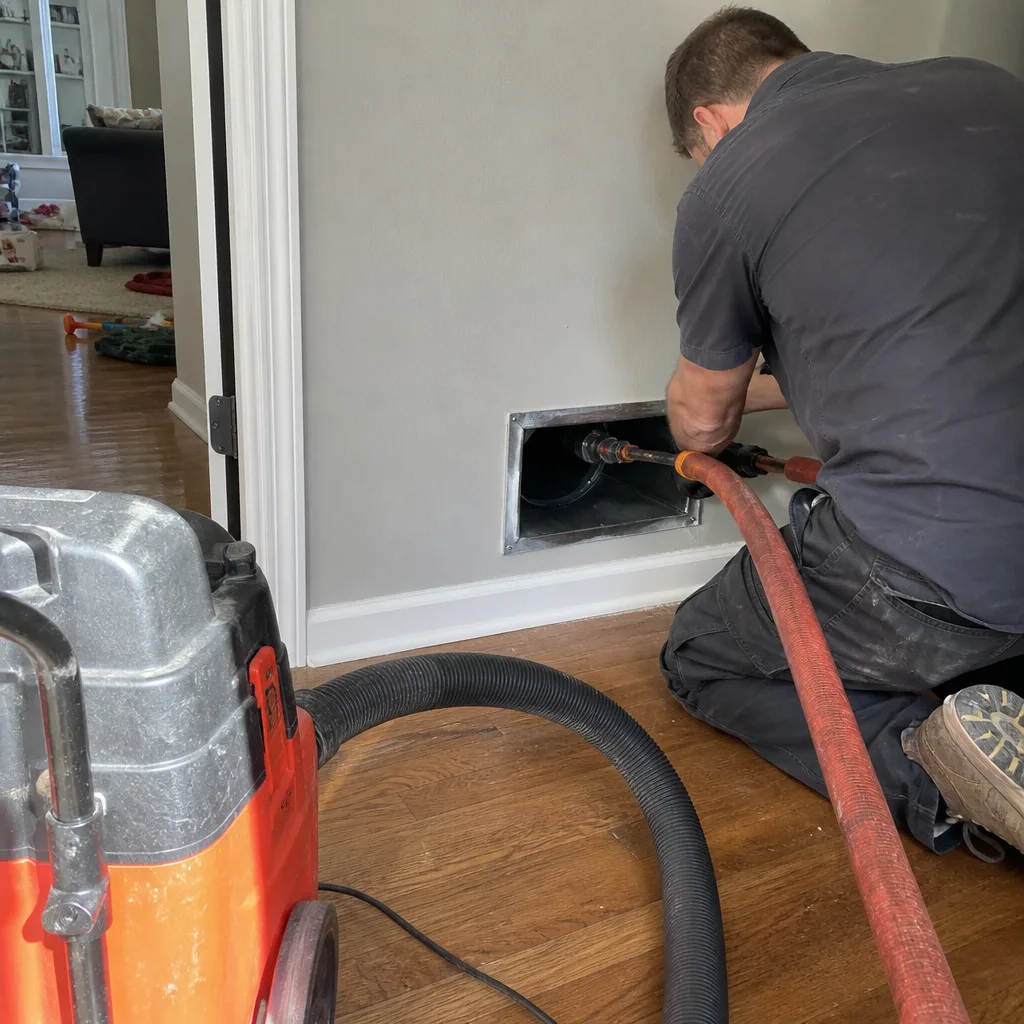 After
After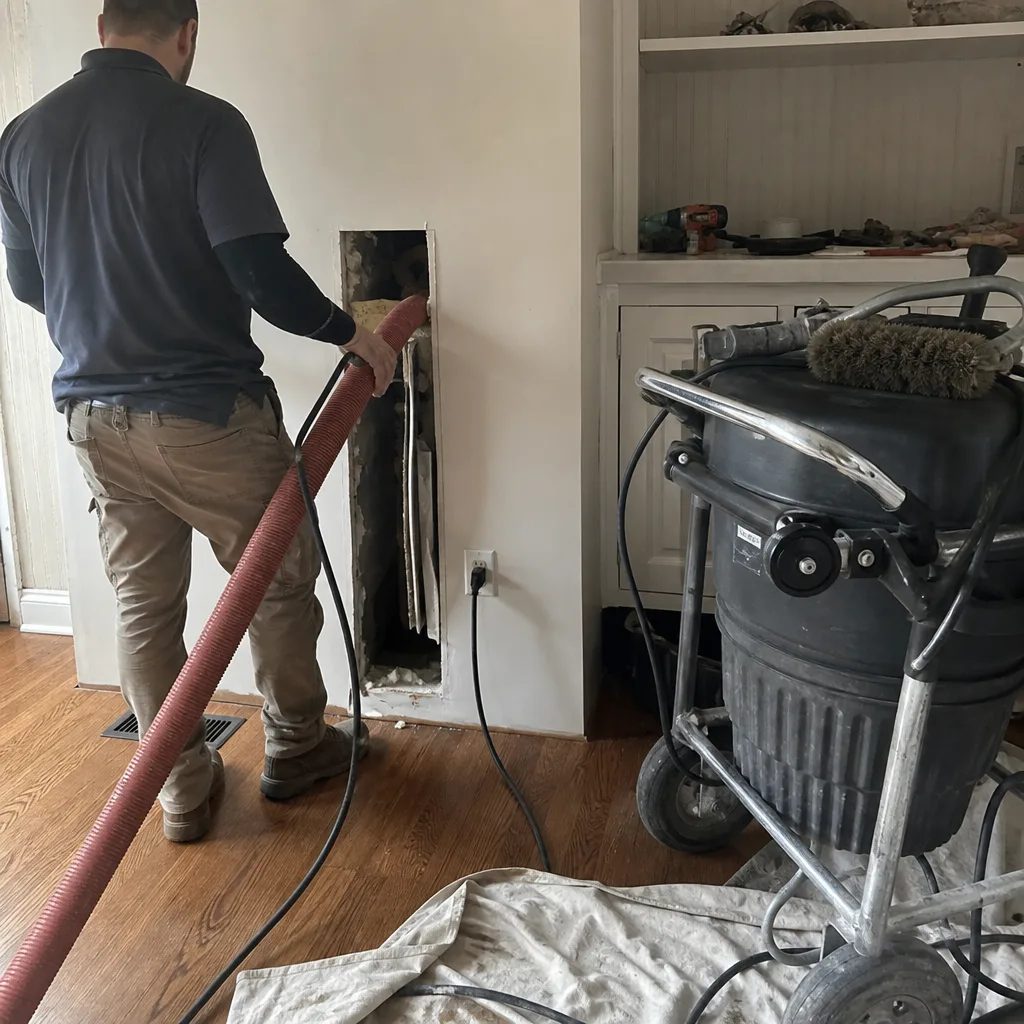 Before
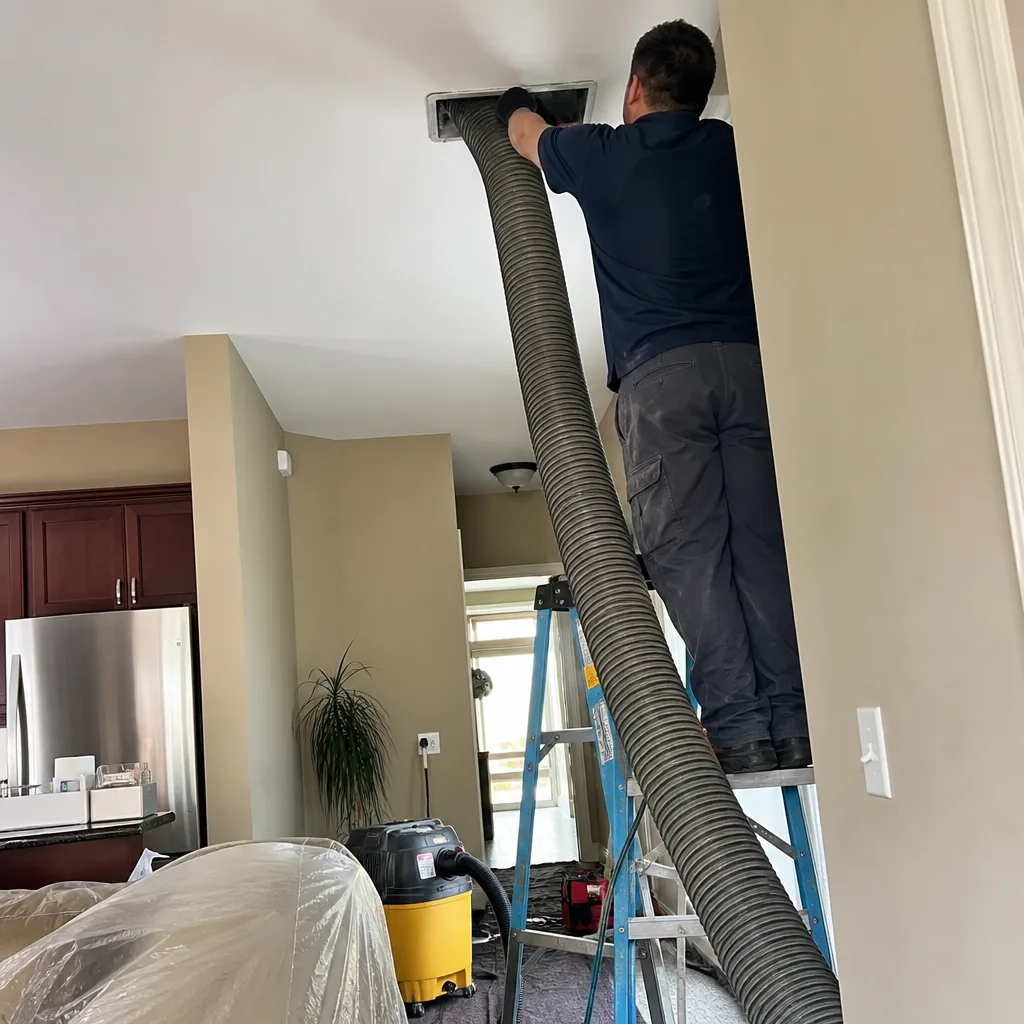 After
After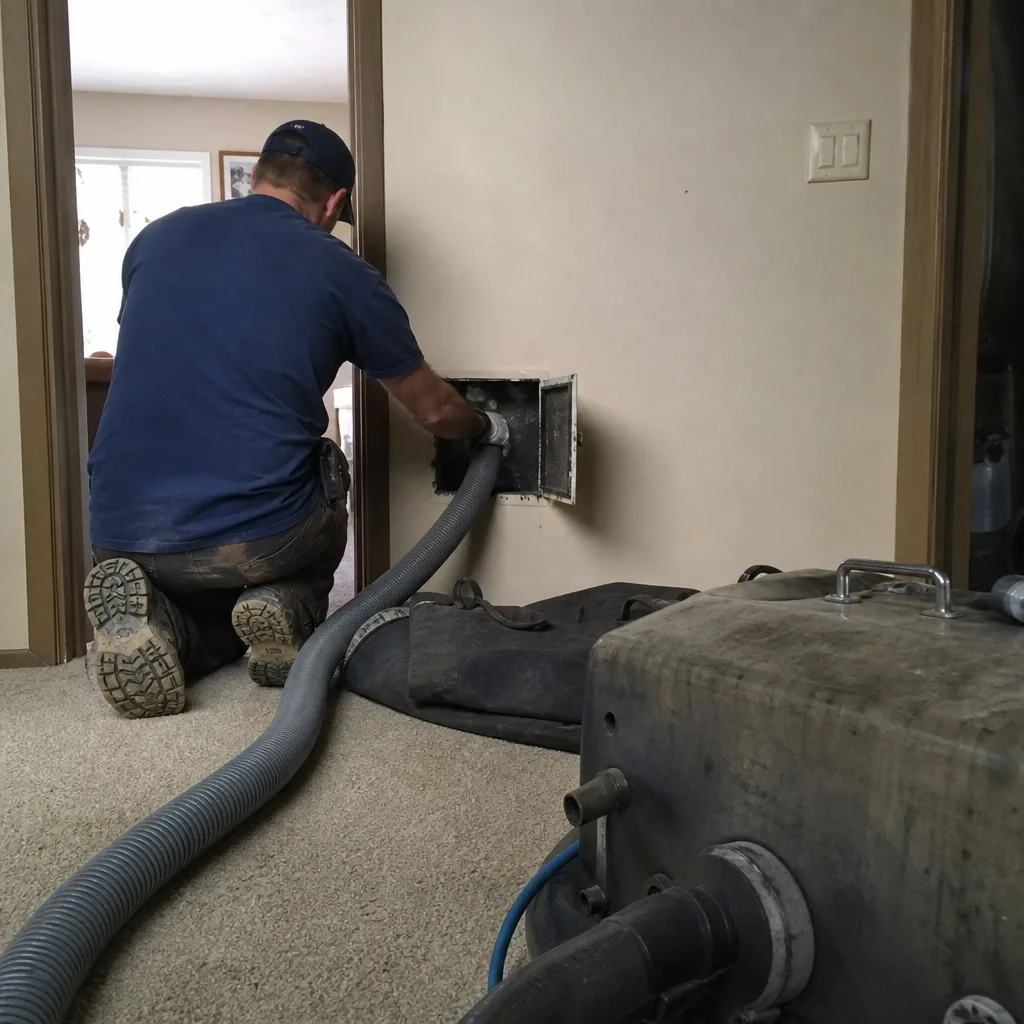 Before
 After
AfterDIY vs Professional Air Duct Cleaning: The Northbrook Homeowner’s Decision Guide
A homeowner in Northbrook with a HEPA shop-vac, a drill, and two free hours can genuinely clean the accessible portions of their supply and return boots. That covers roughly 30-40% of the total duct surface area in a typical suburban home. The real question, and the one most guides skip, is whether that 30-40% is where the contamination actually lives. In this guide, we’ll map exactly what DIY equipment can reach, what professional negative-pressure extraction does differently in mechanical terms, and how to decide which path matches your home’s age, duct material, and last service date. No urgency, no coupon math, just the documented facts we’ve gathered from serving Northbrook homes since 2013.
Quick Answer
Air Duct Cleaning in Northbrook is viable for register grilles, boot interiors, and first-segment duct runs you can see and touch. Professional negative-pressure cleaning is necessary for main trunk lines, panned returns, and any debris beyond the first elbow. For most Northbrook homes built 1960-1995 with original ductwork, DIY maintenance addresses surface dust but leaves the bulk of accumulated debris untouched.
Table of Contents
- What DIY Equipment Can Actually Reach
- What DIY Cannot Reach: The Mechanical Reality
- How Negative-Pressure Source Cleaning Works
- Decision Framework: Home Age, Duct Material, Last Service
- DIY Sanitizing and Antimicrobial Sprays: What They Actually Do
- The Real Cost of DIY vs. Professional in Northbrook
- Common Mistakes to Avoid
- When to Call a Professional
- Frequently Asked Questions
- The Bottom Line
BeforeAfterWhat DIY Equipment Can Actually Reach
Let’s start with what works. A determined Northbrook homeowner with basic tools can accomplish meaningful maintenance in three specific zones.
Register grilles and faceplates. These collect the most visible dust and are the easiest to remove. A screwdriver, warm water with mild detergent, and a soft brush will clean powder-coated steel or plastic grilles without damage. In our experience, grilles in Northbrook’s older ranch and split-level homes, particularly in neighborhoods like Meadow Ridge and Greenbriar, often show a film of fine particulate that wipes away clean. This is genuine maintenance, not theater. Clean grilles improve airflow direction and reduce the immediate recirculation of surface dust.
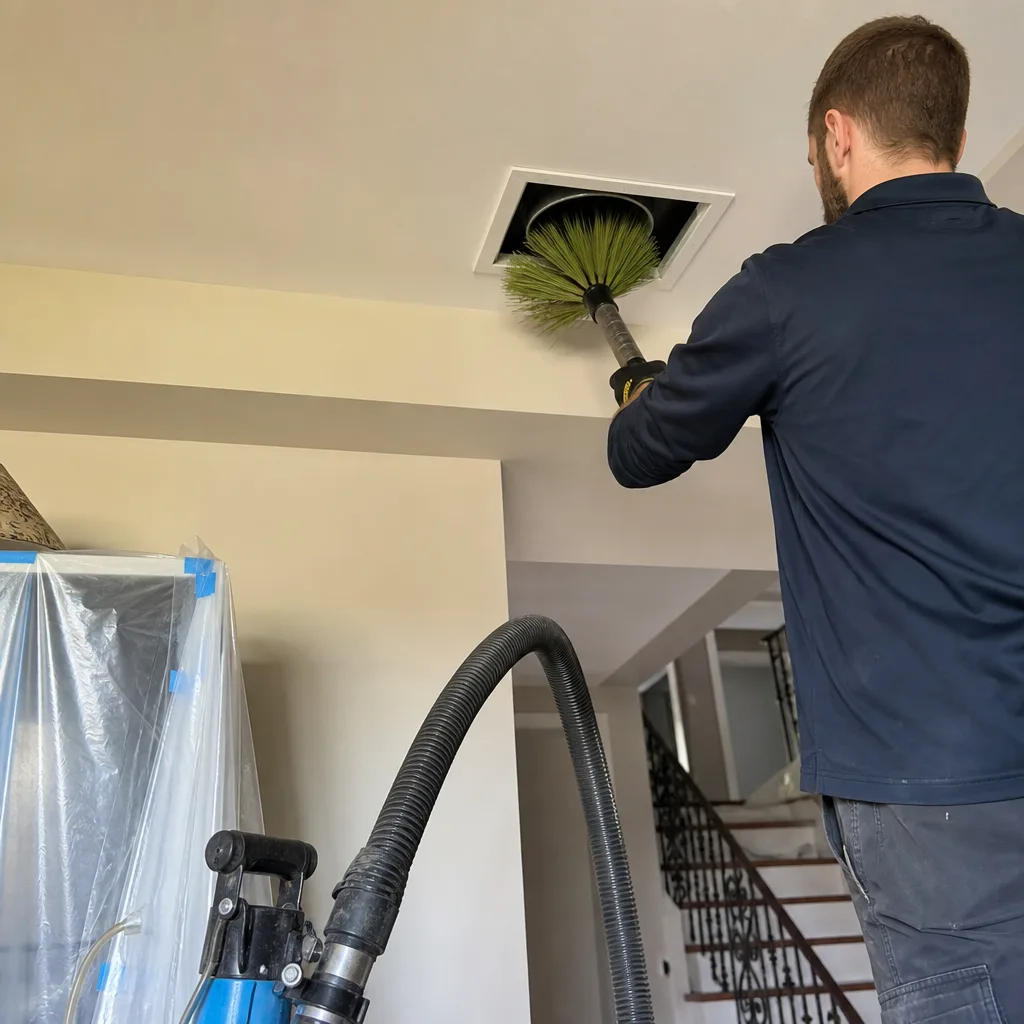
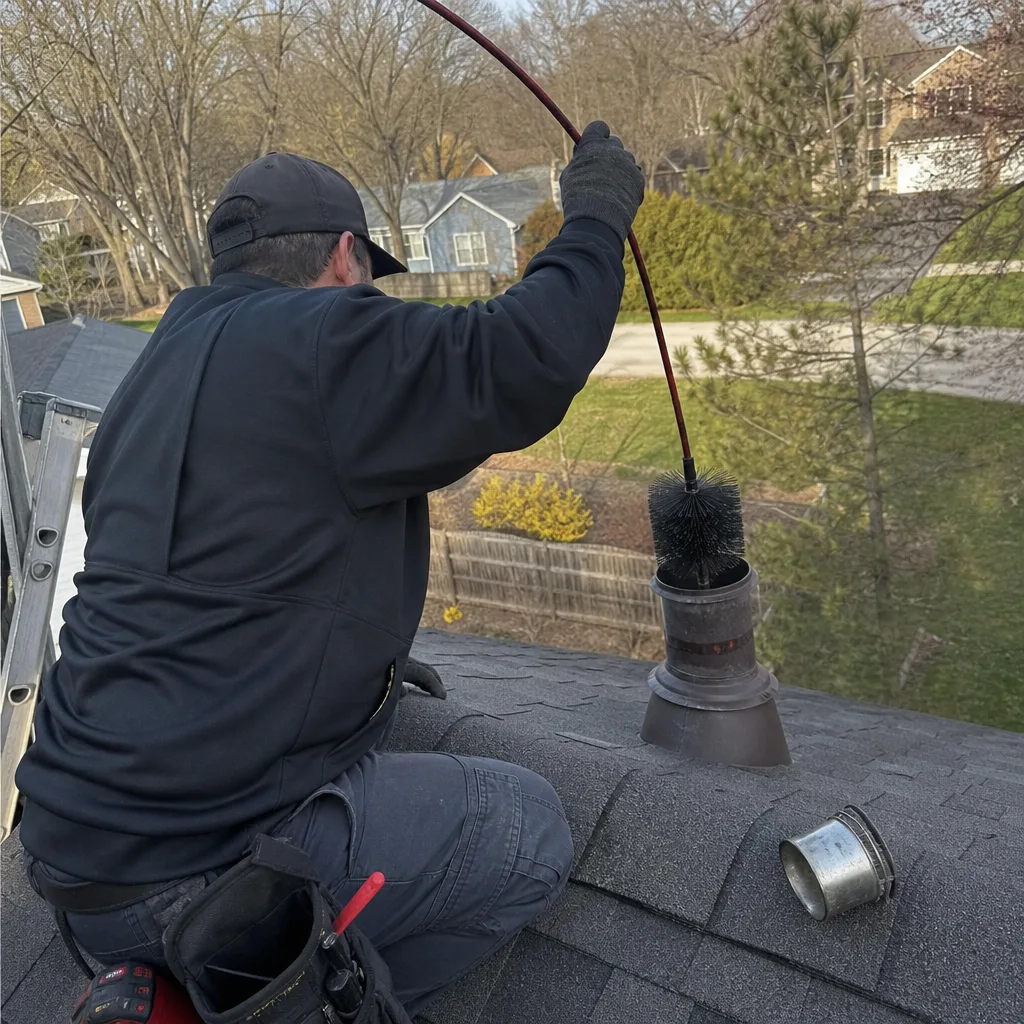
Boot interiors, 6-18 inches deep. The boot is the sheet-metal transition piece that connects your register to the duct run. With a flexible dryer vent brush attached to a drill, you can scrub the interior surfaces of most boots. A HEPA shop-vac held at the opening will capture loosened debris. This works best on straight boots with no dampers or balancing vanes. In Northbrook’s post-war housing stock, many boots are simple rectangular transitions. We’ve photographed boots where this method removed 70-80% of visible debris in the accessible zone.
First-segment duct runs, if straight and short. Some supply runs in ranches and bungalows run straight from the trunk for 3-4 feet before the first elbow. A 12-foot flexible brush with nylon bristles can traverse these segments and dislodge debris. The key limitation is the elbow. Consumer brushes bind at 90-degree turns, and forcing them risks puncturing flex duct or dislodging fiberglass duct board.
What you cannot do with consumer equipment: navigate past the first elbow, access main trunk lines running through basements or crawlspaces, clean panned returns framed between floor joists, or generate sufficient airflow to capture fine particulate once it’s airborne. We’ll explain why that matters mechanically in the next section.
Equipment that actually helps: a HEPA shop-vac (not standard, which blows fine dust through the exhaust), a drill-powered flexible brush kit with extension rods, microfiber cloths for grille surfaces, and a borescope camera if you want visual confirmation of what you’ve reached. A basic borescope runs $40-$80 and connects to a smartphone. We’ve seen Northbrook homeowners use these to document their own work with surprising thoroughness.
Equipment that does not help: standard household vacuums without HEPA filtration, compressed air blowers that push debris deeper into the system, or any brush with metal bristles on flex duct or duct board.
What DIY Cannot Reach: The Mechanical Reality
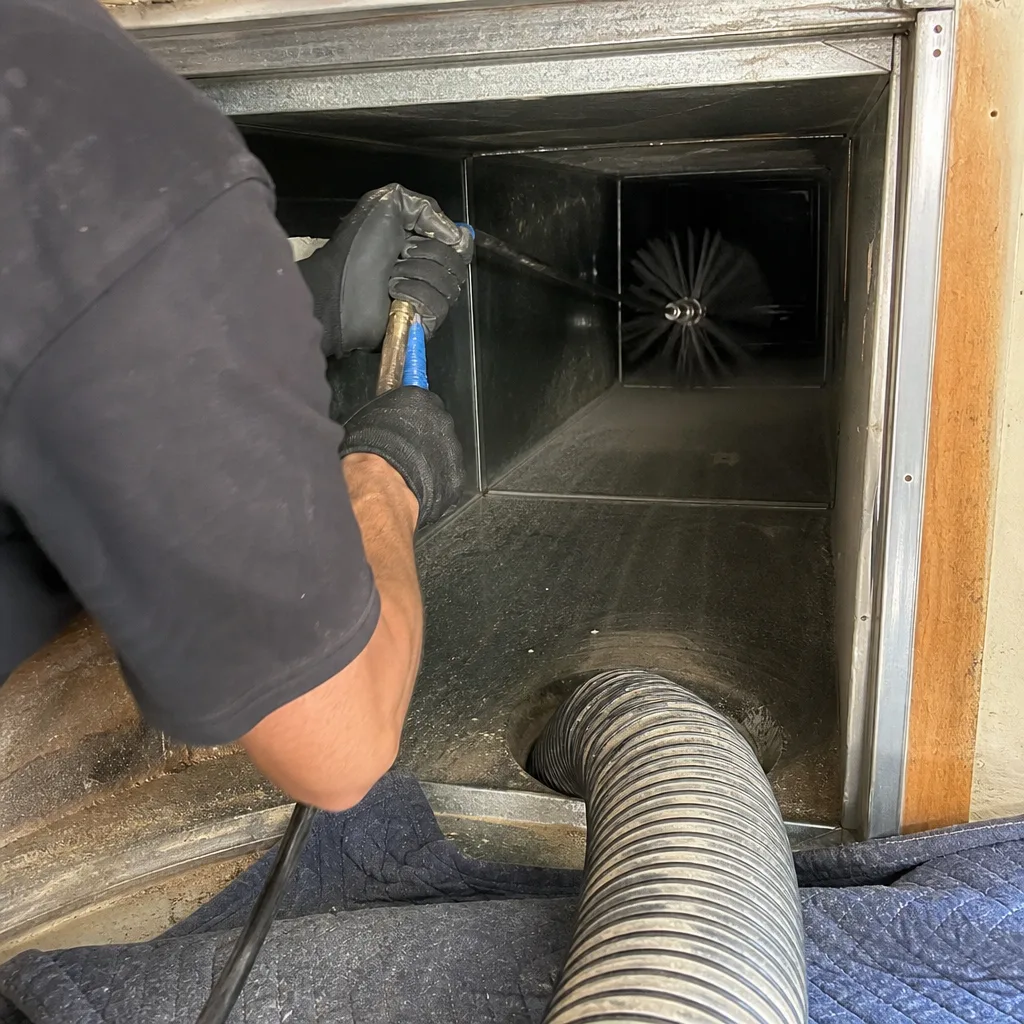
The duct system in a typical Northbrook home is a network of supply trunks, branch runs, return pathways, and the plenum, which is the large sheet-metal box that connects directly to your furnace or air handler. DIY methods reach the terminal ends. The core of the system remains untouched. Here’s why that distinction determines whether your effort produces a documented result or just noise.
Main trunk lines carry the majority of airflow volume. In a 2,000-square-foot Northbrook home, the main supply trunk might be 8×20 inches and run 30-40 feet through the basement or crawlspace. Debris accumulates along the bottom surface where airflow velocity drops. A shop-vac at a register cannot generate airflow through this trunk; the path of least resistance pulls air from nearby registers, not from 20 feet of trunk line. We’ve photographed trunks in Northbrook’s 1960s colonials where the debris layer measured 1-2 inches at the low points. No register-based method touches this.
Panned returns are inaccessible by design. Many Northbrook homes, especially those built 1945-1975, use panned returns: sheet metal nailed between floor joists to form a return air pathway. The interior surfaces are rough wood and often unsealed. Debris adheres to these surfaces, and the cavity geometry prevents any brush or vacuum attachment from effective contact. The only access points are the register openings, typically 12×6 inches, too small for meaningful mechanical cleaning without disassembly.
Elbows and transitions create dead zones. Every 90-degree elbow in a duct run reduces airflow velocity at the outer radius. Fine dust settles in these zones. A flexible brush binds at the elbow; even if forced through, it scrubs only the inner radius, missing the debris accumulation on the outer wall. Professional equipment uses pneumatic whips and skipper balls that expand to contact all interior surfaces, driven by compressed air and extracted by negative pressure at the source.
The plenum and coil cabinet. The plenum sits directly above your furnace or air handler. It’s the distribution point for all supply air. In Northbrook’s climate, with heating demand from October through April, the plenum cycles through extreme temperature swings that can loosen debris from interior surfaces. The coil cabinet, which houses your evaporator coil for air conditioning, accumulates biofilm and particulate that restricts airflow and reduces efficiency. Neither is accessible without removing sealed panels, and both require specific cleaning protocols to avoid damage to sensitive components.
Fiberglass duct board and flex duct. Many Northbrook homes built 1975-1995 used fiberglass duct board for its insulation value. The interior surface is porous; debris embeds in the fiberglass matrix and cannot be fully extracted without damaging the substrate. Flex duct, common in additions and retrofits, has corrugated walls that trap debris in the valleys. Aggressive brushing tears the inner liner. Professional cleaning uses controlled negative pressure with soft-bristle contact tools, calibrated to the duct material.
The mechanical reality is this: your duct system is designed as a sealed pressure vessel. Accessing it meaningfully requires breaking that seal at strategic points, not just opening the terminal registers.
How Negative-Pressure Source Cleaning Works
The professional method that produces a different outcome than DIY is called negative-pressure source cleaning. Understanding how it works mechanically explains why the results are not comparable.
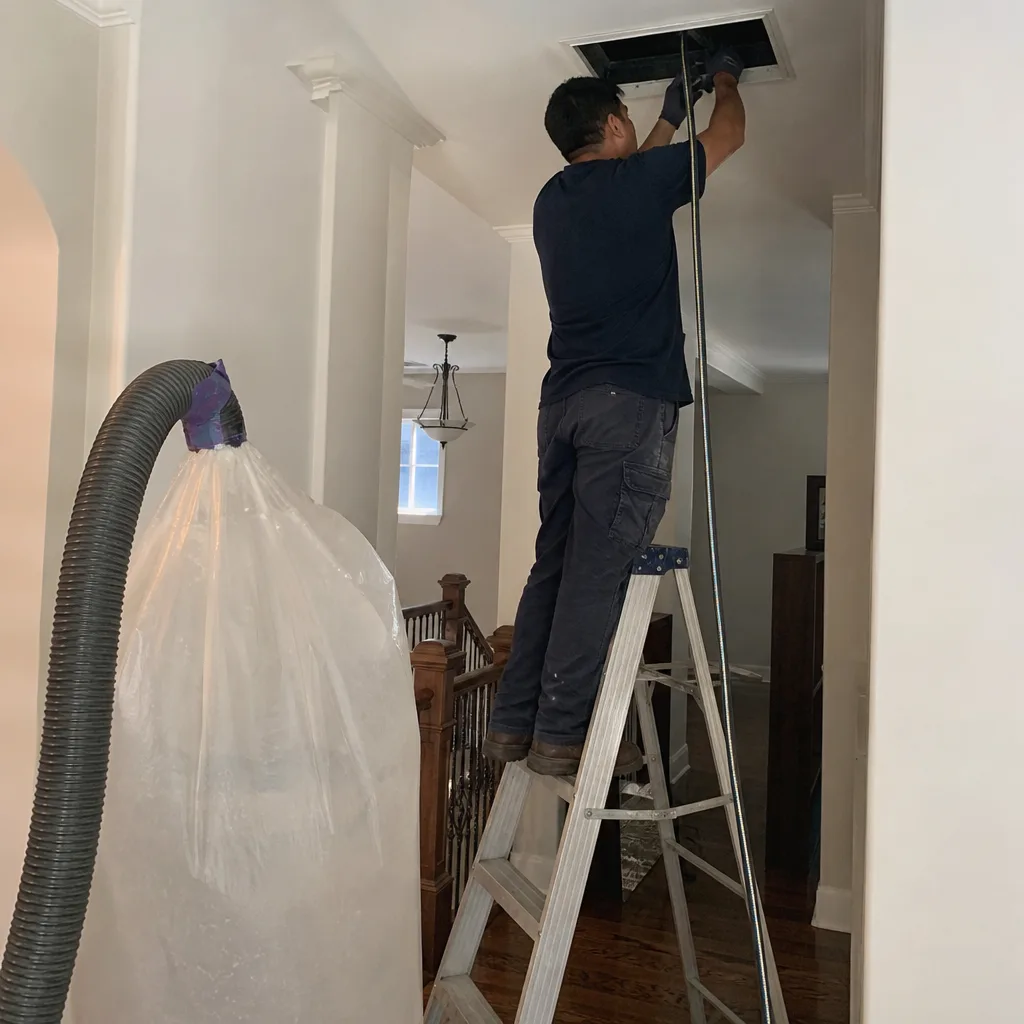
The setup. A technician cuts an access port into the main trunk line, typically near the plenum. A large vacuum collection device, such as a Nikro or Abatement Technologies portable unit, attaches to this port. These machines generate 5,000-10,000 CFM of airflow at the collection point, creating negative pressure throughout the entire duct system. The vacuum source is at the center of the network, not at a terminal register.
The agitation. With negative pressure established, a technician inserts pneumatic tools through register openings or additional access points. These tools, compressed-air-driven whips, skipper balls, or rotary brushes, dislodge debris from interior surfaces. The dislodged material is immediately entrained in the high-velocity airflow and carried to the central collection point. The critical sequence is agitation followed by immediate extraction, not agitation followed by gravity settling.
Why this differs from shop-vac methods. A shop-vac at a register generates approximately 100-200 CFM. It pulls air from the path of least resistance, which is typically the immediate boot and any nearby leaks in the duct system. It does not generate sufficient airflow to entrain debris from 20 feet of trunk line or to overcome the static pressure of a closed system. The debris you loosen with a brush may simply resettle downstream. Negative-pressure source cleaning reverses the airflow pattern: instead of pulling from the register, it pulls toward the center, capturing debris from the entire network.
What the documentation shows. At CleanRun, our photo record captures the interior of every duct run before and after service. In a typical Northbrook home, the before images show debris accumulation at trunk low points, elbow outer radii, and panned return cavities. The after images show these same locations with metal surfaces visible. The difference is not incremental; it is categorical. A shop-vac and brush cannot produce this documentation because it cannot reach these locations.
Equipment specifics. We use Rotobrush brush-and-vac systems for light maintenance and targeted cleaning, Nikro and Abatement Technologies negative-pressure collectors for whole-system source cleaning, and Honeywell and Aprilaire media filtration for post-cleaning air quality verification. These are trade-recognized brands with published specifications; customers can verify performance claims independently. We do not use equipment that cannot be documented and verified.
The mechanical distinction matters for your decision. If your goal is surface maintenance of accessible components, DIY methods are appropriate. If your goal is documented removal of accumulated debris from the full duct network, negative-pressure source cleaning is the only method that produces that outcome.
Decision Framework: Home Age, Duct Material, and Last Service
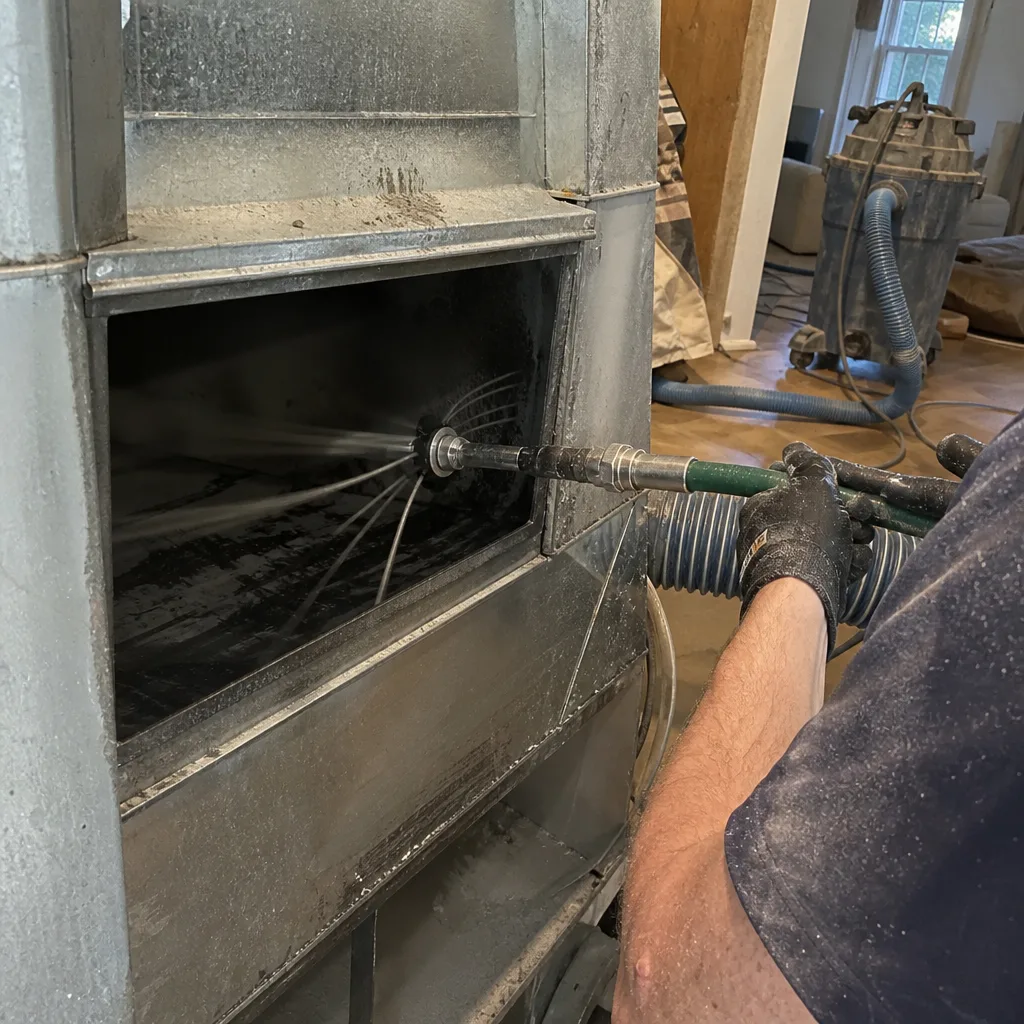
Use this framework to match your situation to the appropriate approach, and see our more guides & resources for related topics. We’ve refined it across 52,000+ homes, including thousands in Northbrook and surrounding Cook County suburbs.
Scenario 1: DIY Maintenance Is Genuinely Sufficient
Your home was built 1995 or later, with all-metal ductwork or properly sealed flex duct. You’ve had professional negative-pressure cleaning within the past 5 years. Your primary concern is surface dust on grilles and light debris in boots. You have no respiratory sensitivities, no visible mold, and no airflow complaints.
Action: Clean grilles quarterly with mild detergent. Use a drill-powered brush and HEPA shop-vac on boots annually. Schedule professional service only if conditions change. For help choosing a provider, read our How to Hire a Air Duct Cleaning Contractor in Northbrook: A Step-by-Step Guide.
Scenario 2: Professional Cleaning Adds Documented Value
Your home was built 1960-1995, with mixed duct materials including panned returns, fiberglass duct board, or unsealed flex duct. You have no record of prior cleaning, or the last service was more than 7 years ago. You notice dust accumulation at registers, uneven heating or cooling between rooms, or increased frequency of filter changes.
Action: Professional negative-pressure source cleaning with documented photo record. In Northbrook’s climate, with heavy heating use and seasonal allergen loads, this interval aligns with measurable debris accumulation. The Air Duct Cleaning in Northbrook page details our full process and pricing structure.
Scenario 3: Neither Cleaning Nor DIY Addresses the Root Problem
Your home has persistent moisture issues, musty odors that return within weeks of cleaning, visible mold growth on registers or in the plenum, or ductwork with significant leakage (measured above 15% total leakage). Your HVAC system is oversized or short-cycling, creating humidity control problems.
Action: Cleaning, professional or DIY, will not solve these problems. The root cause is moisture management, duct leakage, or equipment sizing. Address these first through duct sealing, dehumidification, or HVAC replacement. HVAC Cleaning in Northbrook includes system assessment to identify these underlying issues before any cleaning is quoted.
Scenario 4: Dryer Vent Cleaning Is the Parallel Need
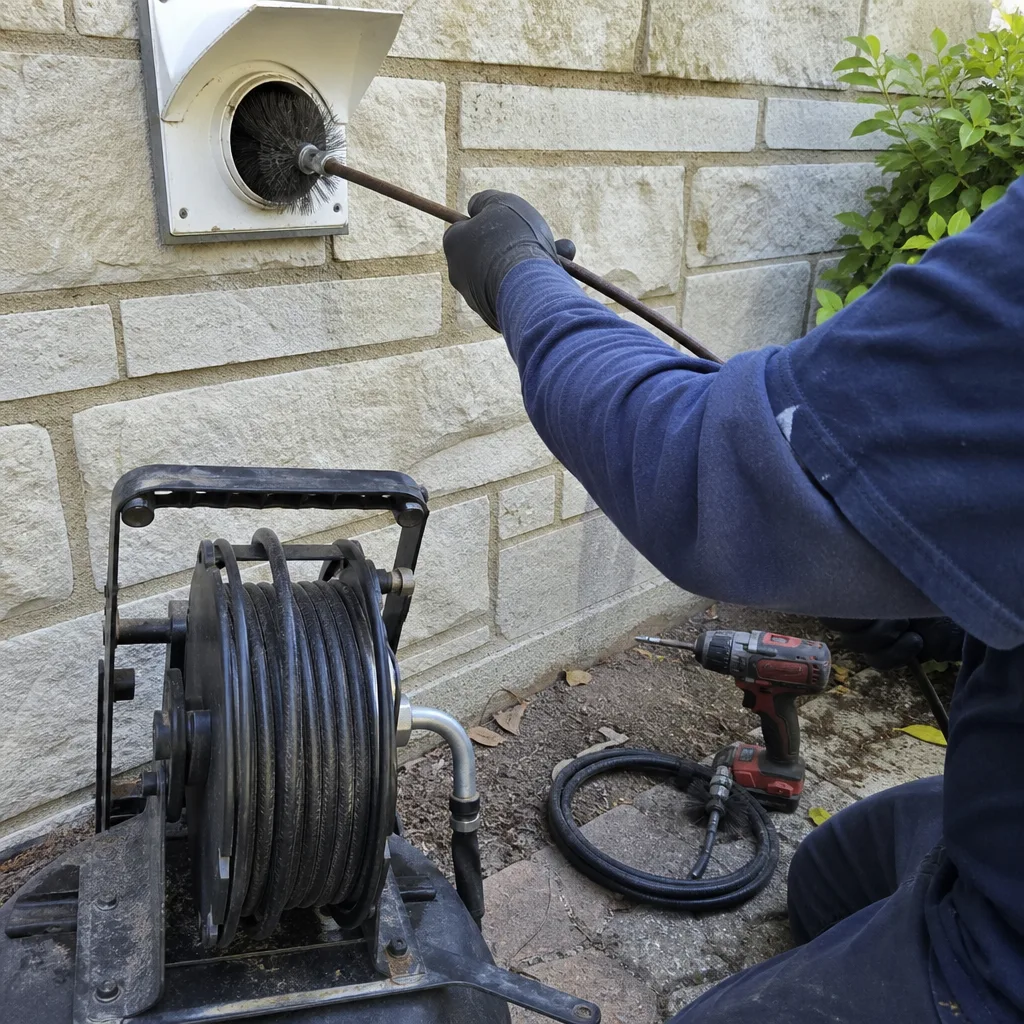
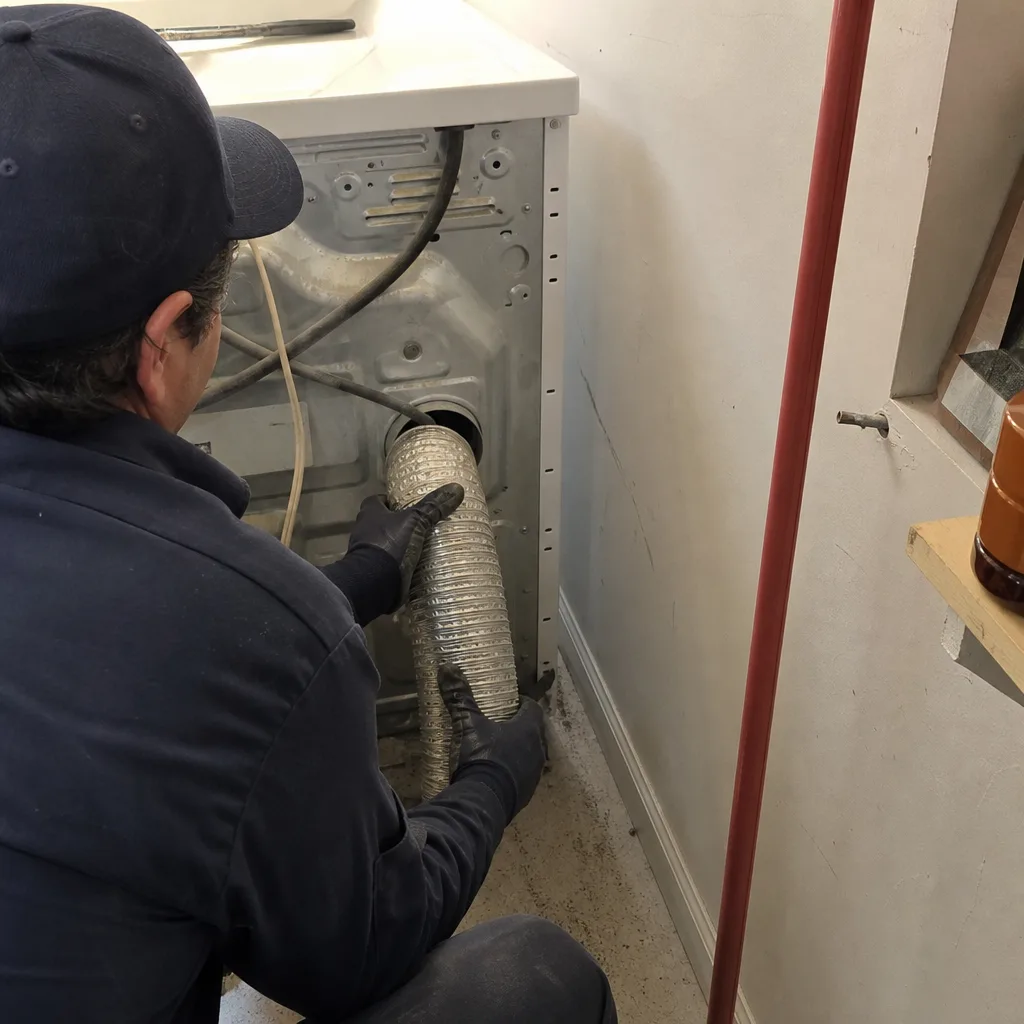
Many Northbrook homeowners conflate duct cleaning with dryer vent cleaning. They are separate systems with separate risks. A clogged dryer vent creates fire hazard and extends drying time. DIY dryer vent cleaning is possible for short, straight runs but dangerous for runs exceeding 15 feet, those with multiple elbows, or vents terminating on roofs. Our Dryer Vent Cleaning in Northbrook page covers the specific safety considerations.
Key indicators for each scenario:
- DIY sufficient: recent professional service, all-metal duct, no symptoms, maintenance mindset
- Professional value: older home, unknown service history, mixed materials, measurable symptoms
- Root problem first: moisture, mold, leakage, equipment issues - cleaning is secondary
- Dryer vent separate: evaluate independently based on run length, termination point, and fire risk
Northbrook-specific context: homes in the Wescott and Sunset Ridge areas, built largely 1955-1975, frequently have panned returns and original fiberglass duct board. These materials degrade predictably and benefit most from professional assessment. Newer construction in the Anets Woods and Stonegate areas, built 2000+, typically has sealed flex duct or rigid metal with fewer inherent accumulation problems.
DIY Sanitizing and Antimicrobial Sprays: What They Actually Do
The retail market for duct sanitizing products has expanded significantly. Homeowners can purchase antimicrobial sprays, UV light wands, and ozone generators with claims of “complete system sanitization.” These claims deserve precise examination.
What antimicrobial sprays can reach. A homeowner spraying into a register opening will coat the boot interior and perhaps the first few feet of duct run. The spray droplets settle by gravity; they do not travel against airflow through 20 feet of trunk line. The active ingredients in EPA-registered sanitizers, typically quaternary ammonium compounds or hydrogen peroxide solutions, require specific dwell times on surfaces to be effective. In a duct system, most of the product runs to the low point and pools, achieving full dwell time only at that location.
What they cannot reach. The main trunk, panned returns, plenum, and coil cabinet receive negligible product deposition. More critically, antimicrobial sprays do not remove existing debris; they coat it. A dirty surface with a thin layer of sanitizer is still a dirty surface. The debris continues to act as a reservoir for particulate and microbial growth. Professional sanitizing, when warranted, follows mechanical cleaning and uses fogging equipment that generates particles small enough to remain suspended and distribute through the system, with controlled dwell time and documented coverage.
UV light wands and ozone generators. UV-C light at germicidal wavelengths (253.7 nm) can inactivate surface-borne microorganisms with sufficient exposure time. A homeowner waving a UV wand through a register opening achieves seconds of exposure on a small surface area. Professional in-duct UV systems, installed in the plenum or near the coil, operate continuously during system runtime with calculated exposure based on airflow velocity and lamp intensity. Ozone generators present additional concerns: ozone is a respiratory irritant, and EPA guidance discourages their use in occupied spaces. We do not recommend ozone for residential duct treatment.
When sanitizing is warranted versus when it adds cost without benefit. Sanitizing is appropriate after verified microbial growth has been mechanically removed, in homes with immunocompromised occupants, or following water damage events with documented contamination. It is not appropriate as a routine add-on to cleaning that has not occurred, or as a substitute for mechanical debris removal. In Northbrook’s climate, with cold dry winters and humid summers, Seasonal Air Duct Cleaning Care for Northbrook: Year-Round Homeowner’s Guide explains how humidity fluctuations create conditions where surface moisture can support microbial growth. Address the moisture first; sanitize only when the mechanical and environmental conditions support it.
Our position, consistent with Haven Standard Clause 1 on transparent pricing: we quote sanitizing separately from cleaning, explain the specific conditions that warrant it, and do not include it in base pricing as an undisclosed add-on. The written price before work starts includes only the services that produce documented value for your specific situation.
The Real Cost of DIY vs. Professional in Northbrook
Honest cost comparison requires accounting for equipment, time, and residual risk. Here’s the breakdown for a typical 2,000-square-foot Northbrook home.
DIY Costs
| Item | Cost | Notes |
|---|---|---|
| HEPA shop-vac (purchase) | $150-$300 | Standard vacuums are insufficient; HEPA filtration required for fine particulate |
| Drill-powered brush kit with extensions | $30-$80 | Nylon bristle only; metal bristles damage duct surfaces |
| Borescope camera | $40-$80 | Optional but recommended for documentation |
| Replacement filters (annual) | $25-$50 | HEPA filters require regular replacement |
| Time investment | 3-5 hours | Per cleaning cycle, including setup and cleanup |
| Accessible surface area cleaned | 30-40% | Boots, grilles, first segments only |
Total first-year DIY investment: $245-$510 for equipment, plus 3-5 hours labor per cleaning. Ongoing annual cost: $25-$50 in filters plus time. Critical limitation: 60-70% of duct surface area remains unaddressed, with no documentation of what was or was not cleaned.
Professional Costs
Professional air duct cleaning in Northbrook, performed with negative-pressure source extraction and documented photo record, typically ranges $450-$850 for a whole-home system depending on home size, duct configuration, and accessibility. This range reflects actual market pricing in Cook County’s northern suburbs, not promotional teaser rates.
What this includes:
- Written price delivered before any work begins, under Haven Standard Clause 1
- Negative-pressure source cleaning of all supply and return duct runs
- Main trunk line cleaning with access ports as needed
- Plenum and boot cleaning
- Register grille cleaning and reinstallation
- Documented Photo Record of every duct run, before and after, delivered as standard
- 365-Day Done Right Promise in writing
What this does not include: per-vent surcharges, undisclosed equipment fees, or post-service upselling. Our pricing is one flat price per system, agreed in writing before work starts.
Cost-Effectiveness Analysis
If your home qualifies for DIY maintenance under the Scenario 1 framework, the DIY investment pays for itself in 1-2 cycles and provides appropriate maintenance. If your home falls under Scenario 2, professional service every 5-7 years costs $64-$121 annually when amortized, with full-system documentation that supports home value, HVAC efficiency, and indoor air quality claims.
The hidden cost of partial DIY cleaning: debris left in trunk lines and panned returns continues to circulate, accelerating filter loading and potentially reducing equipment lifespan. In Northbrook’s heating-intensive climate, a 10% airflow reduction from duct accumulation can increase energy consumption measurably over a heating season. The documentation gap matters for resale; a photo record of professional cleaning is a transferable asset, DIY claims are not.
Common Mistakes to Avoid
- Using a standard household vacuum without HEPA filtration. Non-HEPA vacuums exhaust fine particulate through the motor housing, redistributing it through your home. In Northbrook’s tight winter construction, this can measurably increase indoor particulate levels for days.
- Brushing flex duct or fiberglass duct board with aggressive tools. Metal bristles and stiff nylon tear the inner liner of flex duct and fracture fiberglass duct board surfaces, creating debris rather than removing it. We’ve documented duct damage from homeowner tools that required sectional replacement.
- Applying antimicrobial spray without mechanical cleaning first. Sanitizer on a dirty surface produces a coated dirty surface. The product label dwell times assume clean substrate; on debris, effectiveness drops precipitously.
- Ignoring the return side of the system. Many homeowners clean supply registers and assume the job is done. Return pathways, especially panned returns in Northbrook’s older homes, typically contain more debris than supplies because they lack filtration at the register point.
- Pressuring compressed air through registers without extraction. Blowing debris loose without simultaneous capture pushes it deeper into the system, where it resettles in trunk low points and elbow dead zones. This makes future professional cleaning more difficult, not less.
- Trusting $79-$99 coupon pricing as comparable to documented service. These rates typically cover register vacuuming and grille wiping, not negative-pressure source cleaning. The equipment, time, and documentation required for genuine whole-system cleaning cannot be delivered at this price point. We provide free second opinions on any written estimate for this reason.
When to Call a Professional
Call a professional when your home’s age, materials, or symptoms exceed what DIY methods can document. Specifically: original ductwork from 1990 or earlier with no service record; visible mold or persistent musty odor; airflow complaints or uneven conditioning between rooms; recent renovation with drywall dust or construction debris; or any respiratory symptoms that correlate with HVAC runtime.
CleanRun Air Duct Cleaning Northbrook offers free estimates in Northbrook. Every estimate includes a written price before any work starts, under Haven Standard Clause 1. Every completed job includes a Documented Photo Record of every duct run and the 365-Day Done Right Promise in writing. Our technicians are background-checked, uniformed, and identified by name before arrival, per Haven Standard Clause 3: Verified Crews. Call (224) 351-9772 to schedule. Bring a competitor’s written quote; we’ll provide a free second opinion with our number next to it.
Frequently Asked Questions
Whole-home negative-pressure source cleaning for a typical Northbrook home ranges $450-$850, depending on system size and accessibility. This is a flat price per system, agreed in writing before work begins, with no per-vent surcharges. Call (224) 351-9772 for a specific estimate; estimates are free.
Low quotes typically cover surface cleaning of registers and boots, not negative-pressure source extraction of the full duct network. The $79-$99 price point cannot support the equipment, labor time, and documentation that genuine source cleaning requires. Always ask what specific steps are included, whether the main trunk and returns are cleaned, and whether before-and-after documentation is provided as standard. CleanRun provides free second opinions on any written estimate for direct comparison.
Demand a documented photo record showing the interior of every duct run before and after service. At CleanRun, this is standard on every job, delivered to the customer as part of the completed job record. If a company cannot or will not provide this documentation, the work cannot be verified. Photos should show identifiable locations, not generic stock images.
For Northbrook homes with all-metal ductwork and regular filter maintenance, professional negative-pressure cleaning every 5-7 years is typically sufficient. Homes with panned returns, fiberglass duct board, pets, or occupants with respiratory sensitivities may benefit from 3-5 year intervals. DIY maintenance of grilles and boots can extend these intervals but does not replace whole-system cleaning. The specific interval depends on your home’s materials and conditions, not a calendar alone.
Dryer vents under 15 feet with straight termination and accessible exterior hood can be DIY-cleaned with a flexible brush kit. Longer runs, multiple elbows, roof terminations, or vents with visible lint accumulation beyond the first segment require professional equipment and safety protocols. Dryer vent fires peak in winter when Northbrook homeowners run heavier loads more frequently. Our Dryer Vent Cleaning in Northbrook page details specific risk factors and our cleaning process.
We use EPA-registered sanitizers only when warranted by specific conditions: verified microbial growth, post-water damage, or occupant health requirements. The product is applied after mechanical cleaning using fogging equipment that achieves documented coverage and dwell time. We do not include sanitizing in base pricing or apply it routinely without cause. The specific product and application method are disclosed in the written scope before work begins.
The Bottom Line
DIY air duct cleaning in Northbrook is genuinely useful for register grilles, boot interiors, and straight first-segment runs. It is not a substitute for negative-pressure source cleaning of main trunks, panned returns, and areas beyond the first elbow. The decision framework is straightforward: newer homes with recent professional service and all-metal ductwork benefit from DIY maintenance; older homes with mixed materials and unknown service history need documented professional cleaning; homes with moisture, mold, or equipment problems need those problems addressed first, with cleaning secondary. The real comparison is not price alone but documented outcome against honest scope. A written price before work starts and a photo record when it ends are the only verifiable measures of what was actually accomplished.
Written by Tomas Reyes, Owner at CleanRun Air Duct Cleaning Northbrook, serving Northbrook since 2013.