
Last updated September 23, 2026
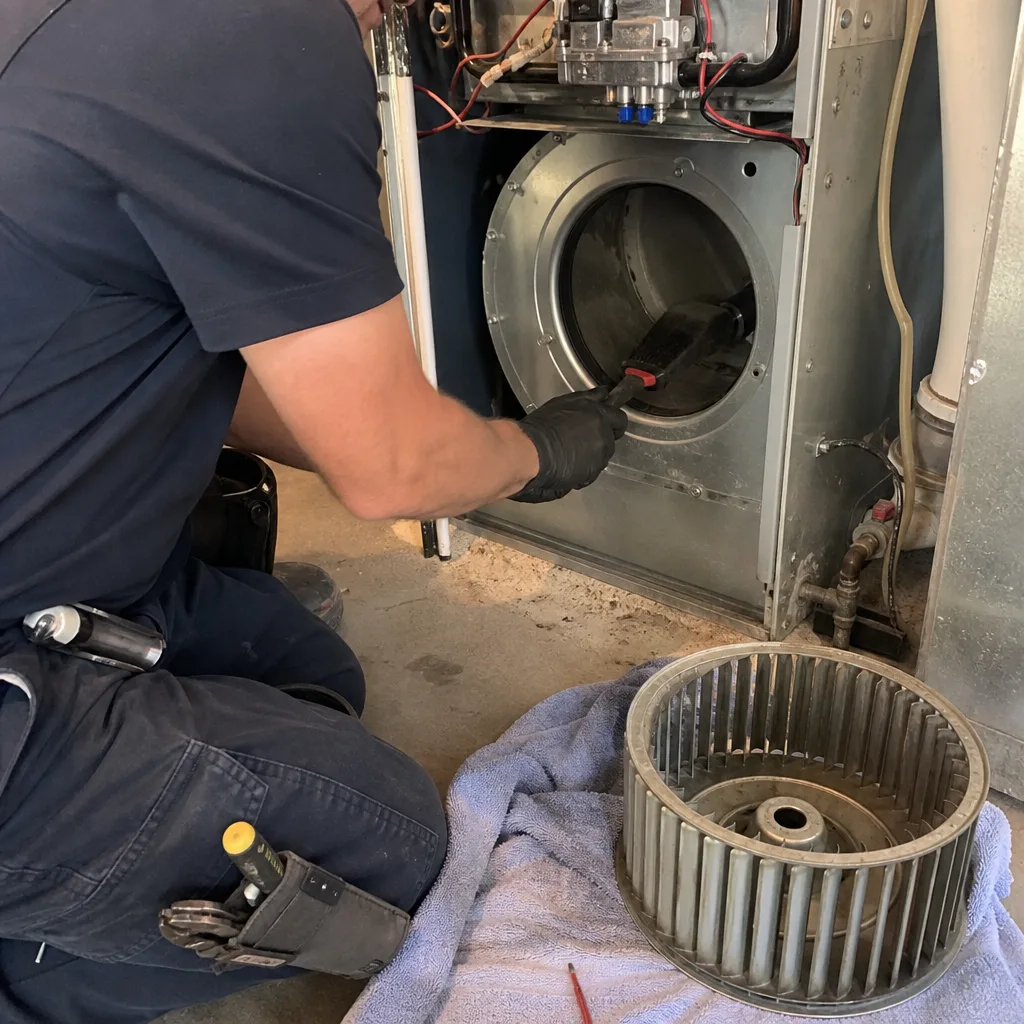
Whole-system duct and dryer vent check with before-and-after photos - you see exactly what came out of your vents
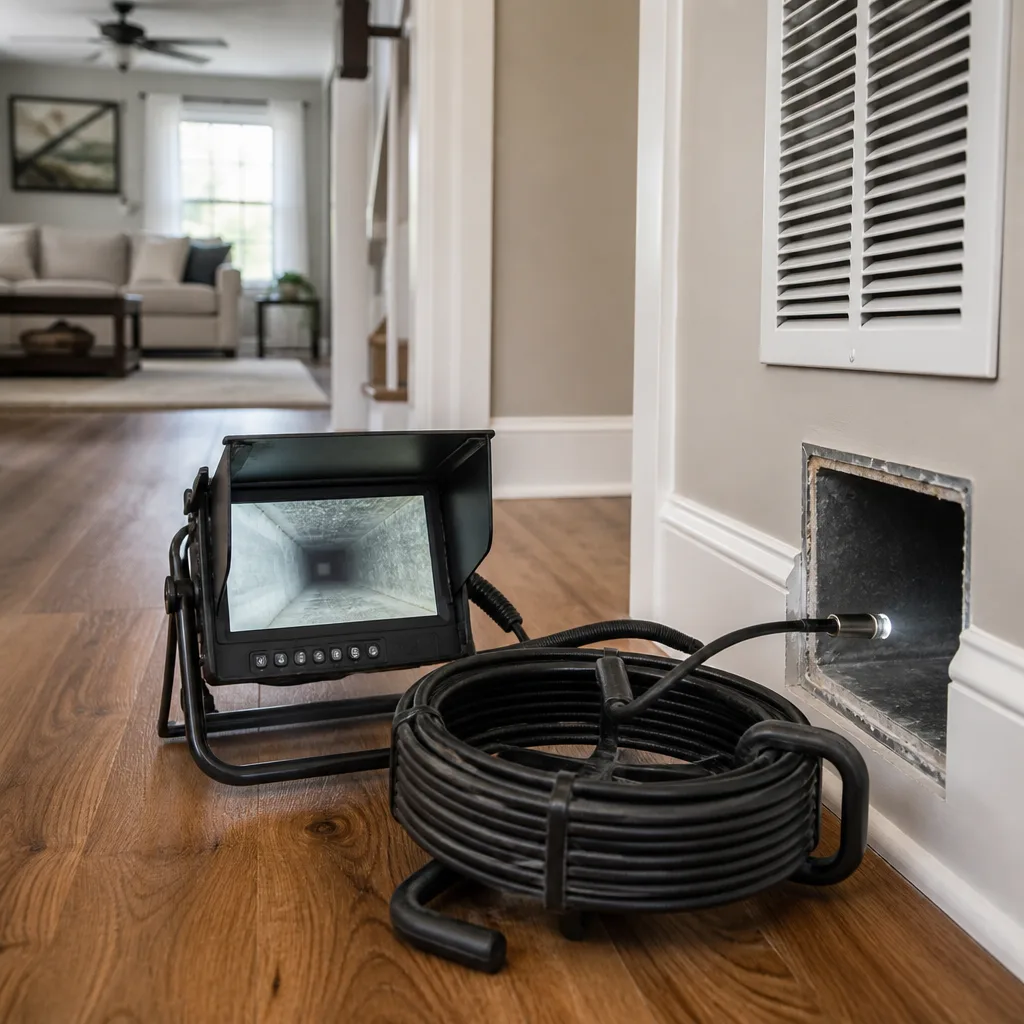
That "$99 whole-house special" is a bait ad - the real number appears once they are in your hallway, or the "clean" is a shop-vac at the register. We photograph the inside of your ducts before and after instead.
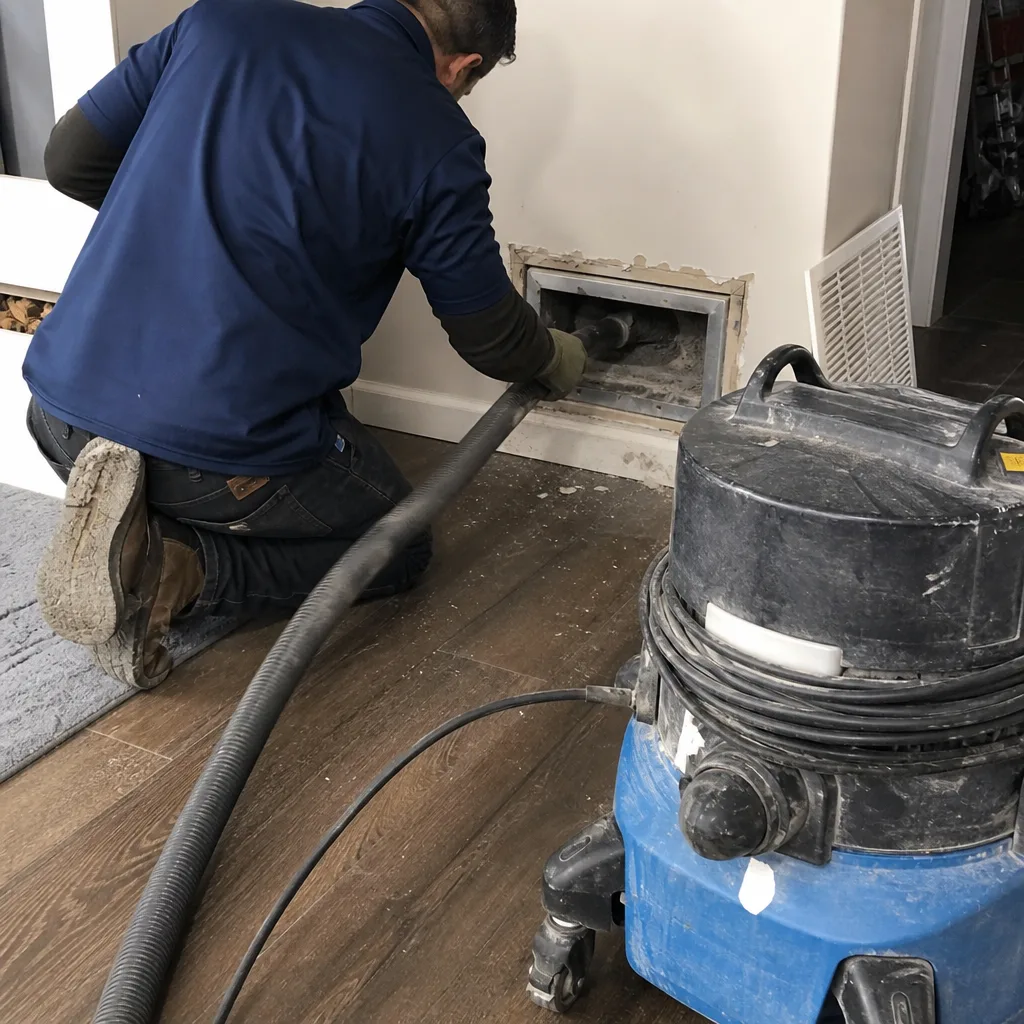 Before
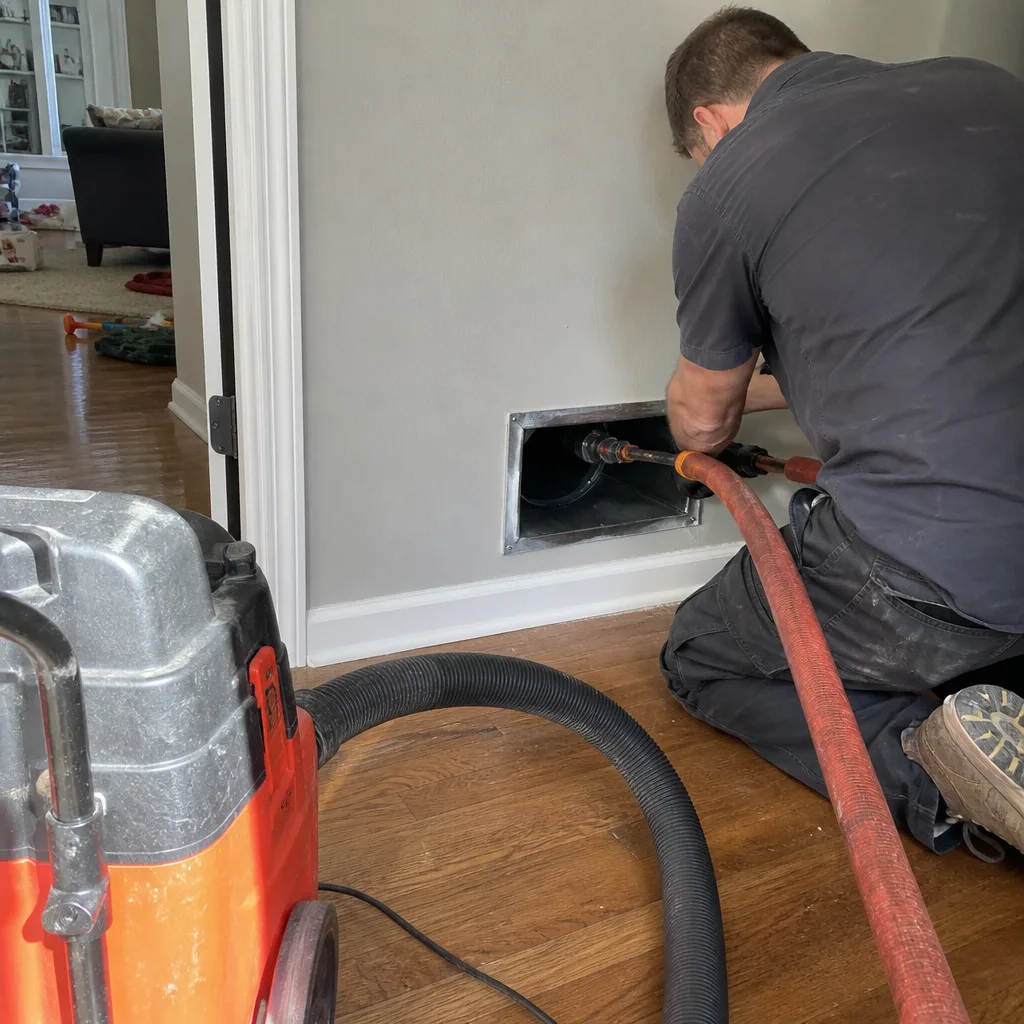 After
After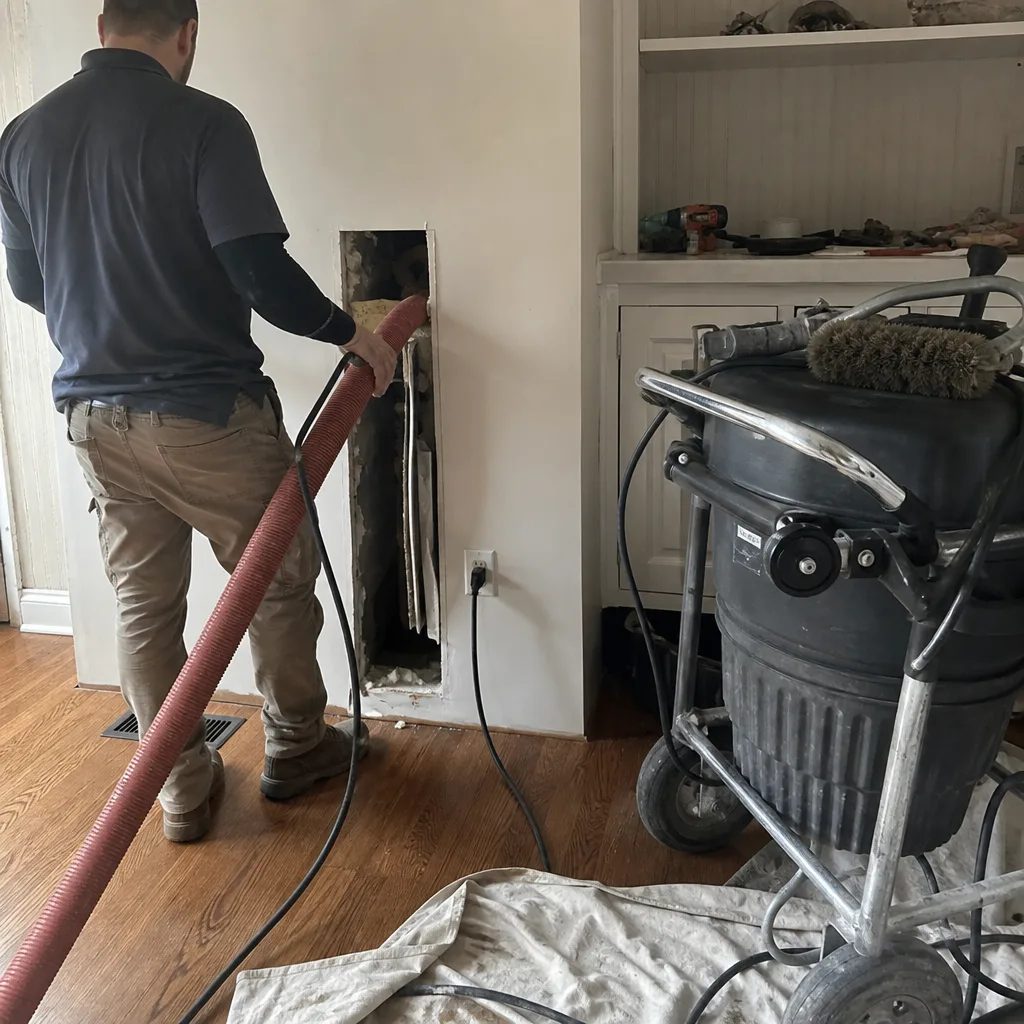 Before
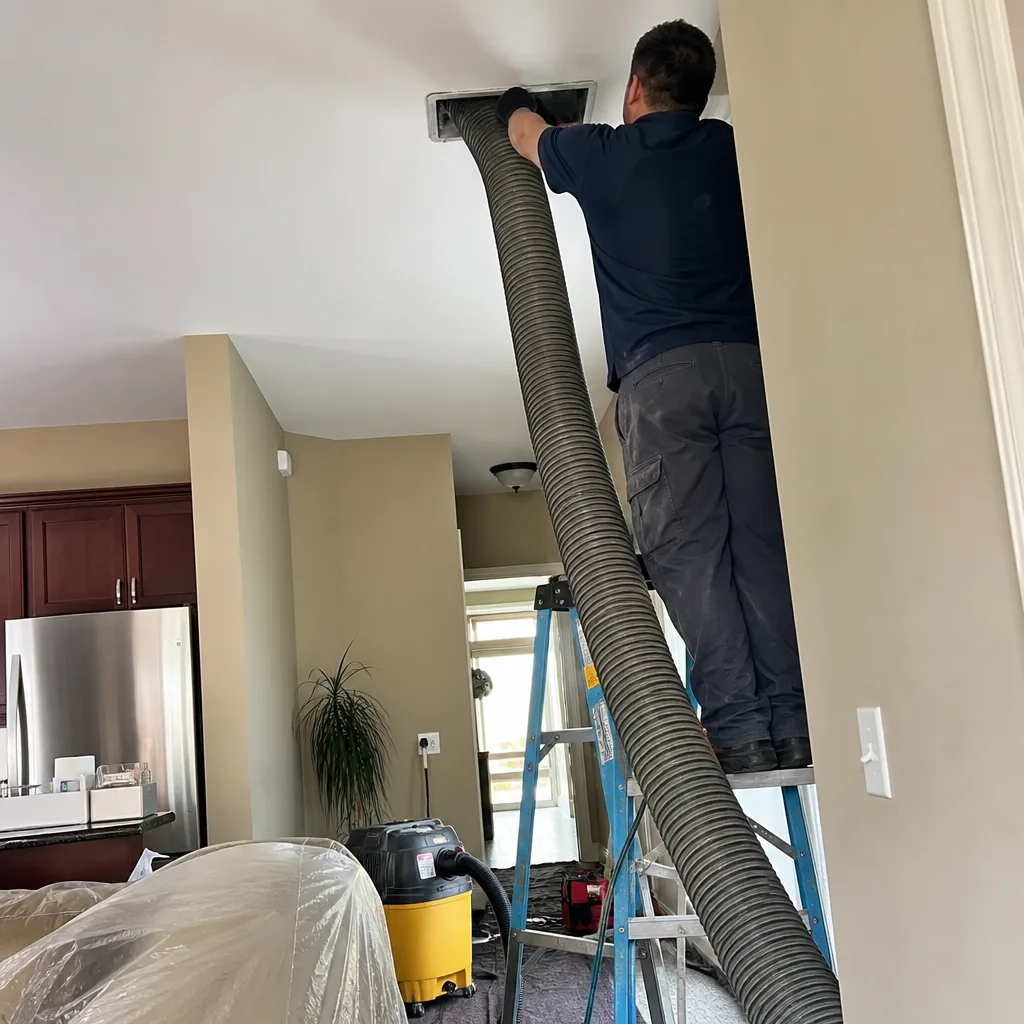 After
After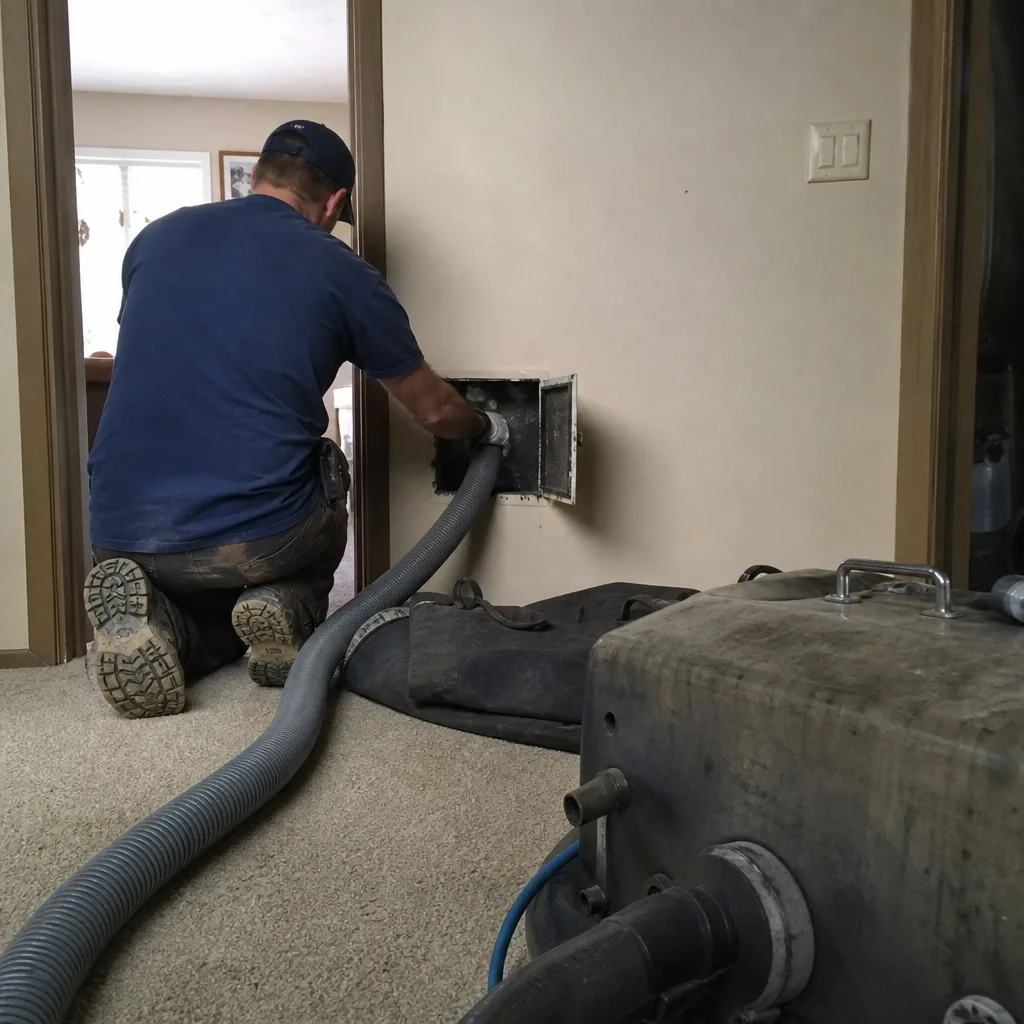 Before
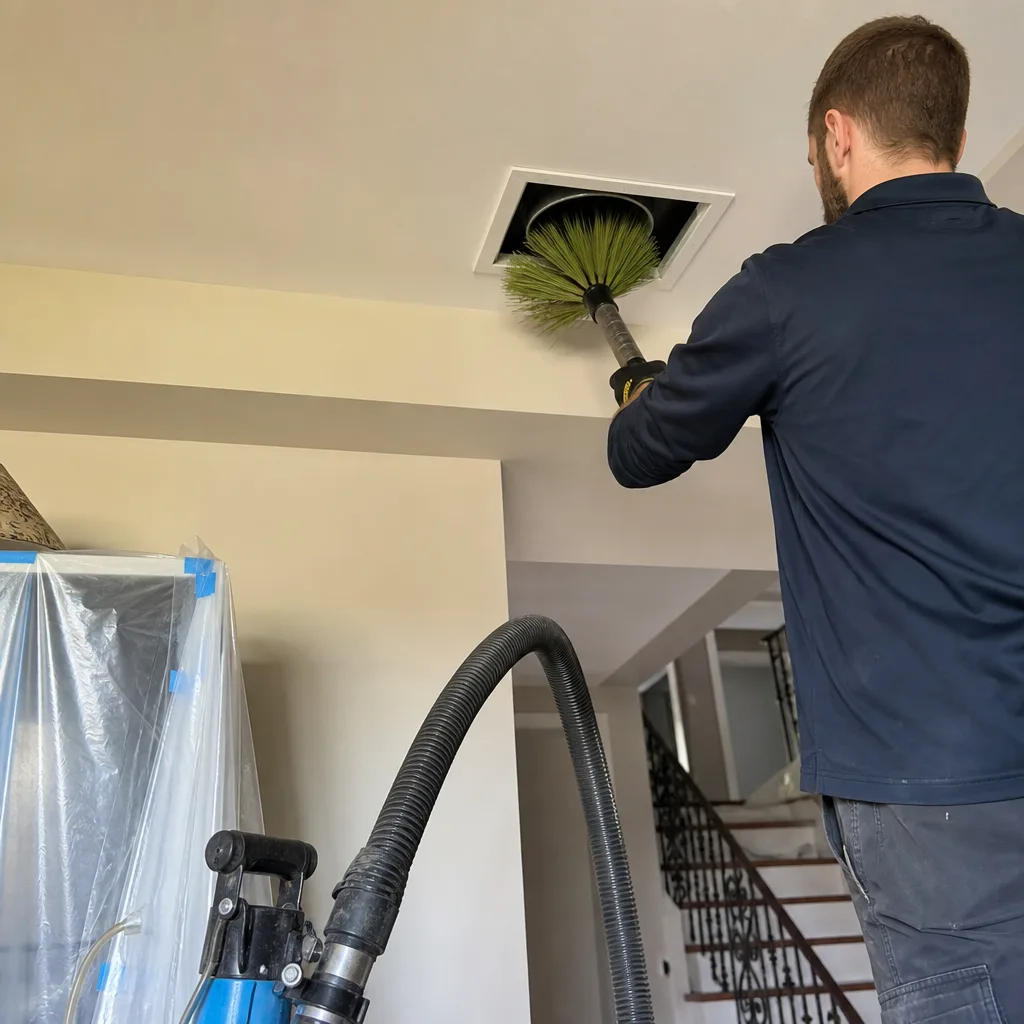 After
AfterSeasonal Air Duct Cleaning Care for Northbrook: Year-Round Homeowner’s Guide
In Northbrook, the worst month to discover your ducts need cleaning is January - when the house is sealed, the HVAC is running continuously, and whatever was accumulating since October is now being distributed 24 hours a day. We’ve been in homes across Northbrook where the camera showed a 3-inch debris build-up at the first elbow that the family had been breathing for three winters straight. This guide maps Northbrook’s four distinct seasonal contamination conditions to specific inspection and maintenance actions, so you’re checking the right thing at the right time - not guessing based on a calendar reminder.
Quick Answer
Northbrook homeowners should inspect return grilles in April for pollen loading, check cooling coils and humidifier pans in July for moisture-related contamination, schedule post-construction duct evaluation in October, and verify winter particulate levels with a mid-January filter inspection. A whole-system Air Duct Cleaning services every 2-3 years is typical for Northbrook’s tree-dense environment, though homes with attached humidifiers or recent renovation may need annual service.
Table of Contents
- Northbrook’s Four-Season Contamination Profile
- Spring (April-June): Pollen Loading at Return Grilles
- Summer (July-September): Humidity and Mold Near Cooling Coils
- Fall (October-November): Post-Renovation Debris and Construction Dust
- Winter (December-March): Particulate Concentration in Sealed Homes
- Month-by-Month Inspection Calendar for Northbrook Homes
- The Humidifier Factor: Why Some Northbrook Homes Need Different Care
- What a Technician Should Find: Seasonal Baselines for Clean Ducts
- Common Mistakes to Avoid
- When to Call a Professional
- Frequently Asked Questions
- The Bottom Line
BeforeAfterNorthbrook’s Four-Season Contamination Profile
Northbrook sits in Cook County’s northern tier, where the tree canopy density - oaks, maples, and the pollen-heavy cottonwoods along the North Branch of the Chicago River - creates a particulate load that suburban homeowners farther west simply don’t face. The village’s housing stock, largely built between 1955 and 1985 with significant infill construction since 2015, means most duct systems are original galvanized steel or early flexible duct, both of which trap debris differently than modern smooth-wall systems.
The seasonal pattern breaks down into four distinct contamination events:
- Spring pollen loading: April through early June, when oak and grass pollen counts regularly exceed 1,500 grains per cubic meter. Return grilles - the intake points where air enters the duct system - become coated with sticky pollen that bypasses standard 1-inch filters.
- Summer humidity and mold potential: July through September, when Northbrook’s proximity to Lake Michigan keeps relative humidity elevated even during heat waves. Cooling coils in the air handler produce condensate; if the drain pan or condensate line is partially blocked, moisture enters the ductwork.
- Fall construction debris: October through November, when Northbrook’s active renovation market - teardowns in East Northbrook, gut rehabs near downtown - generates fine particulate that infiltrates neighboring homes through soffit vents and window gaps, then settles in ducts during the first heating cycles.
- Winter particulate concentration: December through March, when the house is sealed against cold, the HVAC runs 16-20 hours daily, and there’s no fresh air exchange to dilute accumulated dust, skin cells, and combustion byproducts from gas furnaces.
Each of these conditions demands a different inspection focus. A homeowner who checks the same thing in April and October is missing half the picture.
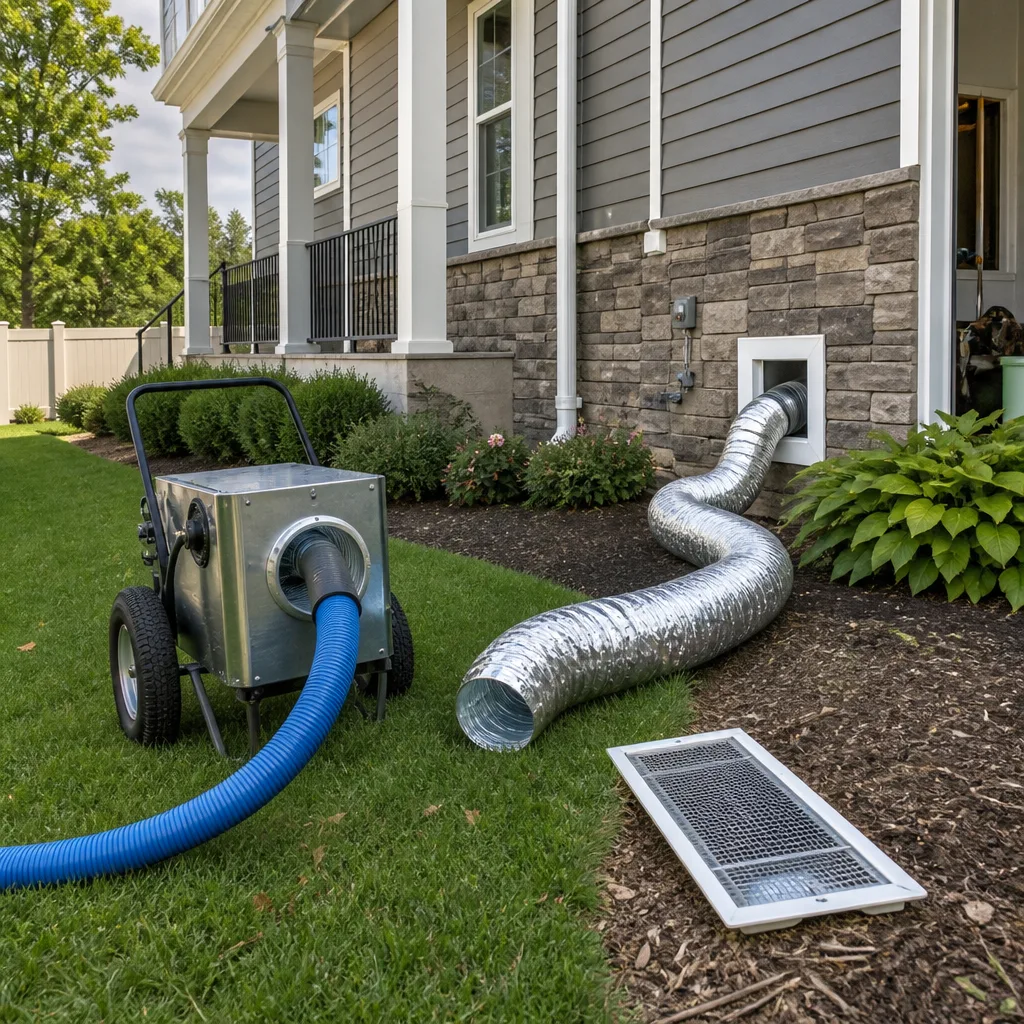
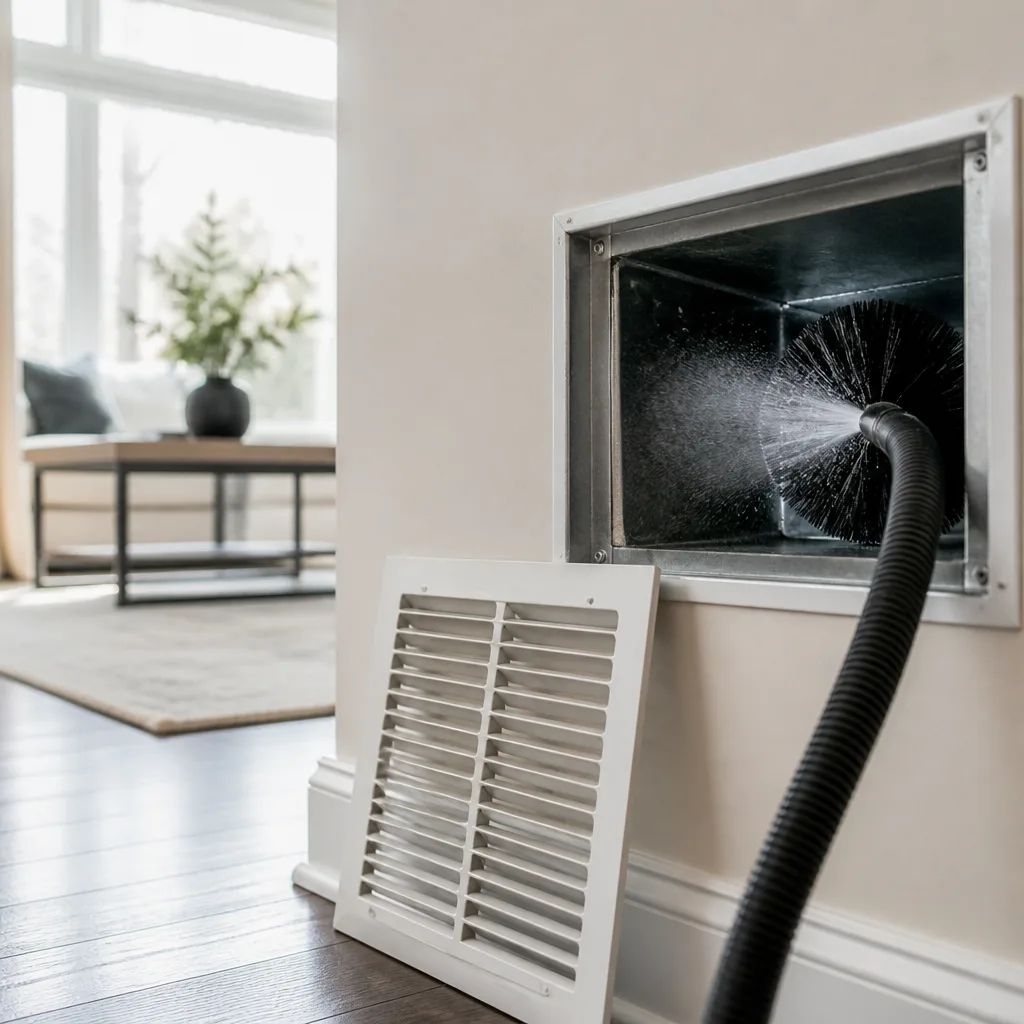
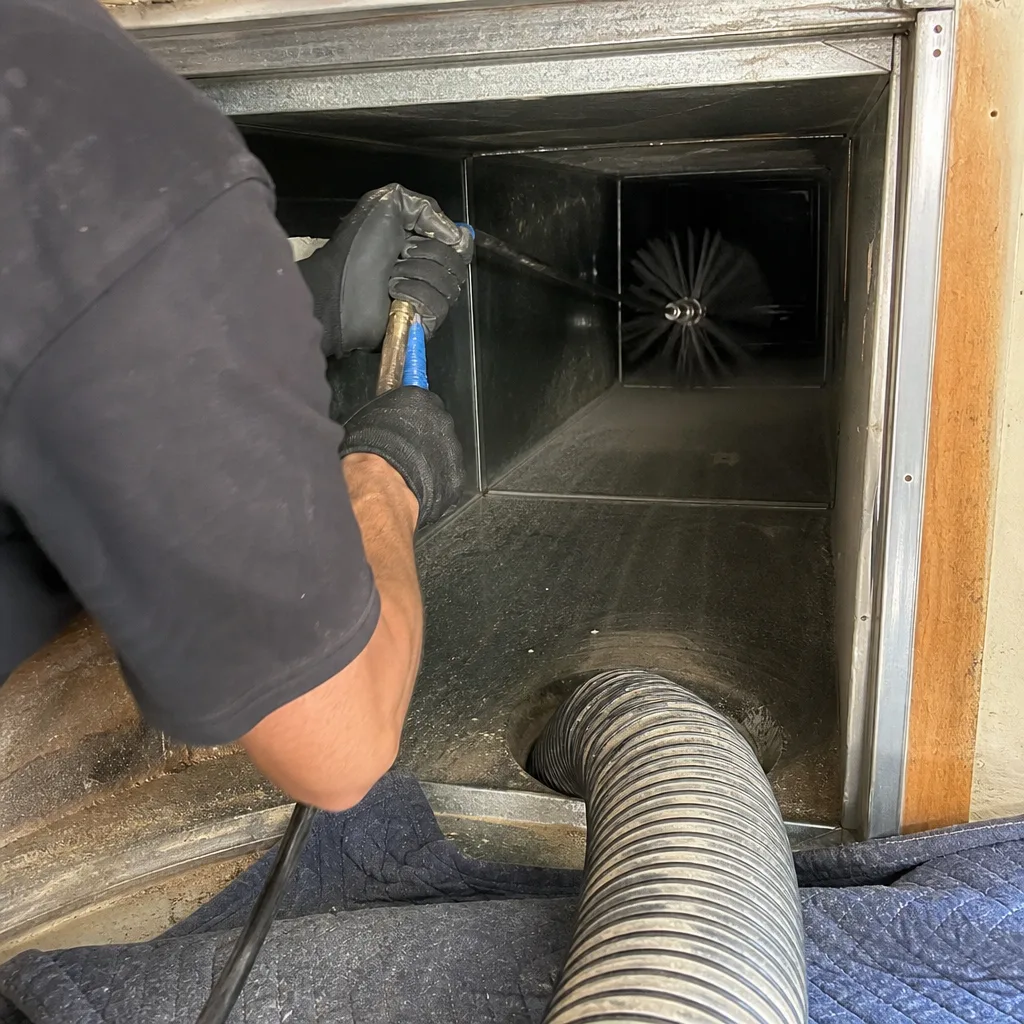
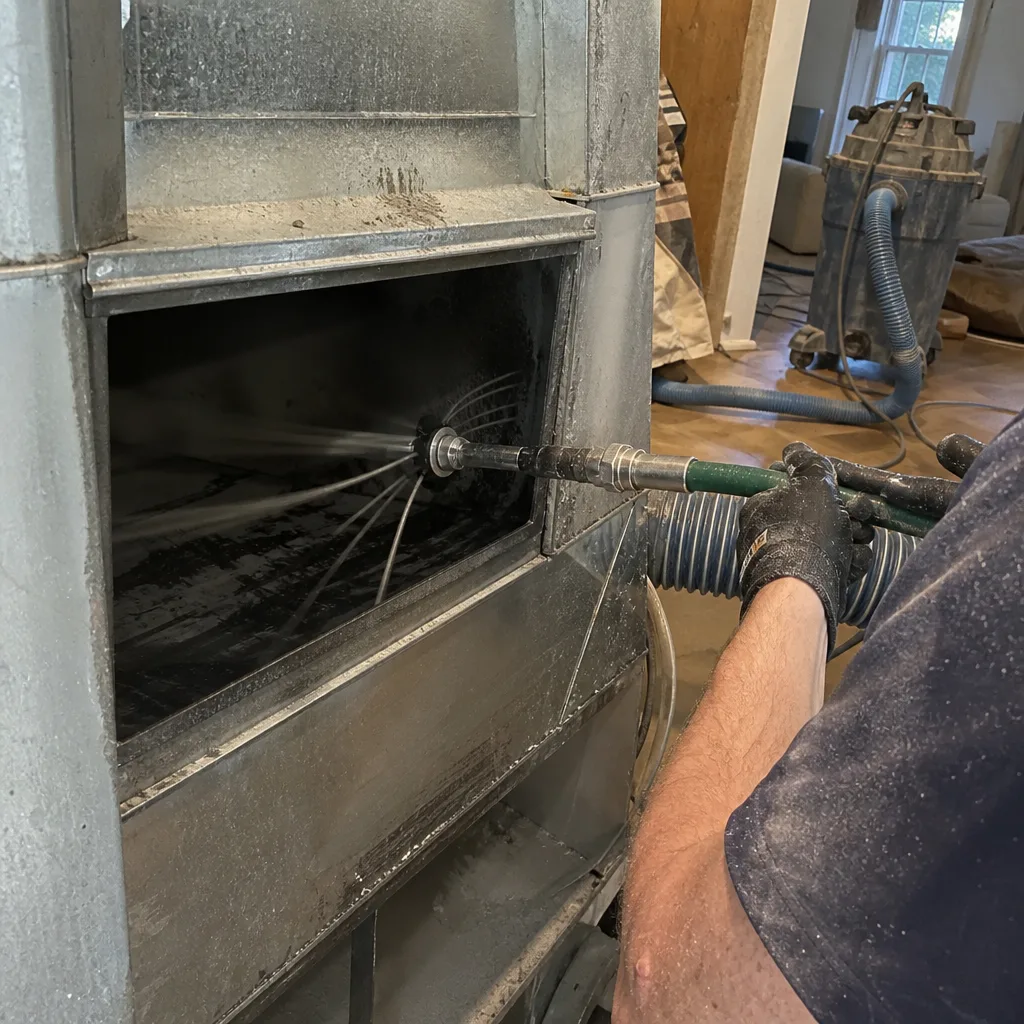
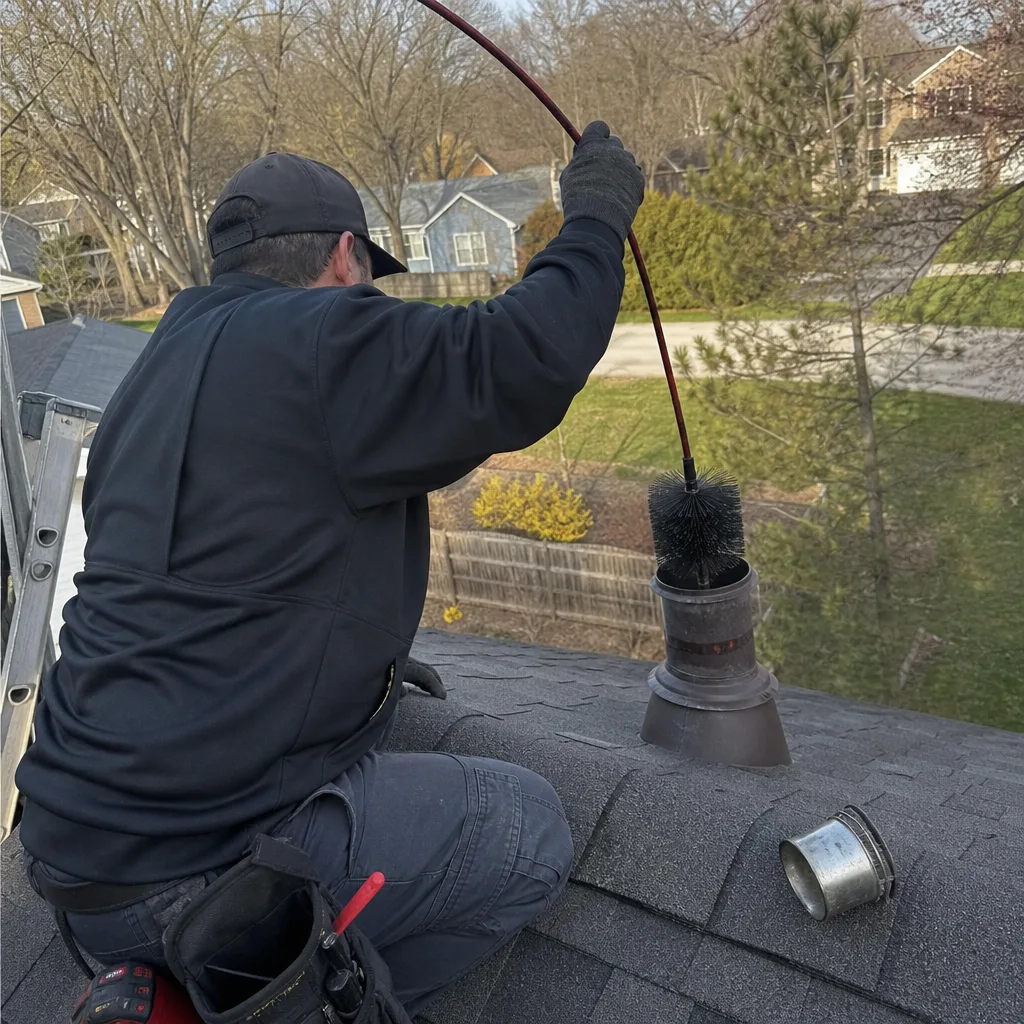
The equipment we use to address these seasonal variations matters. For negative-pressure extraction in older galvanized systems, we deploy Nikro portable HEPA collectors. For flexible duct inspection where camera navigation is tight, Rotobrush brush-and-vac systems allow us to document the full run length. These aren’t marketing names - they’re tools you can look up, and we publish our equipment roster so customers know what they’re paying for before we arrive.
Spring (April-June): Pollen Loading at Return Grilles
Oak pollen in Northbrook typically peaks the last week of April. The grains are large - 20-40 microns - which means they don’t stay airborne long. They settle on horizontal surfaces, including the louvered faces of return grilles, and get drawn into the duct system when the HVAC cycles on.
Here’s what happens inside: pollen is hygroscopic, meaning it absorbs moisture. In Northbrook’s spring humidity, pollen grains that make it past the filter swell and adhere to duct walls, particularly at the first elbow or transition where airflow changes direction. We’ve photographed this buildup in homes near Techny Prairie Park and along Waukegan Road - the camera shows a yellow-green film that standard vacuum attachments won’t dislodge.
What to inspect in April:
- Remove return grille covers and inspect the back side with a flashlight. Staining or sticky residue indicates pollen is making it past the filter.
- Check the filter itself. If it’s bowed inward toward the duct, that’s a sign of high resistance - either the filter is overloaded or the duct behind it is partially blocked.
- Look at the duct boot, the sheet-metal transition between grille and main trunk. Pollen accumulation here is a leading indicator of deeper contamination.
Filter strategy for Northbrook springs: A 1-inch pleated filter with a MERV 11 rating captures most pollen without overloading the blower motor. Higher MERV ratings in older Northbrook systems can actually reduce airflow and cause the evaporator coil to freeze in summer. If you’re running MERV 13 or above in a system installed before 1990, you’re trading one problem for another.
For homes with significant tree canopy exposure - common in the neighborhoods east of Waukegan Road and north of Dundee - we often recommend upgrading to a 4-inch media filter cabinet, which holds more debris without the airflow penalty. Honeywell and Aprilaire both manufacture retrofit cabinets that fit most Northbrook air handlers. The installed cost in this market typically runs $380-$520, and the media replacement is annual rather than monthly.
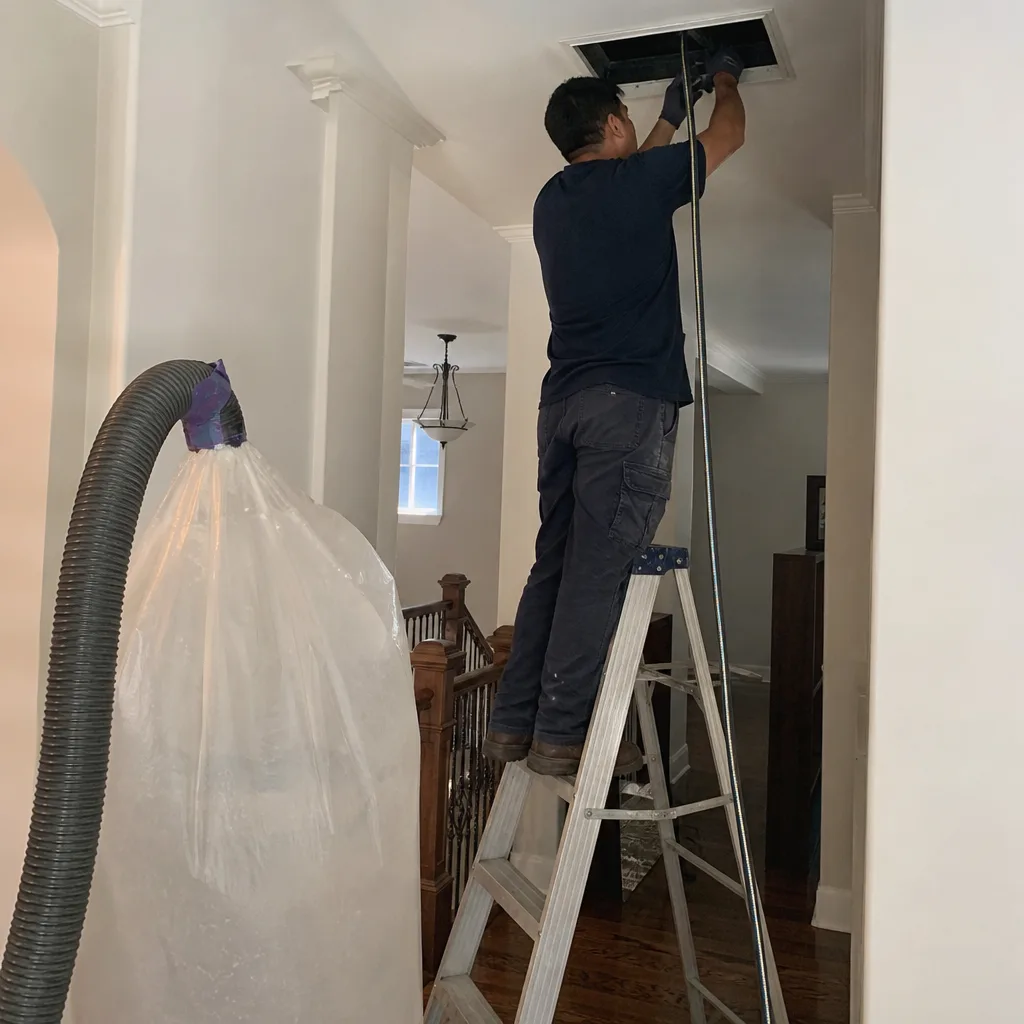
When we clean pollen-loaded systems in Northbrook, the documented photo record shows the difference between surface vacuuming and actual extraction. A shop vac at the register removes what’s visible. Negative-pressure extraction with a HEPA-sealed collector removes what’s adhered to the duct wall. The photo record lets you verify which you received.
Summer (July-September): Humidity and Mold Near Cooling Coils
Northbrook’s July dew point averages 68°F, and Lake Michigan’s thermal mass keeps overnight lows from dropping enough to provide real drying. The cooling coil in your air handler - the A-shaped aluminum fins where refrigerant absorbs heat - runs at approximately 40°F during operation. Warm, humid air hits cold metal. Condensate forms. It should drain away through the condensate line to a floor drain or pump.
When it doesn’t, three contamination pathways open:
- Standing water in the drain pan: The pan beneath the coil is typically galvanized steel or polymer. Water that sits for more than 48 hours supports bacterial growth, which produces the musty smell that distributes through ducts when the blower cycles.
- Coil fouling: Dust that makes it past the filter adheres to wet coil fins. The resulting mat reduces airflow across the coil, lowering system efficiency and providing a substrate for mold colonization.
- Duct saturation: In severe cases, water overflows the pan and enters the plenum - the large sheet-metal box that connects the air handler to the duct trunk. From there, moisture wicks into fiberglass duct liner or flexible duct, creating hidden mold reservoirs.
July inspection checklist:
- Run the AC for 20 minutes, then shut it off and listen at the air handler. Gurgling from the drain pan indicates partial blockage.
- Inspect the condensate line exit. In Northbrook, these typically terminate at a basement floor drain or a small condensate pump. Algae growth at the exit point means the line needs cleaning.
- Remove the air handler access panel (power off first) and shine a flashlight on the coil fins. Uniform gray dust is normal. Dark spotting, particularly at the bottom of the A-frame where water collects, warrants professional evaluation.
The mold species we most commonly identify in Northbrook summer samples are Cladosporium and Aspergillus - both allergenic, neither typically toxigenic in residential concentrations. The issue isn’t emergency-level toxicity; it’s chronic low-grade exposure in a sealed house. A family spending July and August indoors with a contaminated coil is inhaling spore loads that a clean system wouldn’t generate.
Cleaning a contaminated coil requires foaming cleaner applied with low pressure, followed by thorough rinsing - and containment, because the debris you’re removing is bioactive. This isn’t a homeowner task. The coil fins are fragile; pressure washing bends them permanently. And without HEPA containment, you’re distributing mold through the house during the cleaning process.
Our HVAC Cleaning in Northbrook service includes coil inspection and cleaning as a standard component, with photo documentation of the coil condition before and after. Haven Standard Clause 1 applies: written price before any work starts, including coil cleaning if it’s needed.
Fall (October-November): Post-Renovation Debris and Construction Dust
Northbrook’s building permit data shows consistent teardown and major renovation activity, particularly in the East Northbrook area and along Shermer Road where 1950s ranches are being replaced or substantially gutted. Construction generates respirable crystalline silica from concrete cutting, drywall dust, and fiberglass insulation fragments - particulate in the 1-10 micron range that penetrates standard window seals and soffit vents.
The contamination pathway is indirect. A neighbor’s renovation doesn’t dump dust directly into your ducts. But it elevates ambient particulate throughout the neighborhood. Your HVAC system, running in heating mode as temperatures drop, draws that elevated load through return grilles. Filters capture some. The rest enters the duct system.
More significant is direct contamination in homes that underwent their own renovation. In Northbrook, common fall projects include:
- Kitchen and bathroom gut renovations, during which contractors often block or remove return grilles for access and fail to seal them properly afterward
- Basement finishing, which may involve cutting new duct runs or modifying existing ones without post-construction cleaning
- Window replacement, which temporarily removes the pressure boundary between indoor and outdoor air, allowing construction dust from the property or street to enter
October evaluation protocol:
- Check all return grilles for proper seating. A grille that rocks or gaps at the edge was likely disturbed and not resealed.
- Run the system and hold a flashlight beam parallel to the air stream at each supply register. Visible particle movement in the light indicates elevated dust load.
- If renovation occurred on your property, request the contractor’s duct protection documentation. Reputable Northbrook contractors use temporary filters or grille seals; if there’s no record, assume debris entered.
The documented photo record is particularly valuable after renovation. We can compare October images to prior cleaning records and show exactly what the construction season added. In a 2022 job on Voltz Road, the photo record revealed drywall dust packed 2 inches deep in a newly extended duct run - the contractor had run flex duct through a dusty joist bay without cleaning the pathway first. The homeowner had no symptoms yet; the camera found it before the family started heating with it.
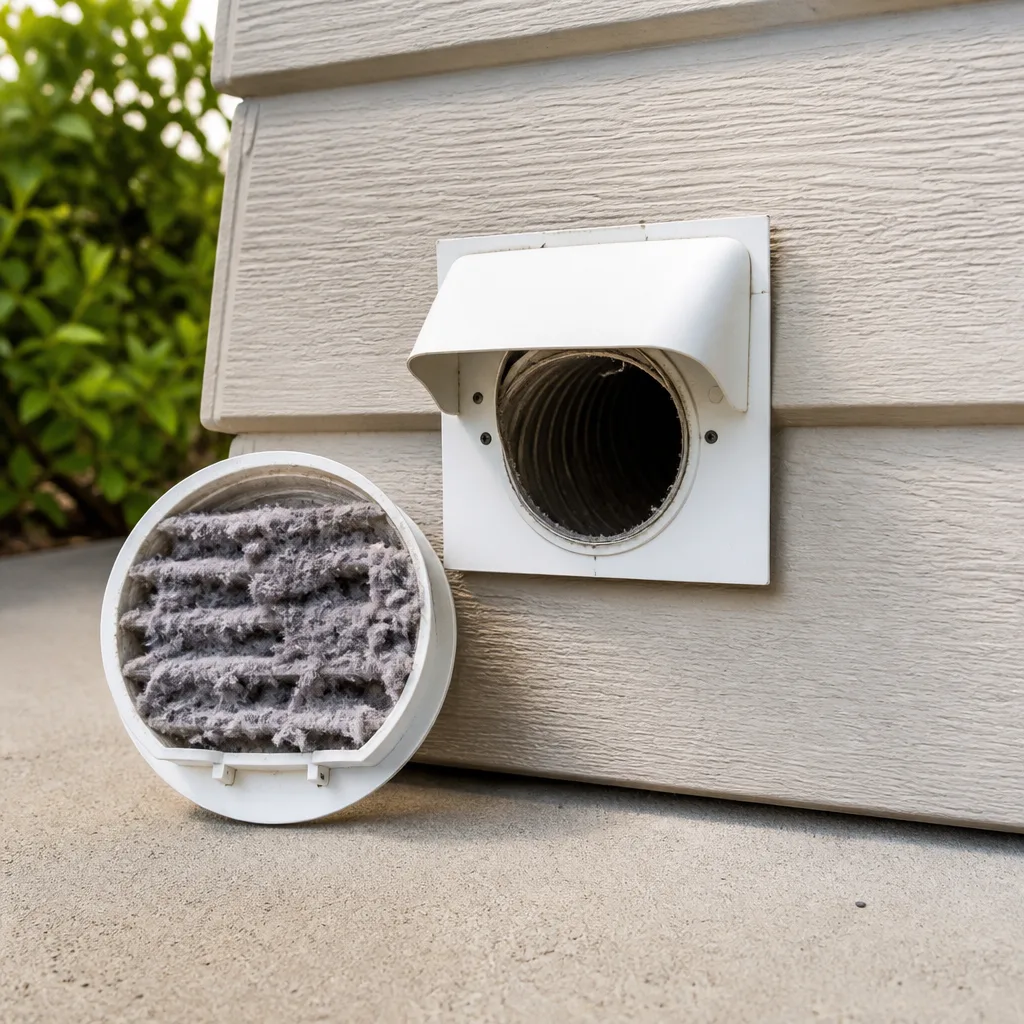
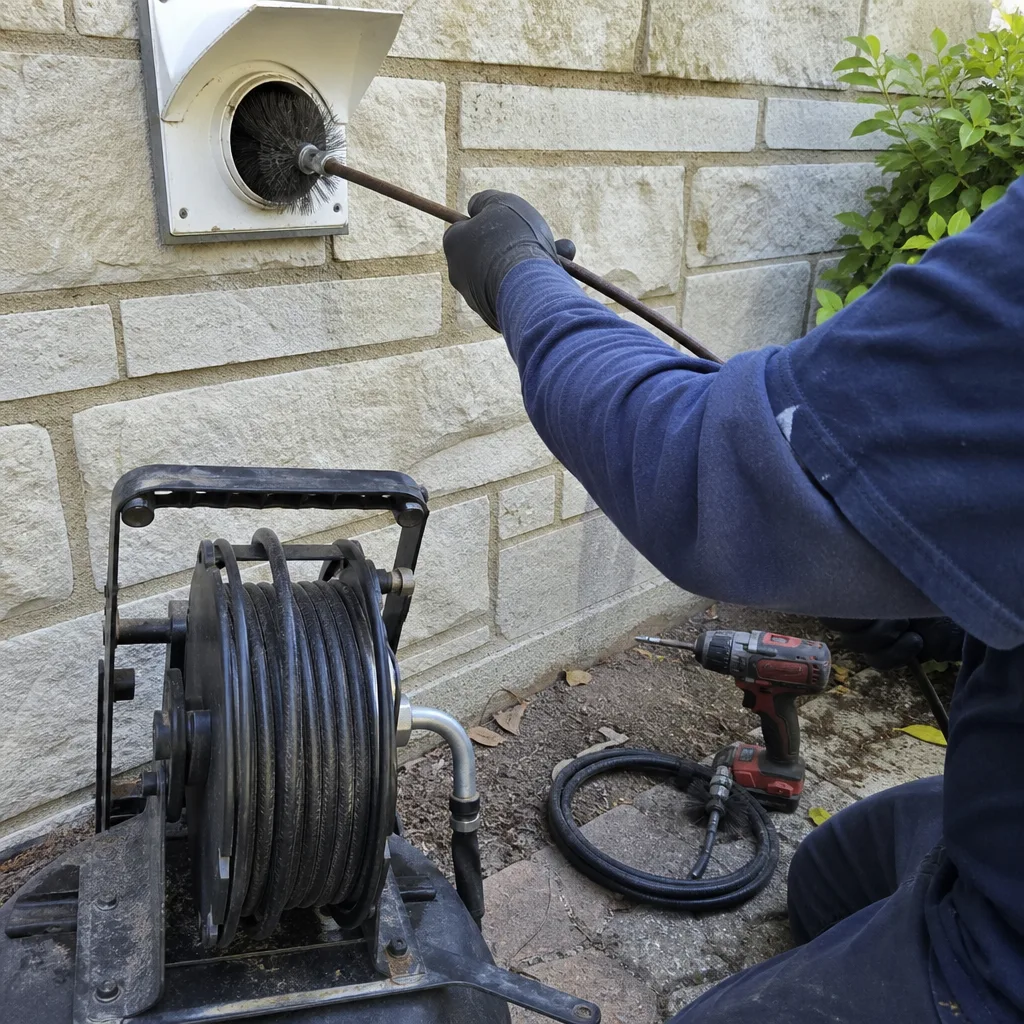
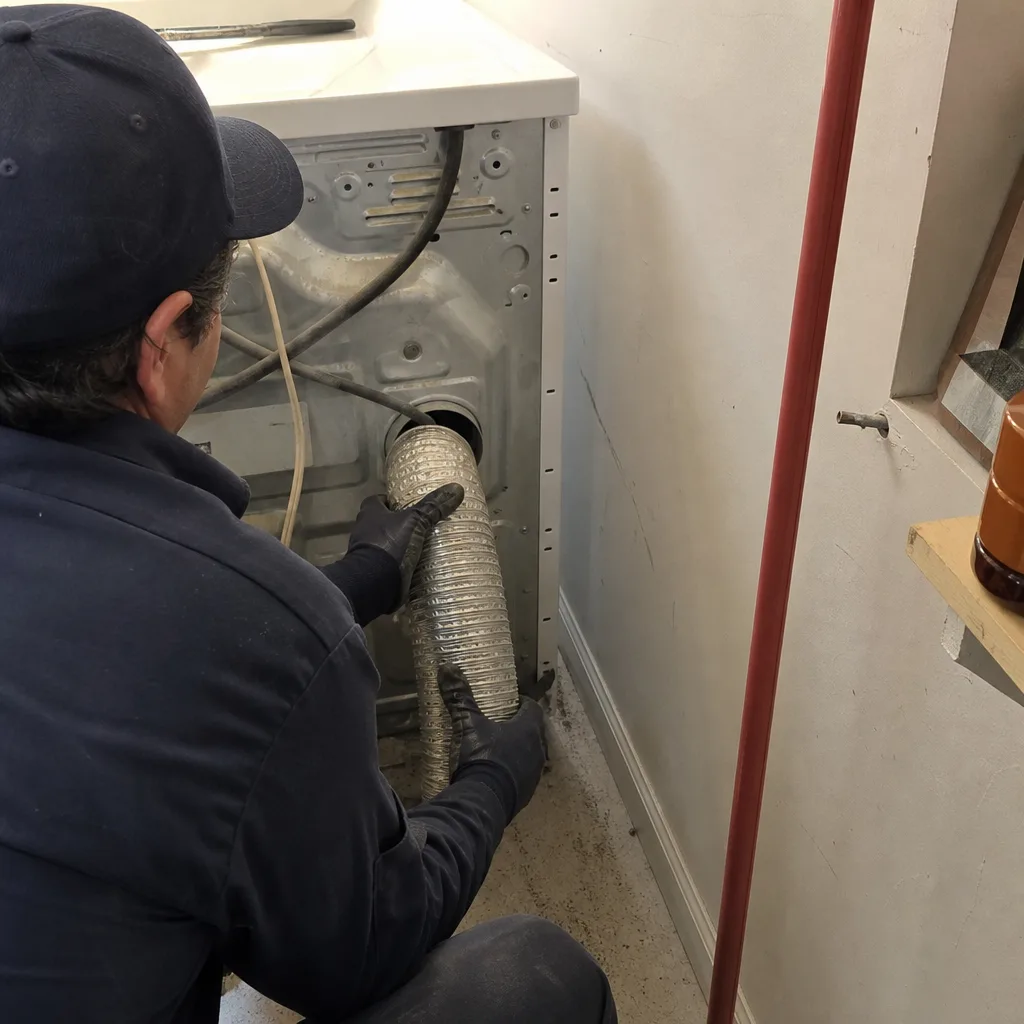
Fall is also when we recommend Dryer Vent Cleaning in Northbrook as a companion service. Lint accumulation accelerates in summer heavy-use months, and the first sustained heating cycle in October can ignite accumulated debris. The dryer vent and duct system share the same pressure boundary; evaluating both together gives a complete picture of fall contamination.
Winter (December-March): Particulate Concentration in Sealed Homes
Northbrook’s January average high is 31°F. The house stays closed for weeks at a time. The HVAC system, now in heating mode, recirculates the same air through the same ducts 4-6 times per hour. Whatever entered the system in fall is now being concentrated.
The physics are straightforward: no fresh air infiltration means no dilution. Indoor particulate sources - skin cells, pet dander, cooking aerosols, combustion byproducts from gas furnaces - accumulate. The filter loads progressively. Airflow drops. The system runs longer to maintain temperature, increasing the total volume of air passing through contaminated ducts.
Gas furnace combustion produces ultrafine particles (<0.1 micron) and nitrogen dioxide. In a properly vented system, these exit through the flue. But heat exchanger cracks, common in furnaces over 15 years old, can allow combustion gases to enter the airstream. The first indicator is often soot staining at supply registers, particularly those closest to the air handler.
January inspection focus:
- Inspect supply registers for black or gray soot staining, especially on upper-floor rooms where warm air first arrives.
- Check the filter monthly, not quarterly. Winter loading in Northbrook’s sealed homes typically requires January and February replacement even with 90-day rated filters.
- Monitor humidity levels. Northbrook winter air is dry; indoor relative humidity below 25% increases airborne dust resuspension from ducts. If you’re running a portable humidifier, ensure it’s clean - moldy humidifiers are a common winter contamination source we find in January service calls.
The sealed-house effect is most pronounced in homes with high efficiency upgrades - new windows, spray foam insulation, comprehensive air sealing. These improvements reduce heating bills but eliminate the accidental ventilation that older homes relied on to dilute indoor pollutants. A 1960s Northbrook ranch with original windows might exchange air with outdoors at 0.5 air changes per hour. A comprehensively retrofitted home might be at 0.1. The duct system in the efficient home carries a higher contamination burden per volume of air moved.
This isn’t an argument against efficiency. It’s an argument for proportionate duct maintenance. The tighter the house, the more critical the duct cleanliness.
Month-by-Month Inspection Calendar for Northbrook Homes
Generic advice says “check your system seasonally.” Here’s what to actually do, when, based on Northbrook’s specific climate and housing stock.
January
- Replace filter (winter loading peak)
- Inspect supply registers for soot staining
- Check humidifier pad or canister for scale and biofilm
February
- Replace filter again if loading was severe in January
- Verify thermostat schedule matches actual occupancy (overheating increases dust circulation)
March
- Pre-season cooling check: test AC operation for 10 minutes
- Inspect outdoor condenser for debris from winter storms
April
- Primary pollen inspection: remove and inspect return grilles
- Install fresh filter rated for pollen season
- Schedule whole-system evaluation if pollen staining is visible
May
- Monitor filter loading weekly during oak pollen peak
- Check window seals - spring temperature swings expand and contract caulking
June
- Transition to summer thermostat settings
- Final filter check before sustained cooling season
July
- Primary humidity inspection: condensate line, drain pan, coil condition
- Verify dehumidifier operation if basement unit is present
August
- Mid-season filter replacement
- Inspect duct boots in basement for condensation (indicates duct leakage and temperature differential)
September
- Final cooling season coil inspection
- Schedule any needed cleaning before heating season demand peaks
October
- Primary post-construction inspection: grille seating, register particle check, renovation documentation review
- Test heating system for 20 minutes before sustained operation
- Schedule Dryer Vent Cleaning in Northbrook if not done in spring
November
- Install winter-rated filter
- Verify carbon monoxide detectors (Haven Standard Clause 3: Verified Crews includes CO testing on every heating service)
December
- Baseline filter check before holiday hosting increases occupancy and cooking load
- Inspect humidifier start-up if whole-house unit is present
The Humidifier Factor: Why Some Northbrook Homes Need Different Care
Whole-house humidifiers - bypass, fan-powered, or steam types - are common in Northbrook, installed on the supply plenum or return duct to maintain 35-45% relative humidity during heating season. They solve the dry-air problem but create a distinct contamination profile that homes without them don’t experience.
Bypass humidifiers (Aprilaire 600, Honeywell HE280) divert warm air through a water panel. The panel evaporates water into the airstream. What doesn’t evaporate - dissolved minerals, biofilm, and any particulate in the water - remains on the panel or enters the duct as scale dust. In Northbrook, where water hardness averages 8-12 grains per gallon, calcium and magnesium buildup is significant. A neglected water panel becomes a mineral distribution system.
Fan-powered humidifiers add a blower for higher output. The fan motor and housing are additional contamination points if not cleaned annually.
Steam humidifiers (Aprilaire 800) boil water electrically. They don’t distribute minerals as dust, but the boiling chamber requires descaling, and the steam tube into the duct must be inspected for biofilm. Steam units are less common in Northbrook due to higher electrical demand, but we service several in the higher-end construction north of Dundee Road.
The contamination pathway: humidifier water panels are replaced annually in well-maintained homes. But the duct section immediately downstream - the supply plenum and first few feet of trunk - receives continuous moisture during heating season. Any dust present swells and adheres. We’ve photographed this in Northbrook homes where the plenum interior has a uniform gray paste, 1/4 inch thick, that doesn’t match the dry dust found elsewhere in the system.
Humidifier-specific maintenance:
- Replace water panels annually, before heating season. Don’t clean and reuse - the mineral loading is irreversible.
- Inspect the plenum interior at panel change. Visible staining or paste-like residue indicates duct cleaning is needed.
- Verify humidistat setting. Over-humidification (above 45% in winter) causes window condensation, which leads to mold on sills and potential duct moisture issues.
- Consider a steam unit if you have significant respiratory sensitivity. The upfront cost is higher - $1,200-$1,800 installed in Northbrook - but the mineral and biofilm issue is substantially reduced.
When we clean humidifier-affected systems, the documented photo record separates plenum contamination from main trunk contamination. The customer sees exactly where the humidifier contributed and where it didn’t. This matters for maintenance decisions: a home with clean main trunks but contaminated plenums needs different ongoing care than a home with uniform loading.
What a Technician Should Find: Seasonal Baselines for Clean Ducts
A homeowner evaluating whether cleaning is warranted needs a reference point. Here’s what we document in well-maintained Northbrook systems, season by season, so you can compare any quote or inspection report against an actual baseline.
Spring baseline (post-pollen season, May):
- Return grilles: light dust, no visible pollen staining on back side
- Filter: loaded to approximately 50% of visible surface, no bowing
- Main trunk: thin, uniform dust layer, less than 1/16 inch, easily disturbed by airflow
- Branch ducts: similar light loading, no accumulation at elbows or transitions
Summer baseline (peak cooling, August):
- Coil: clean aluminum fins, no biofilm, condensate pan dry between cycles
- Plenum: dry, no moisture staining on insulation or metal
- Supply registers: no mold spotting or discoloration
Fall baseline (pre-heating, October):
- All grilles properly seated and sealed
- Filter: clean or recently replaced
- Duct system: dry, no construction debris visible at register openings
Winter baseline (mid-season, January):
- Filter: loaded but not collapsed, changed within 60 days
- Supply registers: no soot, uniform air temperature across all rooms
- Humidifier (if present): clean water panel, no scale dust at supply registers
Deviation from these baselines indicates need. A technician who reports “moderate debris” without specifying location, depth, and seasonal context is giving you a judgment call, not data. The Haven Standard requires measurable documentation: the photo record shows depth against a known reference (typically the camera’s own shadow or a measurement probe), and the written scope specifies which duct runs were affected and to what degree.
Our Air Duct Cleaning in Northbrook pricing reflects this specificity. A system at spring baseline throughout needs less service than a system with humidifier plenum paste and pollen-compacted return boots. Written price before work starts - Haven Standard Clause 1 - means the inspection itself is documented and the scope is defined before equipment enters the house.
Common Mistakes to Avoid
- Cleaning on a fixed annual date regardless of condition. A Northbrook home with no trees within 100 feet, no humidifier, and no renovation activity may not need annual service. Conversely, a home with three oaks overhead, a bypass humidifier, and a 2024 kitchen renovation may need cleaning 18 months after the last service. Condition drives timing, not calendar color-coding.
- Using the highest MERV filter that fits. MERV 13 and above in systems with original blowers from the 1970s or 1980s restricts airflow, freezes coils, and can cause heat exchanger overheating. The filter should match the system’s designed static pressure, not the homeowner’s aspiration for purity.
- Ignoring humidifier maintenance while focusing on ducts. A new water panel costs $15-40. A contaminated plenum cleaning costs significantly more. The panel is the preventive investment; the duct cleaning is the correction.
- Accepting “blow-and-go” service without photo documentation. A technician with a shop vac and 45 minutes cannot clean a full duct system. The documented photo record - before and after, every run - is the only verification that negative-pressure extraction with proper contact time actually occurred.
- Assuming new construction means clean ducts. New Northbrook builds often have construction debris in ducts from the framing and drywall phases. The builder’s “final cleaning” typically addresses visible surfaces, not duct interiors. We recommend evaluation before the first heating season in any new purchase.
- Neglecting dryer vent cleaning while focusing on HVAC ducts. The dryer vent is part of the same pressure system. A blocked vent reduces dryer efficiency and creates fire risk, but it also affects overall house pressure balance, which influences how much outdoor particulate enters the duct system.
- Waiting for symptoms to confirm need. Musty smell, visible dust, or respiratory irritation indicate advanced contamination. The photo record and seasonal inspection catch issues before they become symptomatic, when cleaning is less invasive and less expensive.
When to Call a Professional
Call for evaluation when: you can see debris at register openings beyond a light dust film; you’ve had renovation work in the past 12 months with no post-construction duct inspection; your humidifier water panel shows heavy scale or you can see dust at supply registers after humidifier operation; you’ve changed filters monthly and still see rapid loading; or you smell mustiness when the system first cycles on, particularly in summer.
CleanRun Air Duct Cleaning Northbrook offers free estimates in Northbrook. We’ll inspect your system with a camera, show you what we find on the spot, and deliver a written price before any work starts - Haven Standard Clause 1, no exceptions. Every job includes a Documented Photo Record of every duct run, before and after, and is backed by our 365-Day Done Right Promise. Call (224) 351-9772 to schedule.
Frequently Asked Questions
For a detailed look at what drives these numbers, see our Air Duct Cleaning Cost Breakdown: The Northbrook Homeowner’s Reference for 2026. Whole-system air duct cleaning for a typical Northbrook home - 2,000-3,000 square feet with 10-15 duct runs - generally ranges from $420 to $780. Homes with attached humidifiers, flexible duct systems that require more navigation time, or significant contamination from renovation may run higher. We deliver a written price before any work starts, and our Free Second Opinion on any written estimate lets you compare apples to apples. Call (224) 351-9772 for an exact quote - estimates are free.
The $79-$149 coupon model typically covers a brief vacuuming of accessible registers, not full-system negative-pressure extraction with HEPA containment. The technician arrives, identifies “additional needed services,” and the final invoice reflects what the work actually costs. Our pricing is flat per system, agreed in writing before equipment enters your home. The photo record verifies what you paid for.
The documented photo record is your verification. We photograph the interior of every duct run before cleaning and after, with the camera’s timestamp and location reference. You receive these images as part of the standard job record. If a company won’t show you photos of your own ducts, you’re buying a service you cannot verify.
For typical homes without humidifiers or recent construction, every 2-3 years is sufficient given Northbrook’s tree canopy and seasonal loading. Homes with whole-house humidifiers, significant renovation activity, or multiple pets may need annual service. The inspection calendar in this guide lets you evaluate condition seasonally rather than guessing.
Yes. Oak and maple pollen in Northbrook’s dense canopy areas - particularly east of Waukegan Road and near the North Branch corridor - produces grain counts that suburban areas with less mature tree cover don’t experience. Return grilles in these neighborhoods show measurably higher spring loading. Filter replacement frequency and duct inspection timing should account for this.
Surface cleaning of register covers and visible duct boots is reasonable homeowner maintenance. Full-system cleaning requires negative-pressure extraction equipment, HEPA containment, and camera navigation that isn’t available to consumers. More critically, disturbing duct debris without containment distributes it through the house. The “how it works” is inspectable; the “how to do it yourself” isn’t practically safe for whole systems.
The Bottom Line
Northbrook’s four-season climate creates four distinct duct contamination events: spring pollen loading, summer humidity and mold potential, fall construction debris, and winter particulate concentration in sealed homes. A single annual cleaning date ignores this pattern. The homeowners who maintain cleanest systems inspect the right component at the right time - grilles in April, coils in July, construction impact in October, filters and humidifiers in January - and schedule professional service based on what they find, not what the calendar says.
The equipment used matters, the documentation matters, and the pricing transparency matters. Every CleanRun job since 2013 has started with a written price and ended with a photo record. That standard doesn’t change with the season.
Call (224) 351-9772 for a free estimate in Northbrook. We’ll inspect your system, show you what the camera finds, and put our number in writing next to any competitor’s quote - no obligation, no surprise add-ons.
Written by Tomas Reyes, Owner at CleanRun Air Duct Cleaning Northbrook, serving Northbrook since 2013.