
Last updated September 23, 2026
Whole-system duct and dryer vent check with before-and-after photos - you see exactly what came out of your vents
That "$99 whole-house special" is a bait ad - the real number appears once they are in your hallway, or the "clean" is a shop-vac at the register. We photograph the inside of your ducts before and after instead.
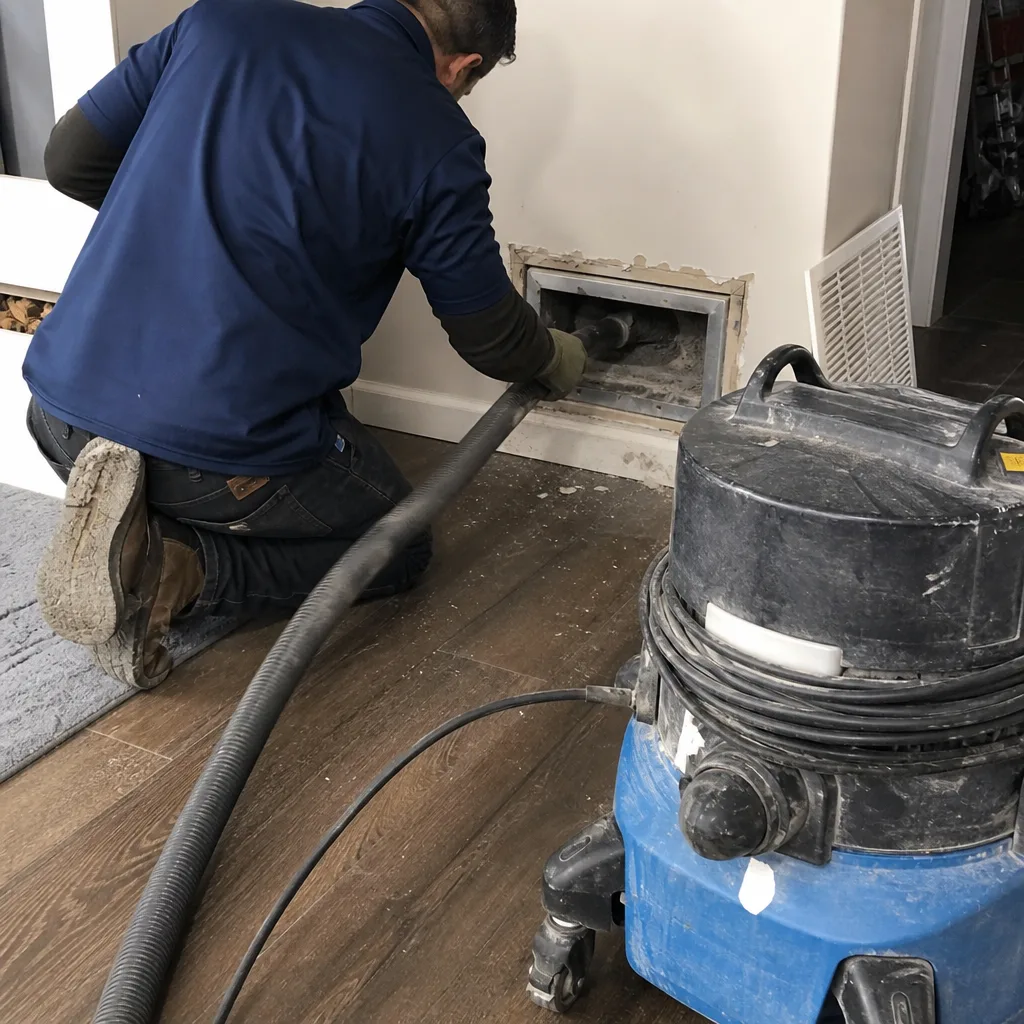 Before
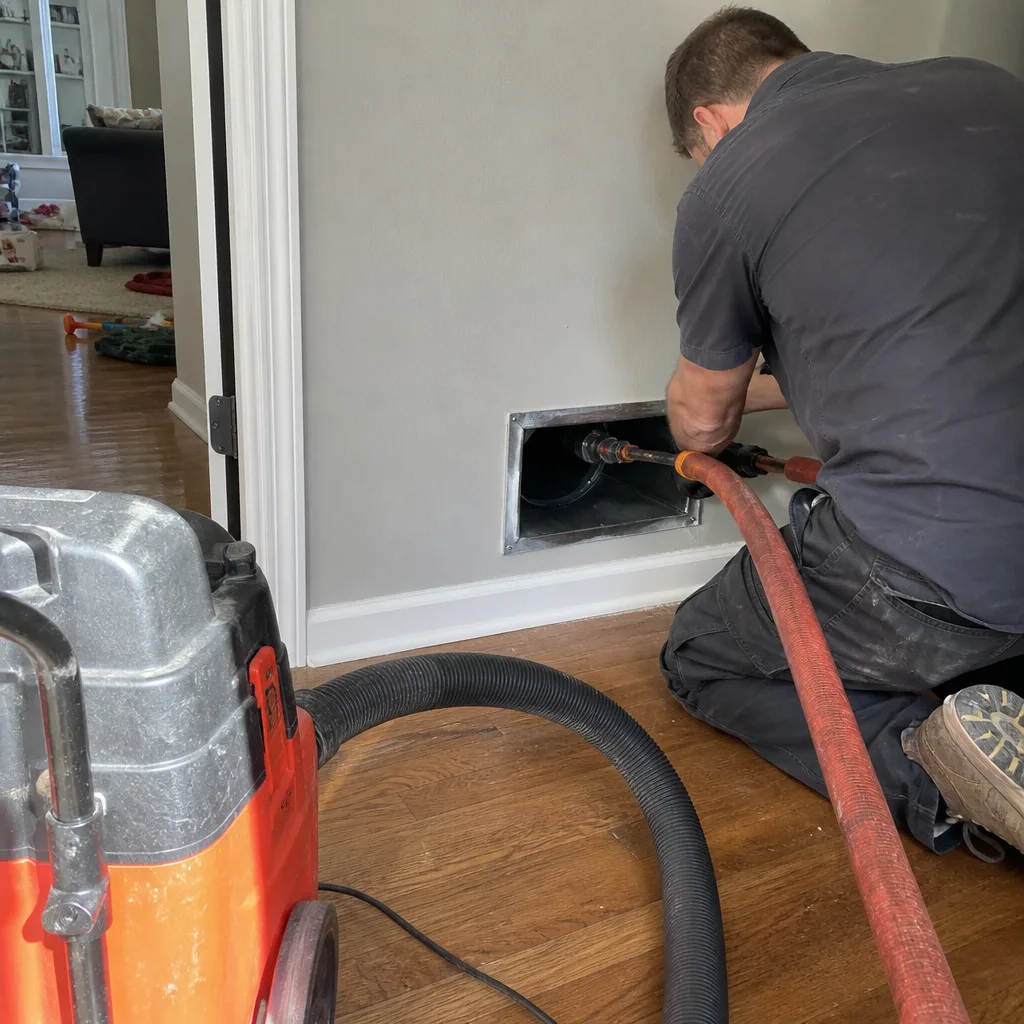 After
After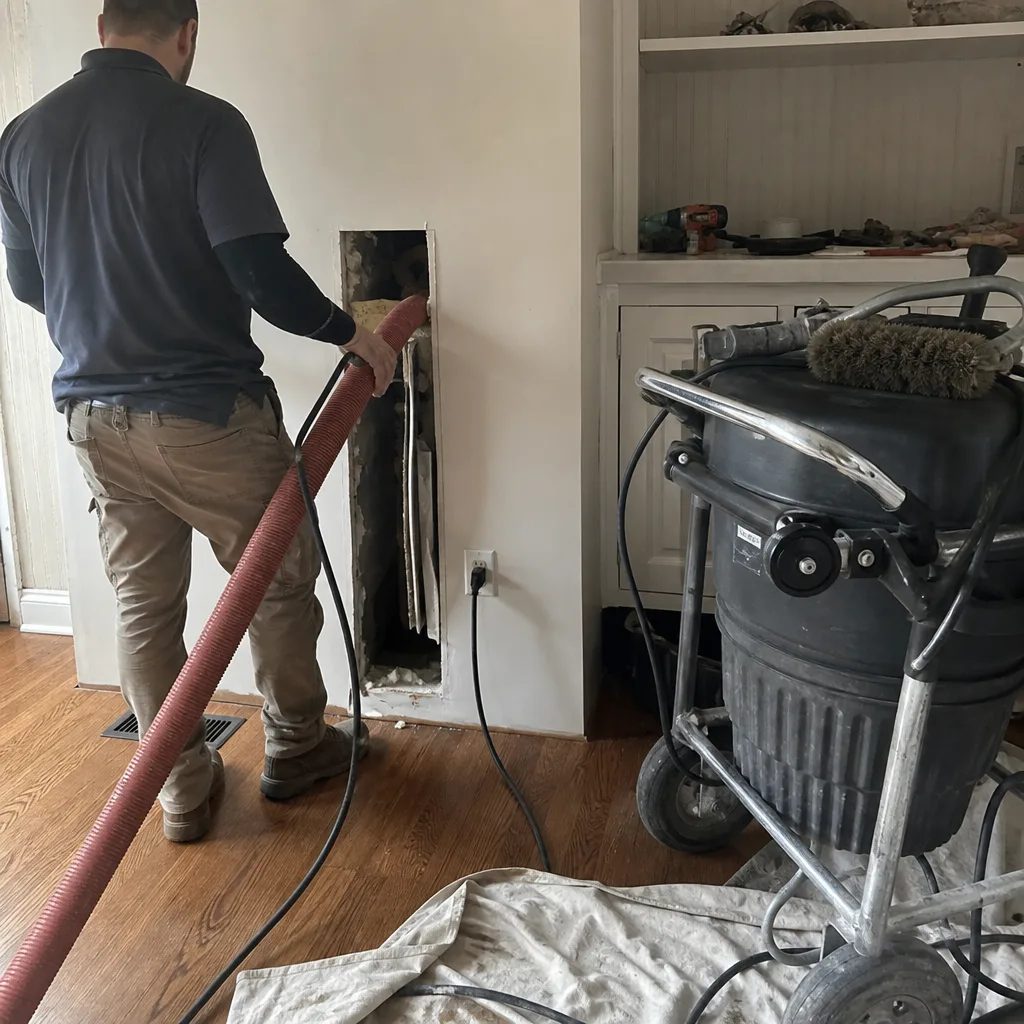 Before
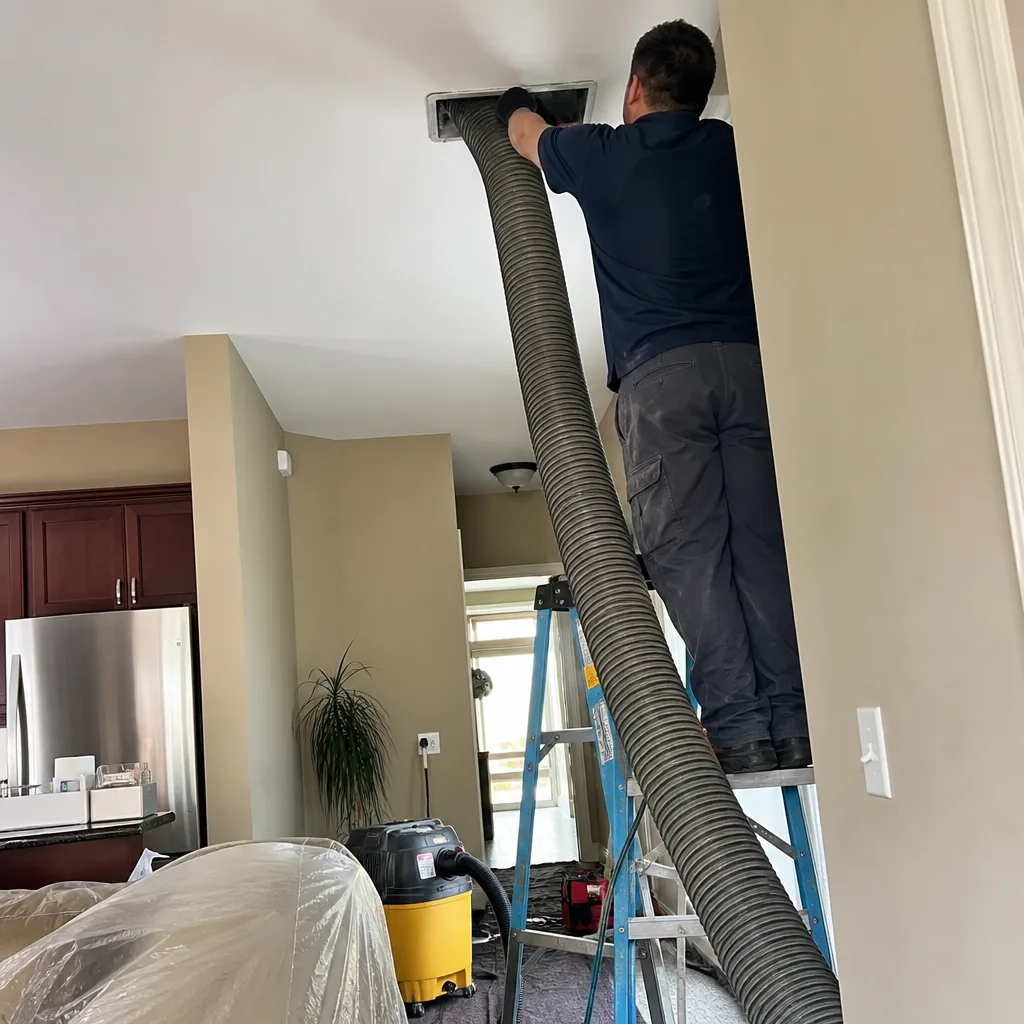 After
After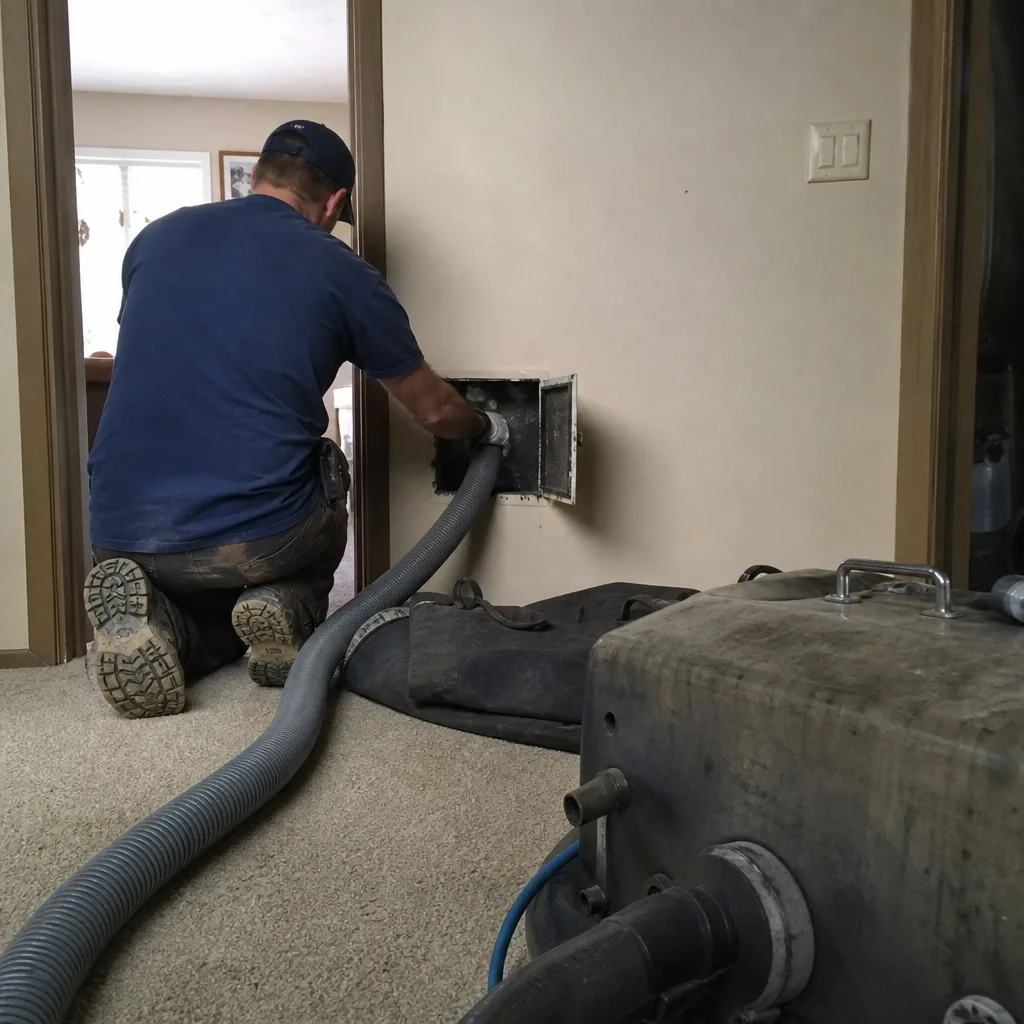 Before
 After
AfterThe Complete Guide to Air Duct Cleaning in Northbrook
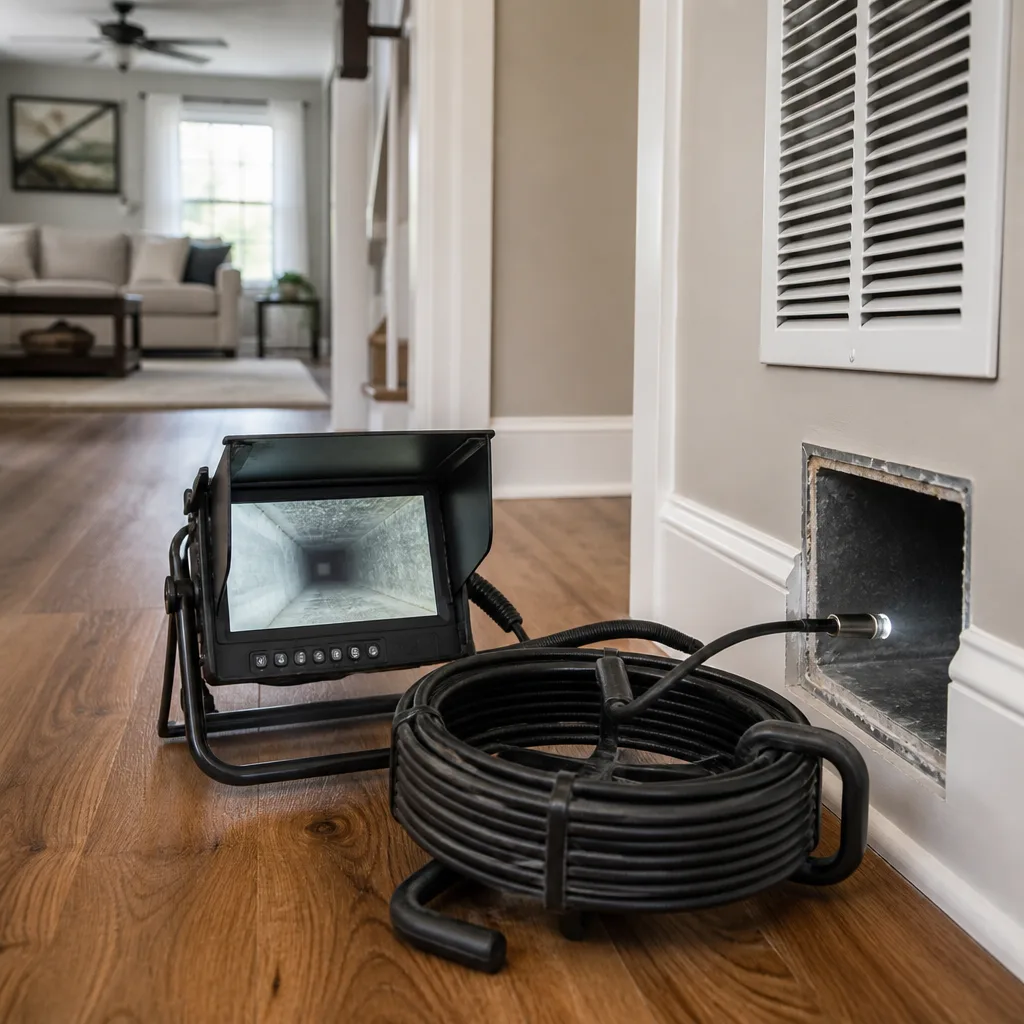
A camera inserted into a 12-year-old Northbrook ranch-style home’s return plenum will typically show a felt-like layer of compressed debris, not the dusty wisp shown in competitor stock photos. The difference between those two images is the difference between a real job and a theatrical one. In this guide, we’ll show you what actually accumulates inside ductwork in Northbrook’s housing stock, what a legitimate cleaning produces as a deliverable, and how to tell whether the work you paid for was performed or merely performed at.
Quick Answer
Professional air duct cleaning in Northbrook costs $450 to $1,200 for a complete residential system, depending on square footage, duct run count, and whether the job follows NADCA ACR standards. A legitimate cleaning includes negative-pressure extraction, mechanical agitation of every duct run, and a documented photo record of before-and-after conditions inside each branch. The work should produce written deliverables: a scope of work, itemized pricing agreed before work starts, and photographic evidence of debris removal.
Table of Contents
- What Actually Accumulates Inside Northbrook Ductwork
- The NADCA ACR Standard: What Compliance Actually Means
- What a Legitimate Photo Record Looks Like
- What Air Duct Cleaning Actually Costs in Northbrook
- Three Post-Cleaning Complaints That Trace Back to Skipped Steps
- Why Equipment Brand and Configuration Matter
- Choosing a Provider: Verification Checklist
- Common Mistakes to Avoid
- When to Call a Professional
- Frequently Asked Questions
BeforeAfterWhat Actually Accumulates Inside Northbrook Ductwork
Northbrook’s housing stock spans roughly 1960s colonials to 2000s construction, with a concentration of homes built between 1985 and 2005. The debris profile inside these systems varies predictably by age, HVAC configuration, and neighborhood microclimate.
In homes built before 1980, particularly in neighborhoods east of Waukegan Road where original ductwork remains, we regularly find a dense mat of compressed particulate at the return plenum, the central collection point where air enters the system before passing through the filter. This material typically consists of degraded fiberglass insulation, settled pollen, and fine particulate from decades of forced-air cycling. The camera shows a uniform gray felt, often 2 to 4 inches thick, that does not dislodge with casual vacuum contact.
Homes from the 1985 to 2000 period, common in the West Northbrook and Greenbriar areas, present a different profile. These systems often feature flex duct runs, the ribbed flexible tubing that replaced rigid sheet metal in many builds. The interior ridges trap debris at regular intervals, creating visible banding on camera. The material here tends to be lighter, fluffier, but more extensive in surface coverage. We’ve documented cases where 60 to 70 percent of the flex duct interior showed visible debris accumulation, particularly in homes with pets or where the original builder-grade filter was never upgraded.
Post-2000 construction in Northbrook, including infill and teardown rebuilds near Sunset Ridge and the downtown corridor, typically shows less total debris but higher concentrations of construction residue. Fine drywall dust, in particular, adheres to duct surfaces and resists standard vacuum extraction without mechanical agitation, the physical brushing or whipping action that breaks debris free from duct walls.
The local climate contributes meaningfully. Northbrook’s position near Lake Michigan means higher spring and fall humidity than inland Chicago suburbs. That moisture, combined with temperature differentials across the duct system, creates conditions where biological growth can establish on debris substrates. We do not use alarmist language about this, but we document it when found: the camera shows the difference between inert dust and active growth, and the appropriate response differs accordingly.
Key debris types we document:
- Particulate accumulation: Fine dust, skin cells, pollen, and fiber fragments that settle over years of system operation
- Construction residue: Drywall dust, sawdust, and insulation fragments from original build or renovation, particularly in newer Northbrook homes
- Degraded filter media: Broken-down fiberglass from original filters or degraded internal insulation in older metal ducts
- Pet dander and hair: Concentrated in return ducts and near floor-level registers in homes with animals
- Moisture-affected debris: Material showing signs of humidity cycling, more common in lake-proximate Northbrook neighborhoods than in western suburbs
The NADCA ACR Standard: What Compliance Actually Means
NADCA, the National Air Duct Cleaners Association, publishes the ACR standard, the Assessment, Cleaning, and Restoration of HVAC Systems guideline that defines what constitutes a complete job versus a partial one. Most Northbrook homeowners have never seen this document. Most low-price competitors have not either, or they treat it as optional.
The standard specifies seven mandatory components. Understanding them lets you evaluate any proposal you receive.
- System inspection before cleaning: A visual assessment, typically with camera equipment, to document pre-existing conditions and identify access limitations. This is not a sales tool; it is the baseline against which results are measured.
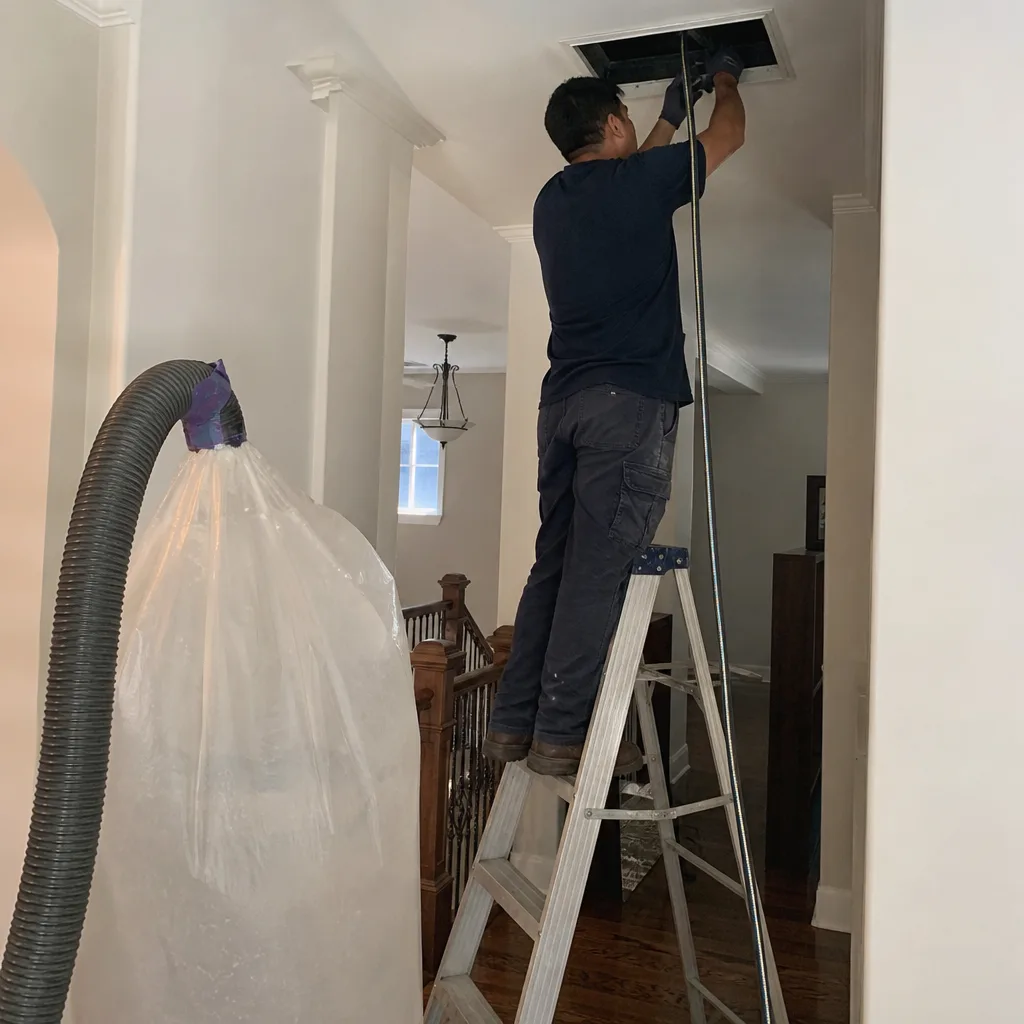
- Containment of the work area: Protection of furnishings, flooring, and occupied spaces from dislodged debris during the cleaning process. In Northbrook homes with finished basements or sensitive flooring materials, this step has material cost implications that $79 coupons do not cover.
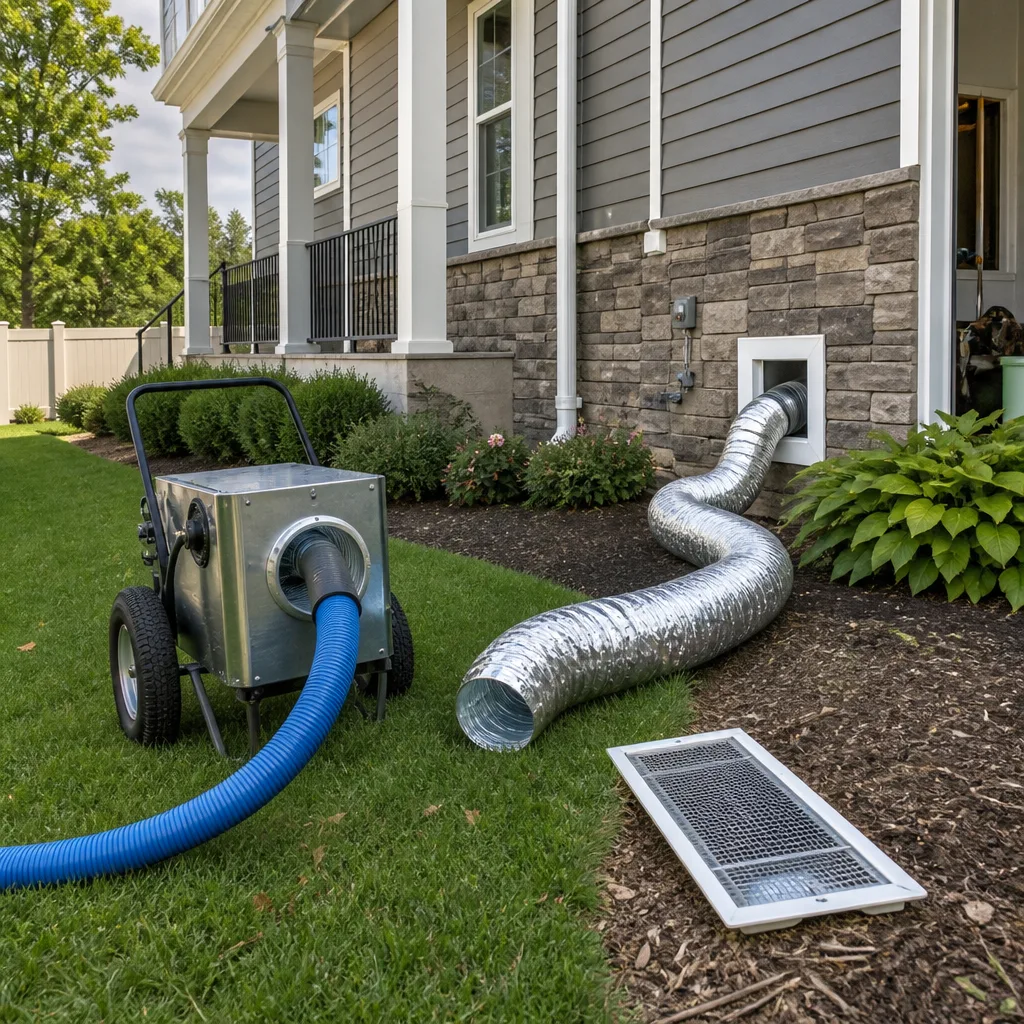
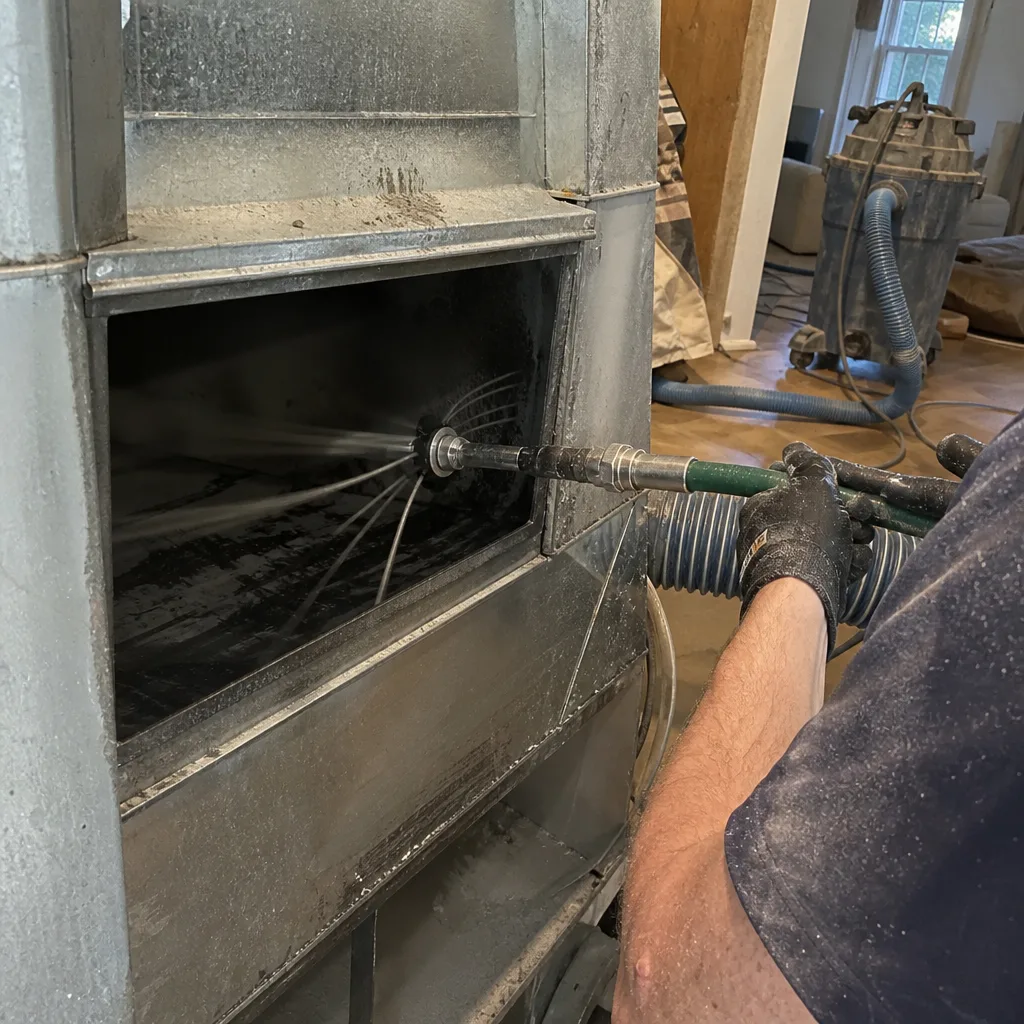
- Negative-pressure extraction: The core mechanical method. A high-powered vacuum unit, typically truck-mounted or portable HEPA-filtered equipment, creates suction that prevents debris from escaping into the home during agitation. Without negative pressure, brushing debris loose simply relocates it to your living space.
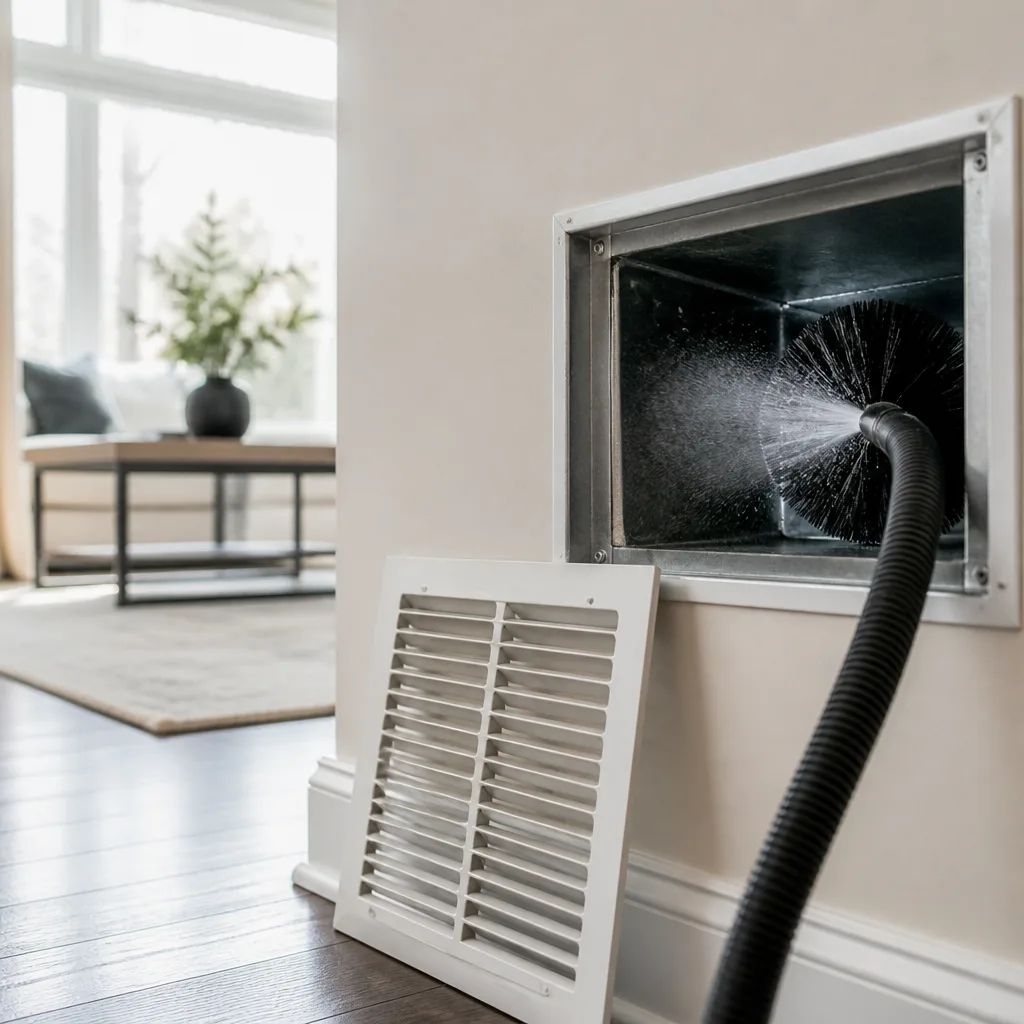
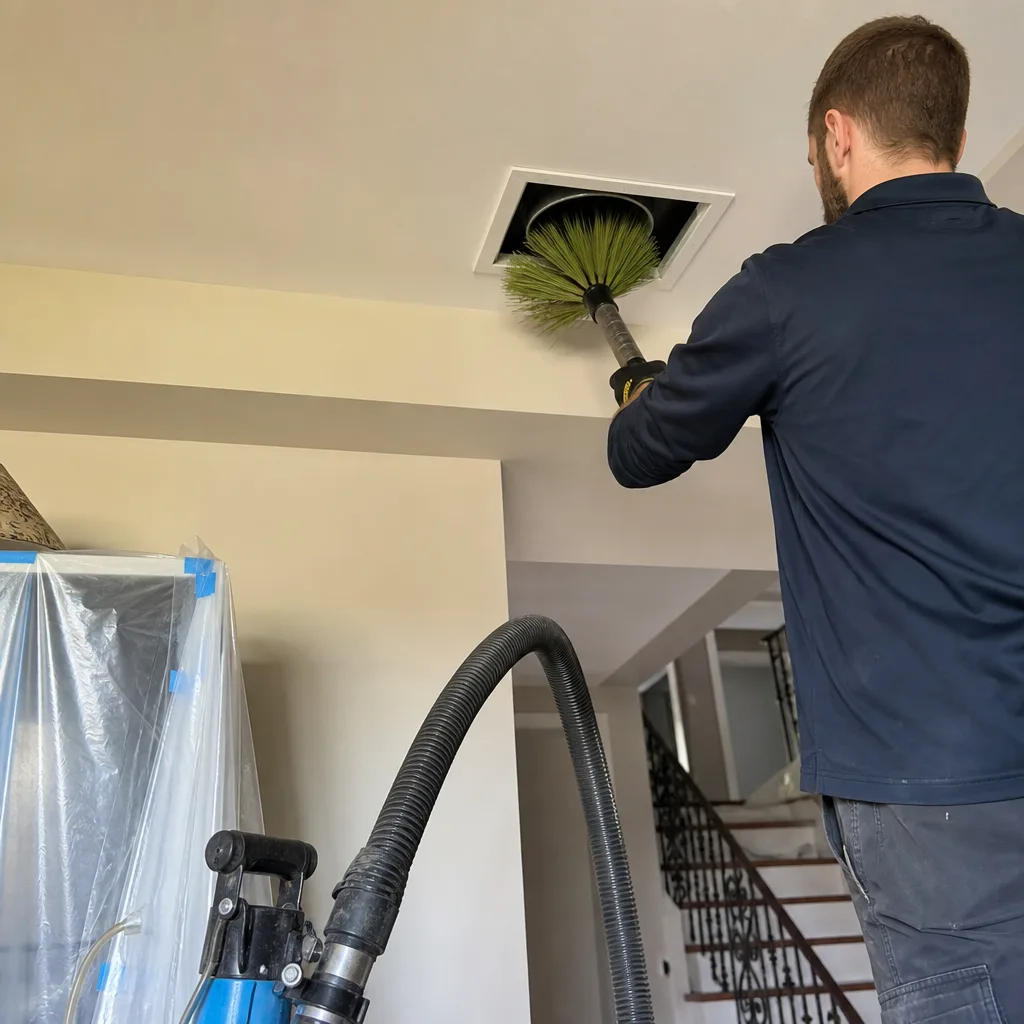
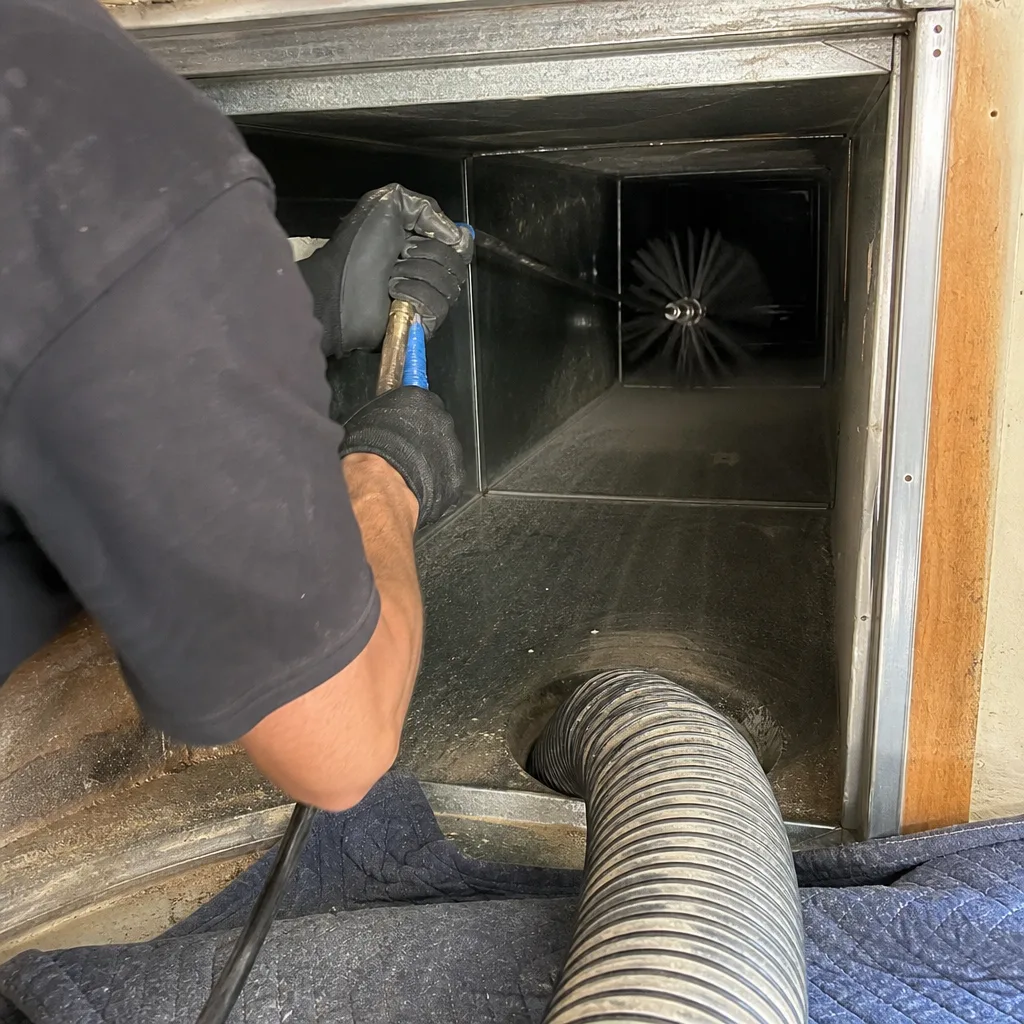
- Mechanical agitation of all duct surfaces: Brushes, whips, or compressed-air tools that physically contact duct walls to dislodge adhered material. This is the step most commonly skipped by low-price operators, who rely on vacuum suction alone and leave the felt-like compressed layers intact.
- Cleaning of all system components: Not just the visible duct runs, but the supply and return plenums (the large central chambers that distribute air to individual branches), registers and grilles, and the air handler components including the blower assembly and coil when accessible.
- Post-cleaning verification: A repeat visual inspection, again with camera documentation, to confirm debris removal and identify any areas requiring additional attention.
- Documentation and customer deliverables: Written record of work performed, including any limitations or recommendations for future maintenance.
The $79 coupon operation typically performs steps 1, 3, and 7 in name only. The inspection is cursory or absent. The negative-pressure equipment is underpowered, often a shop vacuum with inadequate CFM rating. Mechanical agitation is skipped entirely. Post-cleaning verification is verbal, not photographic. The documentation is a carbon-copy receipt, not a scope-of-work record.
At CleanRun, every Northbrook job follows the full ACR protocol under the H.A.V.E.N. Standard, with written pricing delivered before any panel is removed. Haven Standard Clause 1, Upfront Written Pricing, means the estimate you receive is the price you pay, not an opening bid.
What a Legitimate Photo Record Looks Like
The documented photo record is the only verifiable proof that duct cleaning occurred. Everything else, a technician’s verbal report, a receipt line item, even the sound of equipment running, can be simulated. A timestamped, geotagged, sequentially numbered set of images showing the interior of every duct run before and after work is not simulable without actually performing the work.
Here’s what the record should contain for a typical Northbrook home with 12 to 16 duct runs:
- Return plenum, before and after: The widest-angle view, showing the full cross-section of the main collection chamber. In pre-1980 homes, this is typically the most dramatic image.
- Each supply duct run, before and after: Individual images showing the condition from the plenum connection to the register boot, the transition piece behind your wall or floor vent. For a complete job, this means 8 to 12 paired images minimum.
- Each return duct run, before and after: Often fewer in number but typically more heavily loaded with debris.
- Register and grille assemblies: Removed, cleaned, and reinstalled, with images documenting their condition.
- Air handler access: Blower compartment and coil area, where accessible, with before-and-after documentation of any cleaning performed.
- Equipment in operation: The negative-pressure vacuum connected, the agitation tool inserted, establishing that the documented equipment was actually deployed on your system.
The images should be delivered to you as a standard job record, not held hostage for a review or additional fee. CleanRun has provided this documentation on every job since 2013, currently totaling more than 52,000 residential systems. The deliverable is part of the work product, not a marketing premium.
What to look for in evaluating photo records from competitors:
- Are the before and after images from the same location? Legitimate records show identifiable landmarks: a joint, a bend, a specific register boot profile. Generic dusty/clean images could come from any system.
- Is the debris type consistent with your home’s age and location? A 2015 Northbrook home should not show 40 years of accumulation. Inconsistent debris profiles suggest stock photography.
- Are there enough images for your duct count? A 3,000 square foot home with 14 registers should produce at least 28 paired images plus plenum and equipment shots. A half-dozen images total indicates selective documentation or incomplete work.
- Are timestamps sequential and consistent with the work duration? A complete job takes time. Images compressed into a 20-minute window suggest photography theater, not actual cleaning.
What Air Duct Cleaning Actually Costs in Northbrook
The Northbrook market has a specific cost structure driven by home size, access conditions, and the gap between legitimate ACR-compliant work and coupon-grade partial service. The ranges below reflect 2024-2025 pricing for complete residential systems in the 60062 ZIP code and adjacent Northbrook areas.
| Home Size / Duct Configuration | Complete ACR-Compliant Cleaning | What the Price Includes |
|---|---|---|
| Under 2,000 sq ft, 8-10 duct runs | $450 – $650 | Full negative-pressure extraction, mechanical agitation of all runs, plenum cleaning, register removal and cleaning, documented photo record, written scope and warranty |
| 2,000 – 3,500 sq ft, 12-16 duct runs | $650 – $950 | As above, plus additional access points for larger plenum systems common in 1980s-1990s Northbrook builds |
| 3,500 – 5,000 sq ft, 18-24 duct runs | $950 – $1,200 | As above, plus zoned system coordination and extended equipment runtime; typical for Northbrook teardown rebuilds and expanded colonials |
| Additional services (priced separately) | ||
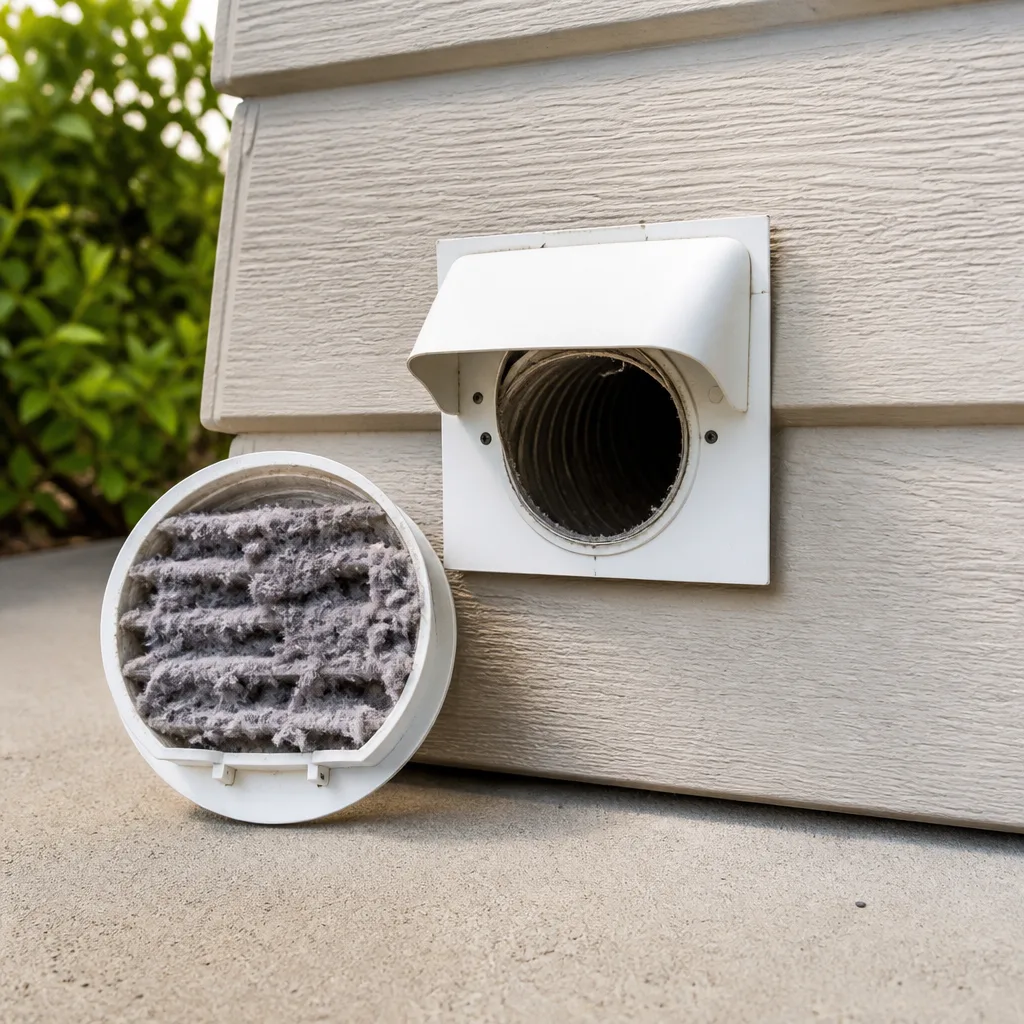
| Dryer vent cleaning | $150 – $250 | Full lint extraction from duct to exterior termination, airflow verification; Dryer Vent Cleaning in Northbrook details |
| HVAC coil and blower cleaning | $200 – $350 | Mechanical cleaning of evaporator coil and blower assembly, not chemical rinse-only; HVAC Cleaning in Northbrook details |
| Duct repair and sealing | $300 – $800+ | Accessible leak sealing, joint reinforcement, register boot repair; scoped after inspection |
These ranges assume standard access conditions. Homes with finished basement ceilings, custom built-ins over registers, or crawl-space duct runs may incur additional labor for access restoration, quoted in writing before work begins.
The $79 to $149 coupon price, heavily advertised in Northbrook through mailers and online lead services, covers a vacuum connection to one or two access points, minimal if any agitation, and no documentation. The business model depends on upselling once inside the home, or on completing multiple jobs per day through volume rather than thoroughness. The math is straightforward: a two-technician crew with truck-mounted equipment, travel time, and proper job duration cannot operate at that price point without omitting mandatory steps.
CleanRun’s pricing follows Haven Standard Clause 1: written price delivered before any work starts, with no post-arrival revision except for customer-requested additions documented in a change order. This is not a courtesy; it is the structural alternative to the bait-and-switch model.
Three Post-Cleaning Complaints That Trace Back to Skipped Steps
We receive second-opinion calls from Northbrook homeowners who had ductwork cleaned elsewhere and experienced one of three predictable outcomes. Each traces directly to a specific omitted procedure.
Complaint 1: “The dust came back within weeks.”
Skipped step: Mechanical agitation of the return duct system, particularly the return plenum.
The return side, where air is drawn back to the HVAC unit, typically carries 3 to 5 times the debris load of supply ducts. It is also harder to access and more time-consuming to clean. Coupon operations often focus visible effort on supply registers, the easily reached vents where homeowners direct attention, while performing minimal or no agitation on returns. The compressed debris layer remains intact, continues to shed particulate under airflow, and re-contaminates the system. Within two to four weeks, visible dust returns to registers and surfaces.
Proper procedure: negative-pressure extraction with powered brush or whip agitation of every return duct run, plus physical cleaning of the return plenum interior. The photo record should show this work was performed.
Complaint 2: “The smell didn’t change at all.”
Skipped step: Cleaning of the air handler components, particularly the evaporator coil and blower assembly, or failure to address moisture issues in the duct system.
Odors in HVAC systems rarely originate in the duct runs themselves. The source is typically biological activity on the coil, a dark, moist environment where microbial growth produces volatile compounds, or in the drain pan where standing water accumulates. Cleaning ducts without addressing the coil is like washing a car’s exterior to fix an exhaust smell. Similarly, if the duct system has active moisture intrusion from a disconnected condensate line or exterior leak, debris will continue to support odor-producing growth regardless of cleaning.
Proper procedure: inspection and, where indicated, cleaning of coil, blower, and drain components; identification and documentation of moisture sources requiring repair before cleaning will produce lasting results. HVAC Cleaning in Northbrook addresses this integrated approach.
Complaint 3: “My energy bills went up, not down.”
Skipped step: Post-cleaning system verification, including filter replacement and airflow balance assessment.
A legitimate cleaning can temporarily increase system airflow by removing restrictions. But if the operation dislodged debris that subsequently clogged the filter, if access panels were left loose creating leaks, or if registers were not properly reinstalled and balanced, the system may work harder to achieve the same conditioned output. The $79 operator has no incentive to verify these conditions; they are already en route to the next appointment.
Proper procedure: filter inspection and replacement if indicated; verification that all access panels are sealed; confirmation that registers are properly seated and adjustable dampers, if present, are returned to their original positions. The written job record should note these verification steps.
Why Equipment Brand and Configuration Matter
The duct cleaning industry uses equipment that varies enormously in capability and design intent. A homeowner cannot be expected to evaluate technical specifications, but naming the equipment being used allows independent verification and signals that the provider is not operating with disguised consumer-grade tools.
CleanRun deploys professional-grade equipment from manufacturers recognized in the trade: Nikro for portable HEPA extraction units used in finished spaces where truck-mounted equipment cannot access; Honeywell and Aprilaire for media filtration and whole-home air quality components; Abatement Technologies for containment and negative-air machines in specialized applications. These are not proprietary or private-label items. Specifications are published, parts are replaceable, and performance claims are verifiable against manufacturer documentation.
The critical specification for extraction equipment is CFM, cubic feet per minute of airflow, combined with static pressure capability. A residential duct system presents resistance that consumer vacuums cannot overcome. The equipment must maintain sufficient velocity at the tool head to capture debris as it is dislodged, not merely at the vacuum inlet. Underpowered equipment leaves debris in the duct, particularly at elbows and transitions where airflow naturally slows.
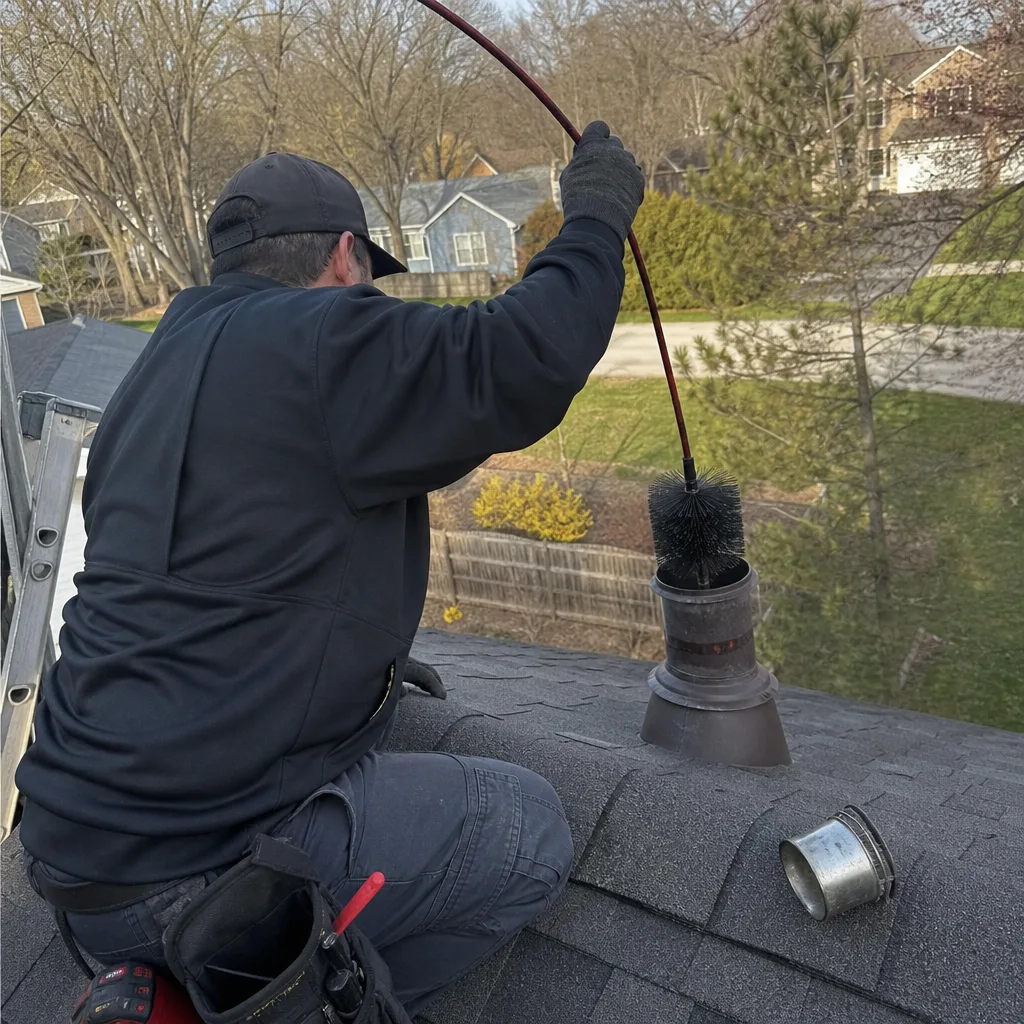
Agitation tools similarly vary. Pneumatic whips, rotating brushes, and forward/reverse skipper balls each have appropriate applications depending on duct material, diameter, and debris type. Flex duct, common in 1985-2000 Northbrook construction, requires different tooling than rigid sheet metal. A provider using a single tool type for all conditions is not performing material-appropriate work.
We name our equipment roster so customers can research independently. This is Haven Standard practice: verifiable claims, not asserted authority.
Choosing a Provider: Verification Checklist
The Northbrook market includes legitimate operators, marginally competent low-price services, and outright fraudulent entities that collect deposits and disappear. This checklist separates the first category from the others.
- Written price before work starts: Not an estimate range, not a “starting at” figure, but a specific dollar amount for a defined scope. If the provider cannot or will not commit in writing, the final invoice will exceed the verbal quote.
- Documented photo record as standard deliverable: Not offered as an upgrade, not contingent on a review, but included on every job as part of the work product. Request sample documentation before booking.
- Published license and insurance verification: Illinois requires licensure for HVAC-related work. The license number should be available on request or published on the company website, not buried in a footer or withheld until asked.
- Equipment identification by brand and type: Vague references to “professional equipment” or “state-of-the-art tools” without specifics suggest consumer-grade or undisclosed tools. Named manufacturers can be independently verified.
- Written warranty with defined terms: Not a satisfaction promise but a specific commitment with duration and remedy. CleanRun’s 365-Day Done Right Promise, backed in writing on every job, provides defined recourse if work proves incomplete.
- Local operational presence: A Northbrook or immediate suburban address, local phone number, and technicians who can describe Northbrook neighborhoods and housing stock without prompting. Out-of-area call centers dispatching independent contractors present verification challenges.
- Free second opinion on competitor estimates: A confident provider will review a written competitor quote and explain the scope differences. CleanRun offers this at no cost under the H.A.V.E.N. Standard.
Air Duct Cleaning in Northbrook from CleanRun meets all seven criteria. We encourage comparison; the documented difference becomes apparent under direct examination.
Common Mistakes to Avoid
- Booking based on coupon price without scope verification: The $79 figure is a customer acquisition cost, not a service price. The average post-coupon invoice in our second-opinion experience exceeds $600, often for work still incomplete by ACR standards.
- Accepting verbal reports without photographic evidence: A technician’s assertion that “everything looks great now” is not verification. The photo record is the deliverable; its absence is a red flag.
- Cleaning ducts without addressing the underlying HVAC condition: A system with a failing blower motor, refrigerant leak, or disconnected return will not perform better after duct cleaning alone. The inspection phase should identify these conditions.
- Scheduling during active renovation: Post-construction cleaning should occur after all trades have finished, not incrementally. Premature cleaning wastes money when subsequent work re-contaminates the system.
- Ignoring access limitations: Finished basement ceilings, built-in cabinetry, and custom trim may require restoration work after duct access. A provider who does not discuss this before quoting is not planning for complete work.
- Confusing duct cleaning with duct sealing or repair: Cleaning removes debris; sealing addresses leaks; repair fixes physical damage. These are distinct services with different pricing and outcomes. A proposal that conflates them lacks specificity.
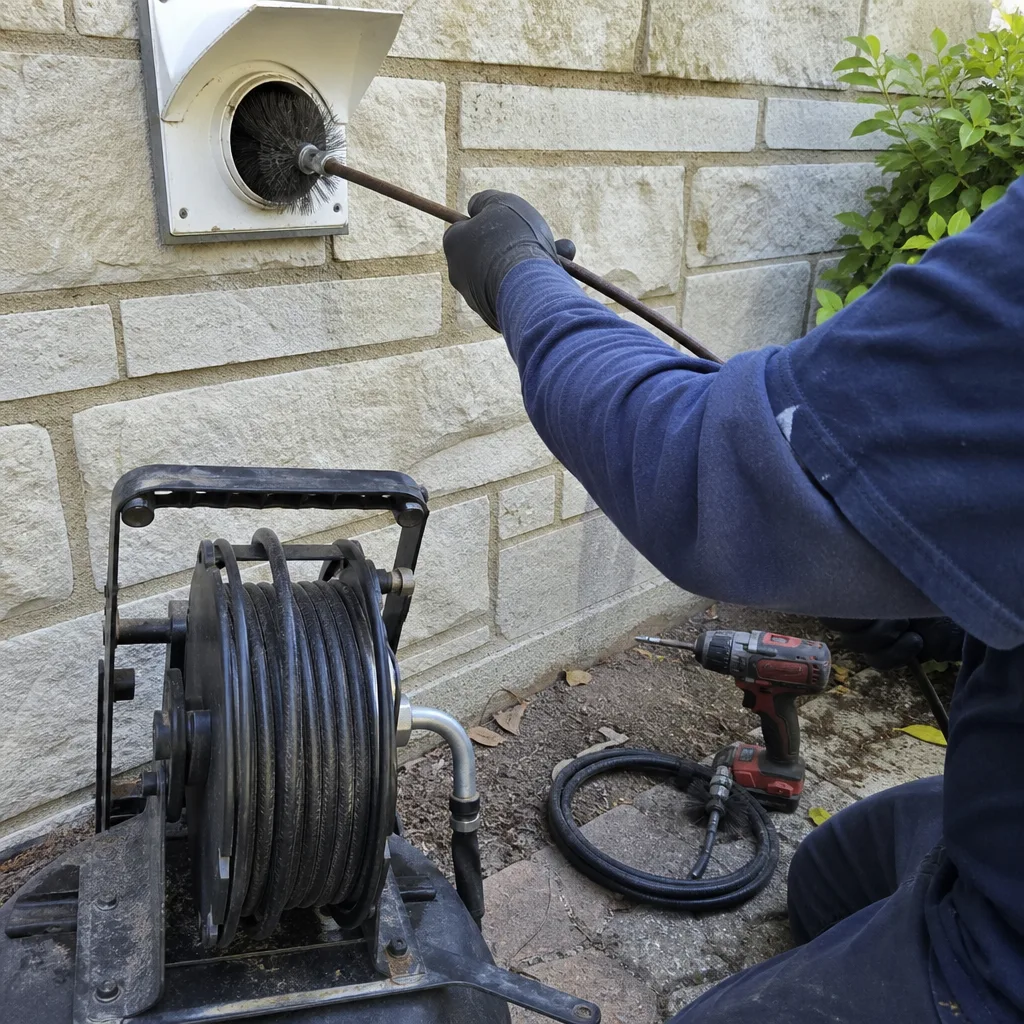
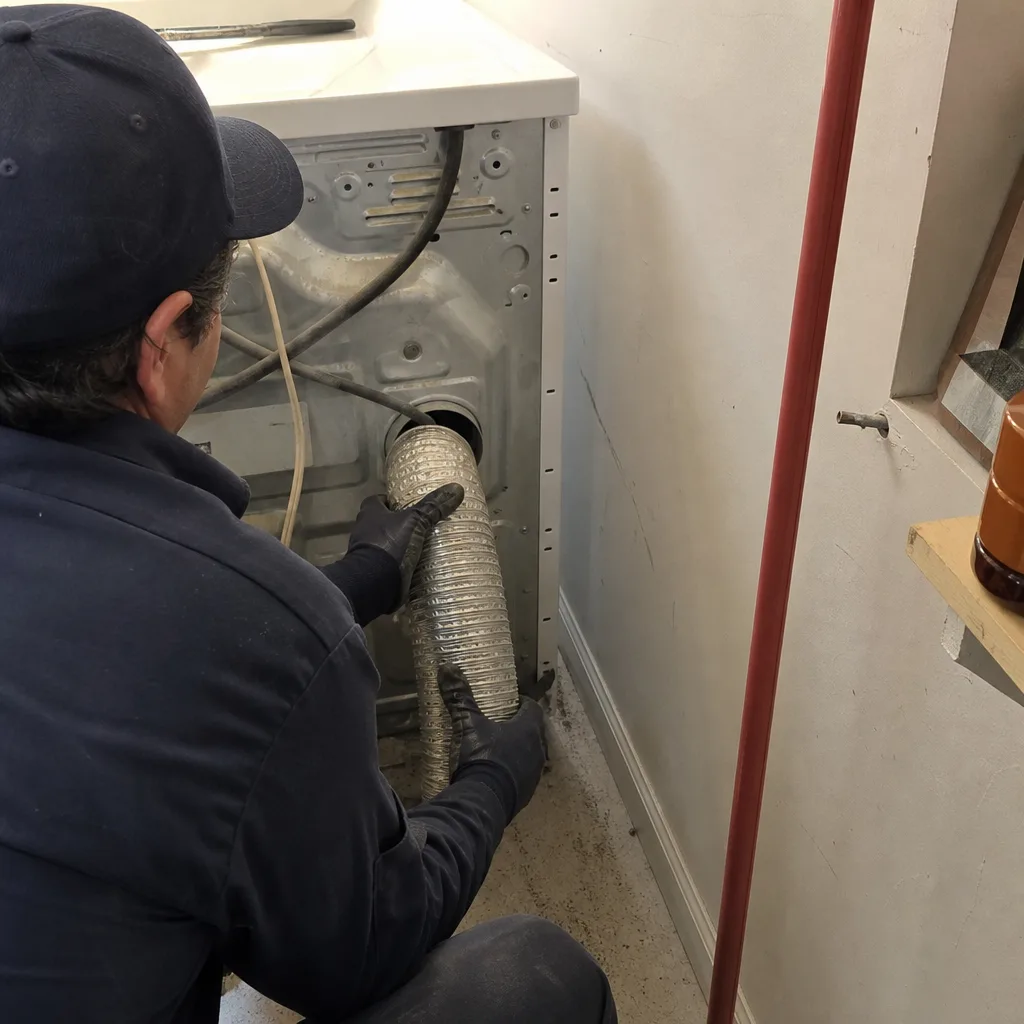
- Neglecting dryer vent maintenance: The dryer vent, not part of the HVAC duct system, is a separate fire safety concern. Annual cleaning is recommended regardless of duct cleaning schedule. Dryer Vent Cleaning in Northbrook addresses this specifically.
When to Call a Professional
Contact a qualified duct cleaning provider when: visible debris emits from registers when the system cycles; you’ve completed renovation work generating substantial dust; you’ve purchased a home with unknown maintenance history; family members experience respiratory symptoms that correlate with HVAC runtime; or your system has not been professionally cleaned in 5 to 7 years and your home falls in Northbrook’s typical 1985-2005 construction range.
CleanRun Air Duct Cleaning Northbrook offers free estimates in Northbrook. Call (224) 351-9772 to schedule an inspection with written pricing, or bring a competitor’s written estimate for a free second opinion under the H.A.V.E.N. Standard. Every estimate includes a preliminary scope discussion and explanation of what the documented photo record will contain for your specific system.
Frequently Asked Questions
Complete residential air duct cleaning in Northbrook ranges from $450 for smaller homes under 2,000 square feet to $1,200 for larger systems with 18 or more duct runs. The price depends on square footage, duct count, and whether the job follows full NADCA ACR standards including mechanical agitation and documented verification. Call (224) 351-9772 for a written estimate specific to your home, estimates are free.
The gap between $79 coupon prices and $450-plus professional quotes reflects scope omission, not efficiency. Low-price operators typically skip mechanical agitation, clean only accessible supply registers, omit return ductwork, and provide no documentation. The business model relies on volume and upselling, not thoroughness. A legitimate two-technician crew with proper equipment cannot complete an ACR-compliant job in the time required to sustain $79 pricing.
Demand a documented photo record showing the interior of every duct run before and after work, with timestamps and identifiable landmarks. This is the only verifiable proof. Verbal reports, equipment noise, and receipt line items can all be simulated. CleanRun includes this documentation as a standard deliverable on every job, a practice held since 2013.
For typical Northbrook homes with standard filtration and no special conditions, every 5 to 7 years is sufficient. Homes with pets, recent renovation, or occupants with respiratory sensitivities may benefit from more frequent service. New construction or post-renovation cleaning should occur after all trades are complete, not during active work. The inspection interval matters more than a fixed calendar; a camera assessment reveals whether accumulation warrants service.
Moderately, in specific conditions. Removing significant restrictions can improve airflow and reduce blower motor workload. But the effect is often overstated; a system with clean ducts but a failing blower, dirty coil, or duct leaks will not show meaningful efficiency improvement. Integrated HVAC assessment, not duct cleaning alone, addresses energy performance. HVAC Cleaning in Northbrook covers this comprehensive approach.
Duct cleaning addresses the distribution network: the supply and return ducts, plenums, and registers. HVAC cleaning includes these components plus the air handler elements: blower assembly, evaporator coil, drain pan, and heat exchanger where accessible. For odor issues or system performance concerns, HVAC cleaning is typically the appropriate scope. For maintenance of the distribution network alone, duct cleaning suffices.
The Bottom Line
Air duct cleaning in Northbrook is a documented mechanical service, not a mysterious procedure. The legitimate job produces written deliverables: an agreed price before work starts, a photo record of every duct run before and after, and a written warranty with defined terms. The illegitimate job produces a receipt and a verbal assurance. The difference is knowable before you book, verifiable after the crew leaves, and consequential for your home’s air system over the years following service. We have performed this work in Northbrook since 2013, with documented records for every one of more than 52,000 homes. The evidence is the argument.
Call CleanRun Air Duct Cleaning Northbrook at (224) 351-9772 for a free written estimate, or schedule a free second opinion on any competitor’s written quote. Every estimate includes scope specificity and explanation of the documentation you’ll receive as standard.
Written by Tomas Reyes, Owner at CleanRun Air Duct Cleaning Northbrook, serving Northbrook since 2013.